All species › Waterfowl › Ducks, swans and geese › Cackling Goose
Cackling Goose | Branta hutchinsii
Kleine Canadese gans | Barnacla canadiense chica
The Cackling Goose has counted as a species of its own only since 2004; before that it was treated as the smallest of the Canada Goose forms. It breeds on the tundra of Alaska and Arctic Canada and winters in dense flocks on fields and grassland, from the Willamette Valley in Oregon to the coastal prairie of Texas. More than a kilogram separates the four subspecies in weight, so size alone rarely settles an identification.
Voice
The call is high and yelping: a quickly repeated kluck-kluck or a sharper yelp, without the deep two-syllable clamour of the Canada Goose. In a mixed flock that sound is usually what gives the species away — through the low a-honk runs a series of much higher, shorter notes. Flying flocks call almost without pause, and above a roost it continues through the night. On the ground a bird warns with a hiss and an outstretched neck; on the breeding grounds the parents gather the goslings with a short, low grunting.
Recording: Greg Irving — CC BY-NC-SA 4.0 · Graysmarsh (near Sequim), Clallam County, Washington, United States · xeno-canto
Identification
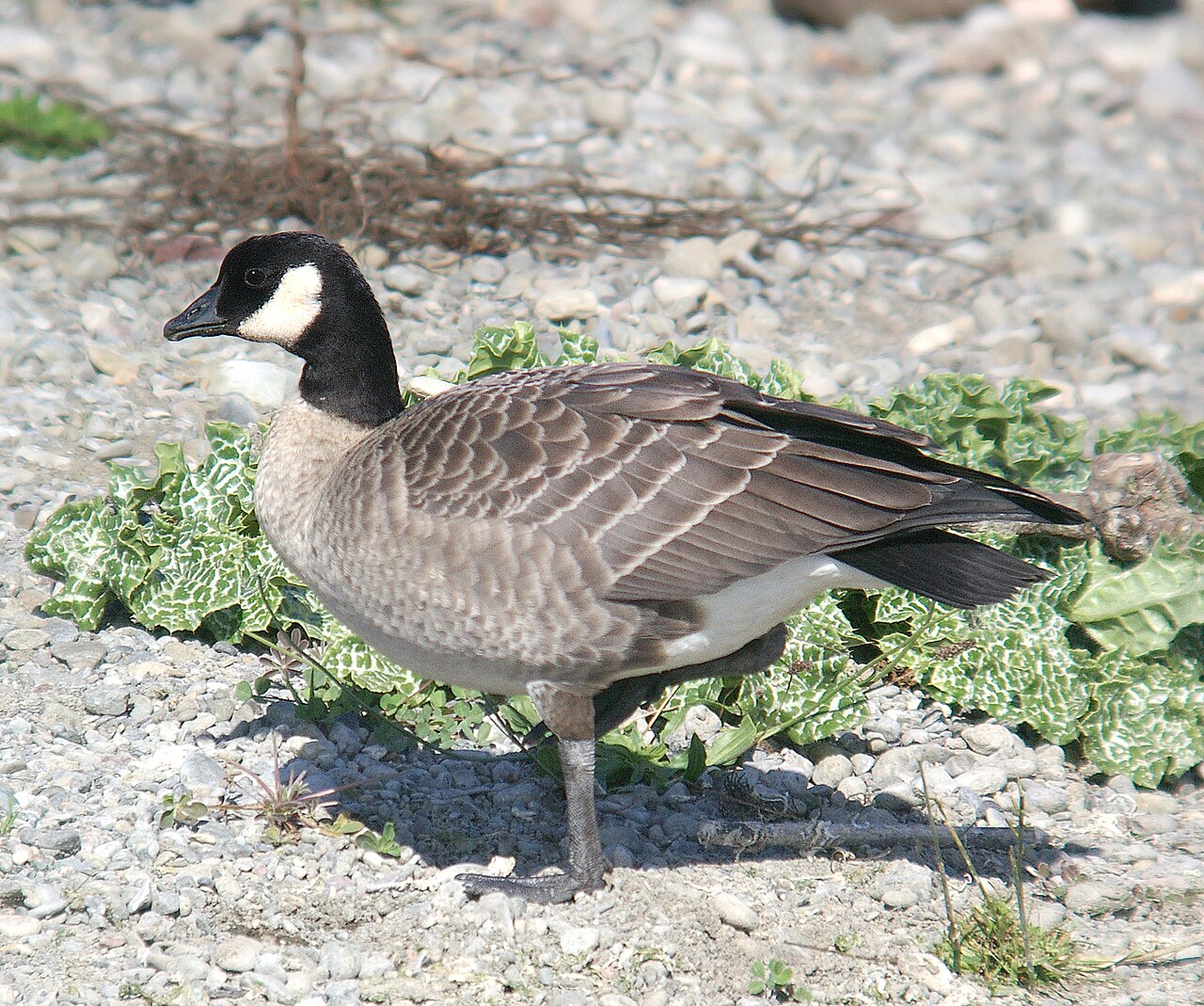
Marked like a Canada Goose: black head and neck with a white cheek patch, brown upperparts with pale feather edges, and white tail coverts forming a band above the black tail in flight. The difference is in the build. The bill is short and stubby and runs steeply up into a rounded, high forehead; the neck is about half the length of the larger species' and the body is compact. In many birds the breast is darker and greyer, in the subspecies minima almost purplish brown, and some birds carry a narrow white ring at the base of the black neck. The sexes are identically marked; the male is slightly larger. In flight the beat is faster and deeper and the silhouette suggests a large duck rather than a goose.
Confusion species
Canada Goose (Branta canadensis) is the whole problem: the largest Cackling Geese and the smallest Canada Geese overlap in size, so a proportion of birds must be left unnamed. Go by the bill profile — short and blunt against a steep forehead, as against long and gradually rising — and by neck length, rather than by bulk, and listen for the much higher call. Brant is smaller still and darker, lacks the white cheek patch and shows only a white streak on the side of the neck above a black breast. Barnacle Goose has an entirely white face and silver-grey, black-barred upperparts. Some birds stay unnamed even after every feature has been weighed; that is not a failure but the state of the question.
Habitat
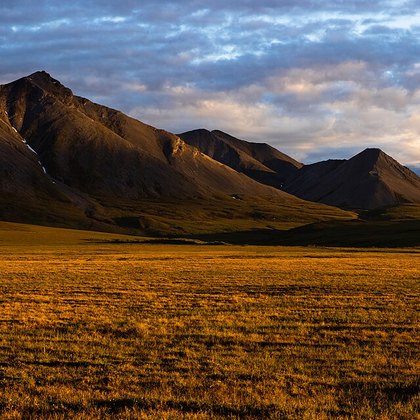
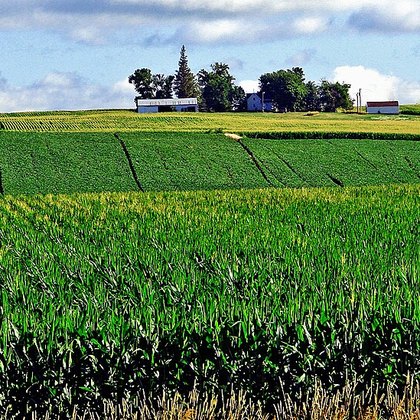
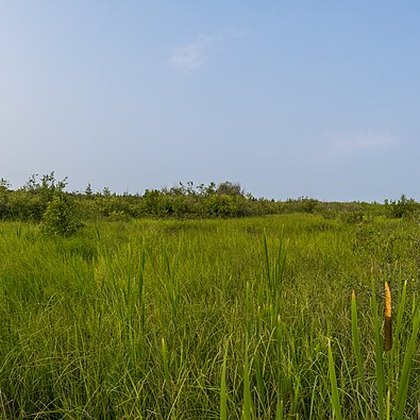
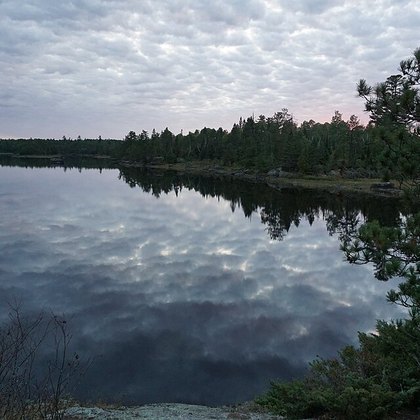
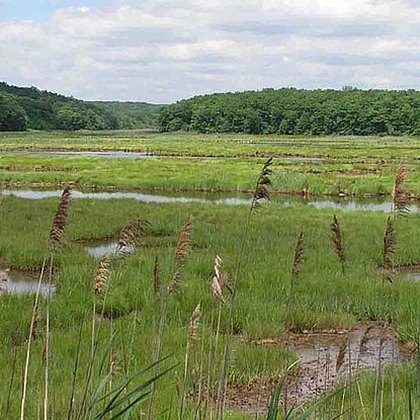
Breeds on wet coastal tundra, above all on the Yukon-Kuskokwim Delta of western Alaska, where nests sit on sedge hummocks between the pools; the other subspecies breed on drier tundra and on the islands of Arctic Canada. On migration and in winter it wants short grass and harvested cropland: grass-seed fields in the Willamette Valley, rice stubble and winter wheat in the Central Valley, coastal prairie and maize stubble along the Gulf of Mexico. It roosts on open water — a lake, a retention basin, a shallow bay — and flies out to the fields by day and back again. Closed forest and deep water it does not use, and unlike the Canada Goose it barely breeds in towns and parks.
Where the bird is most often found, arranged by the USNVC — the vegetation classification of the United States and Canada — and CMECS for sea and coast.
Range and movements
Breeds from western and northern Alaska east through the Northwest Territories and Nunavut to the Arctic islands. Each of the four subspecies follows its own route: minima from the Yukon-Kuskokwim Delta to Oregon and Washington, taverneri to the west coast, leucopareia from the Aleutians to California, and hutchinsii through the Great Plains to Texas and the Gulf Coast. Those routes shifted sharply during the twentieth century: minima once wintered mainly in California and is now almost wholly in the Willamette Valley, held there by mown turf and grass seed. In the east of the continent it appears every year in small numbers among Canada Geese, as far as New England. It does not reach the Old World: the geese of Siberia belong to other forms.
- Resident
- Breeding (summer)
- Winter
- Passage
- dark = core range, pale = thinly spread
Where and when to look
Do not look for a lone bird but work the edge of a Canada Goose flock, watching for one with a head too round and a neck too short for the rest. If you are too far off to judge the bill, wait until the flock lifts — the higher, yelping call and the faster beat come out then. The best time is October and November on the Great Plains, and the whole winter in the Willamette Valley, where flocks run to tens of thousands.
Conservation
Least Concern (LC): the combined numbers run into the millions and are rising. The Aleutian subspecies leucopareia is the counter-example. Arctic foxes released on the breeding islands for the fur trade left a single colony by about 1960, on remote Buldir; once the foxes had been removed island by island the population grew again, and in 2001 the subspecies was taken off the United States endangered species list. Hunting is now the main cause of death and is regulated per subspecies, because numbers and flyways differ so widely.
Scientific name
Branta hutchinsii | (Richardson, 1832)
John Richardson described the species in 1832 as Anser hutchinsii, among the grey geese; because it was later placed in another genus, author and year stand in parentheses. The genus Branta was introduced by Scopoli in 1769; it is a Latinised form of Old Norse brandgás, 'burnt goose', after the sooty black of head and neck. The species name honours Thomas Hutchins, surgeon to the Hudson's Bay Company, who described the goose on the west coast of Hudson Bay and left his notes to Richardson. The type material came from Melville Peninsula, in what is now Nunavut. The name then fell out of use for over a century, while the bird counted as a subspecies of B. canadensis, and was taken up again for a species in its own right in 2004.