All species › Passerines › Cardinals and allies › Blue Grosbeak
Blue Grosbeak | Passerina caerulea
Blauwe bisschop | Azulillo grande
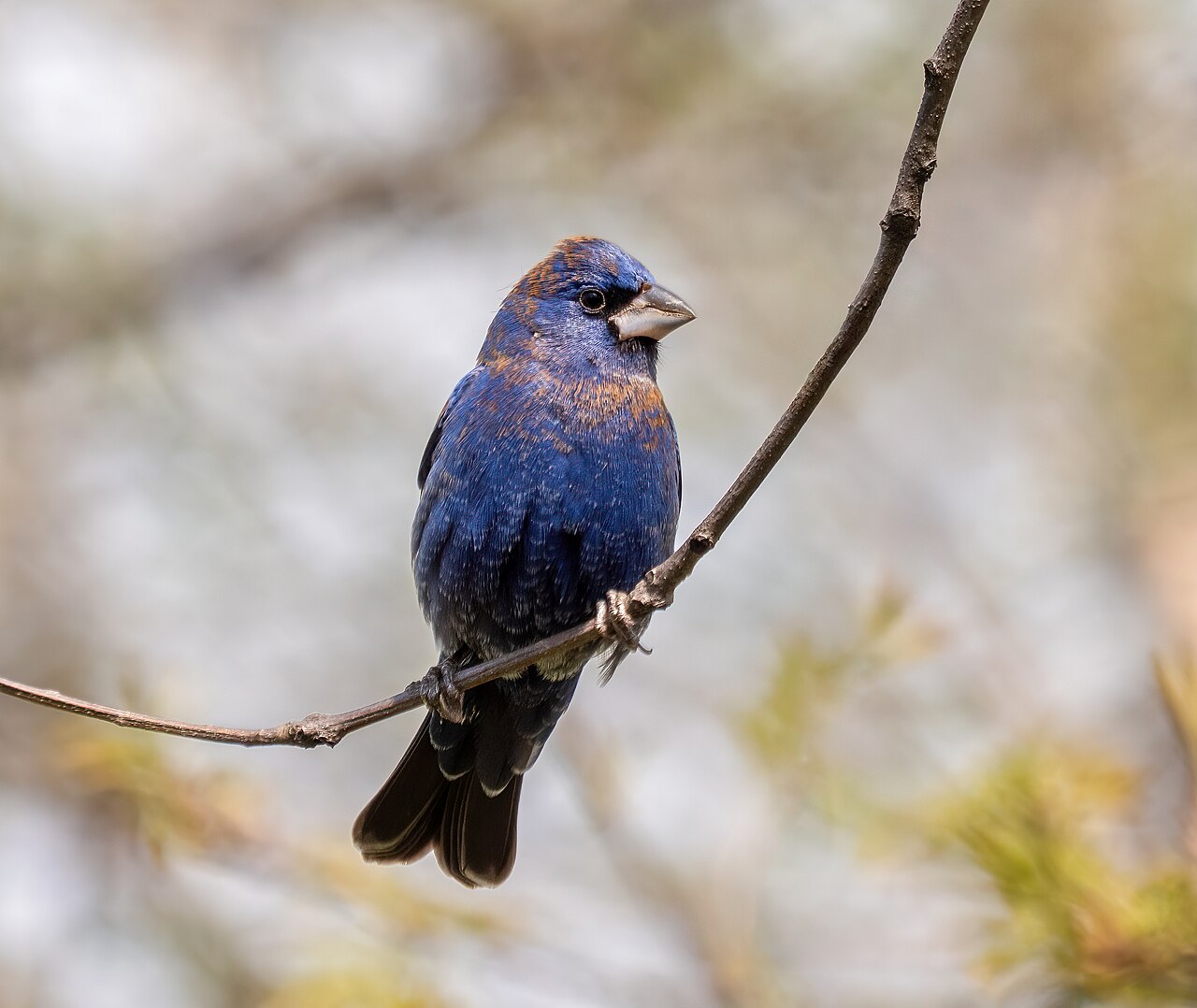
The Blue Grosbeak is the largest of North America's blue seed-eaters, told by its heavy silver-grey bill and two chestnut wingbars. It breeds in scrub and open country across the southern United States and northern Mexico, and has extended its range northward over the past century.
Voice
The song is a full, rising and falling warble of about two seconds, lower and slower than that of Indigo Bunting, usually given from a treetop, a telephone wire or a roadside post. The call is a hard, burry chink with a metallic ring that carries well out of dense scrub and is often the first sign of the species. In flight a short buzzing note is given.
Recording: Manuel Grosselet — CC BY-NC-SA 4.0 · Santo Domingo Tomaltepec, Santo Domingo Tomaltepec, Oaxaca, Mexico · xeno-canto
Identification
The male is deep cobalt blue, with black feathering around the base of the bill and two broad chestnut wingbars, the upper one the broader. The female is warm cinnamon-brown with blue feathers on rump and shoulder and the same two chestnut wingbars. Both sexes have a heavy, triangular, silver-grey bill almost as deep as it is long. The species is clearly larger and bulkier than the buntings of the same genus and moves more slowly; the tail is often flicked sideways when perched.
Confusion species
Indigo Bunting is smaller, has a far smaller bill and lacks the chestnut wingbars; the male Indigo is also lighter and more evenly blue. Lazuli Bunting has white, not chestnut, wingbars and an orange-brown breast band. A female Blue Grosbeak is separated from the females of the other two by the broad buff to chestnut wingbars, the heavy bill and the larger size. The Blue Bunting of Mexico lacks wingbars and has a shorter, more strongly curved bill.
Habitat
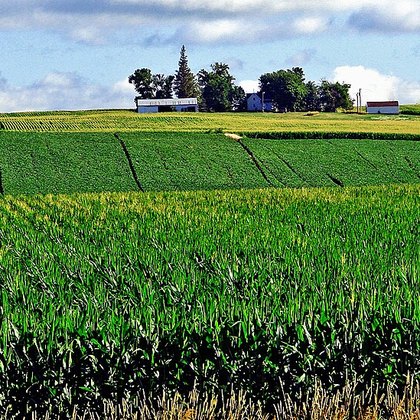
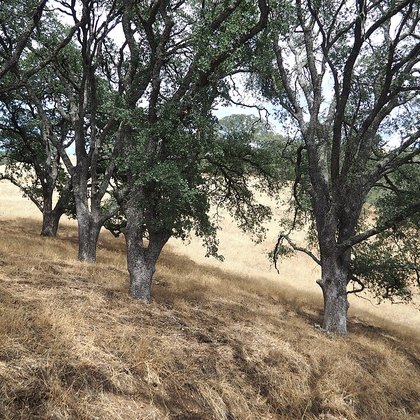
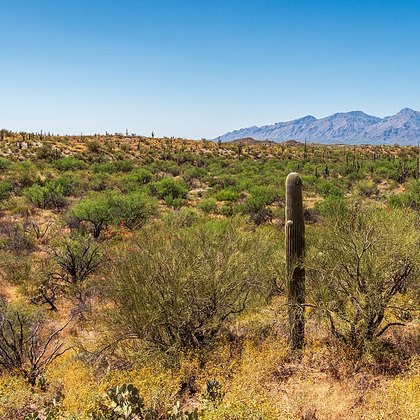
Half-open country with scattered shrubs and trees: abandoned fields, overgrown roadsides, hedgerows, woodland edges, rank growth along streams and, in the west, scrub in semi-desert and along dry washes. Closed forest and bare arable land are avoided. The nest is placed low, one to two and a half metres up, in a shrub at the edge of open ground.
Where the bird is most often found, arranged by the USNVC — the vegetation classification of the United States and Canada — and CMECS for sea and coast.


Range and movements
Breeds from central California and North Dakota east to New Jersey and south across the whole southern United States, with a large breeding range in northern Mexico from Baja California and Sonora to Tamaulipas. Two broods are often raised in the south. Wintering takes place in southern Mexico and Central America, with small numbers on into northern South America. Western birds migrate overland, eastern birds cross the Gulf of Mexico and call at the Caribbean islands on the way.
- Resident
- Breeding (summer)
- Winter
- Passage
- dark = core range, pale = thinly spread
Where and when to look
Drive slowly along a country road with hedgerows and abandoned fields in May or June and listen for the full warble from the wires. Do not settle on Indigo Bunting at the sight of a blue silhouette: look at the bill and at the wing — the heavy silver bill and the chestnut wingbar show at a distance and against the light.
Conservation
Partners in Flight puts the breeding population at about 35 million birds and the species counts as of low concern. The Breeding Bird Survey shows an increase of a little over 0.7 per cent per year between 1966 and 2019. Over the past one to two centuries the range in the United States has shifted northward, probably because forest clearing produced more scrubby edge. Nests are regularly parasitised by the Brown-headed Cowbird.
Scientific name
Passerina caerulea | (Linnaeus, 1758)
Linnaeus described the species in 1758 as Loxia caerulea; because it later moved to Passerina, author and year stand in parentheses. The genus Passerina was introduced in 1816 by Vieillot, from Latin passer 'sparrow'. The species name caerulea is Latin for 'sky-blue, dark blue'. The specimen described came from Carolina, later restricted to South Carolina. The English name refers to the heavy bill (grosbeak, 'thick bill'), the Spanish name azulillo grande the size.