All species › Passerines › New World sparrows › Black-throated Sparrow
Black-throated Sparrow | Amphispiza bilineata
Zwartkeelgors | Chingolo gorjinegro
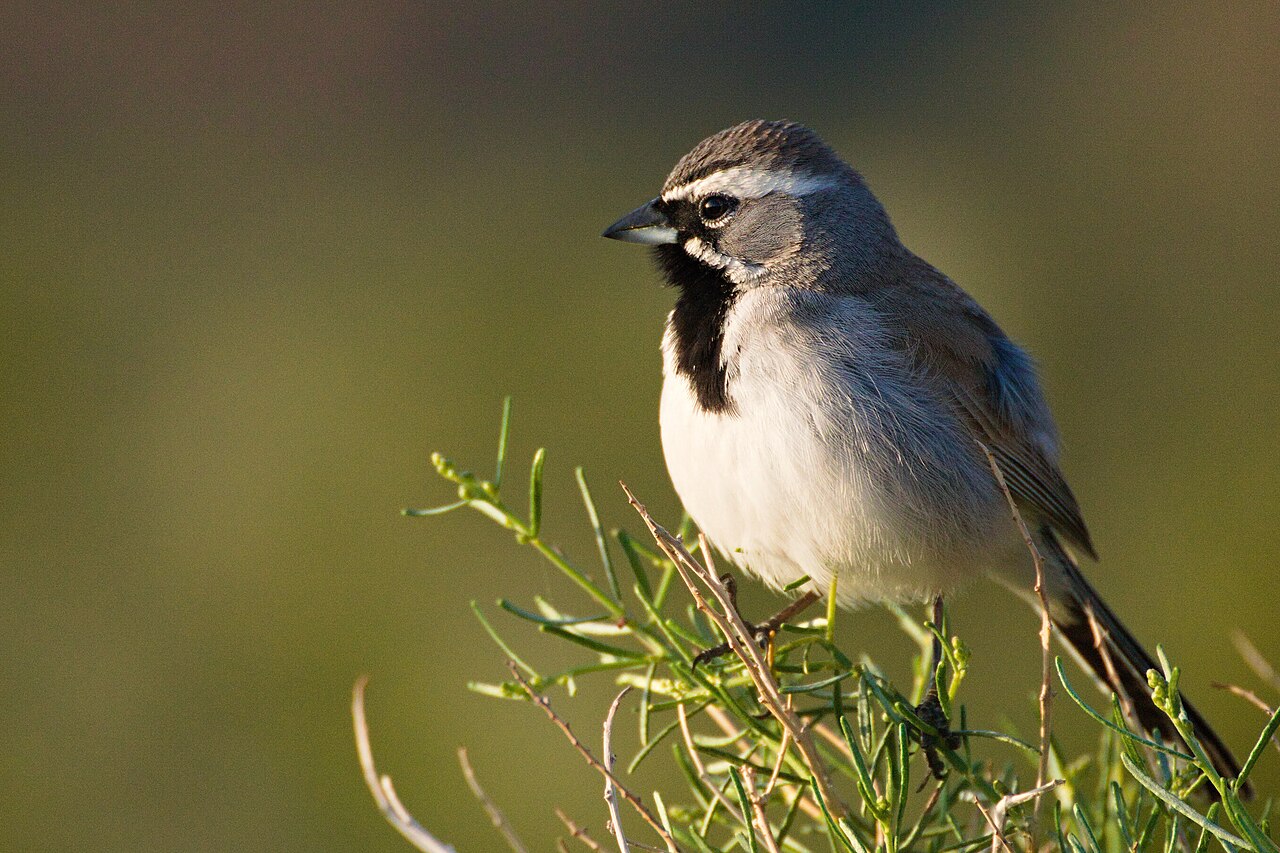
The Black-throated Sparrow is the sparrow of the southwestern deserts: a grey head with two sharp white face stripes and a black triangular throat patch. It keeps to open, stony ground with scattered shrubs, from eastern Oregon to central Mexico.
Voice
The song has two parts: first two or three clear, high introductory notes, then a dry buzz running into a rattling trill, roughly tsee-tsee-zzzrrrr-tritritri. The whole thing lasts under two seconds and is delivered from the top of a creosote bush or a boulder. The call is a high, thin tink, often in short series as a party feeds through the scrub; when disturbed the note sharpens to a chip.
Recording: Pat Goltz — CC BY-NC-SA 4.0 · Tucson, Pima County, Arizona, United States · xeno-canto
Identification
The head is plain grey with a white supercilium and a second white stripe below the dark ear coverts; between them the black throat patch runs out to a point on the upper breast. Upperparts are brownish grey and unstreaked, underparts white to cream. The tail is dark with white corners, most visible as the bird flushes. The bill is short and conical, with a blue-grey lower mandible. Juveniles lack the black throat and show fine streaking on breast and back, so for a few weeks they look like a different bird altogether.
Confusion species
Sagebrush Sparrow and Bell's Sparrow share the grey head, but have a dark central breast spot instead of a black throat, a white eye-ring and a single white malar stripe; they also keep to taller, denser sagebrush (grey-green wormwood scrub of the dry western interior). Black-chinned Sparrow has a pink bill, a plain grey head and, in the male, black reaching onto the forehead, with no white face stripes. Juvenile Black-throated Sparrows are the real problem: look for the unstreaked grey nape and the white tail corners, and for the attending adults.
Habitat
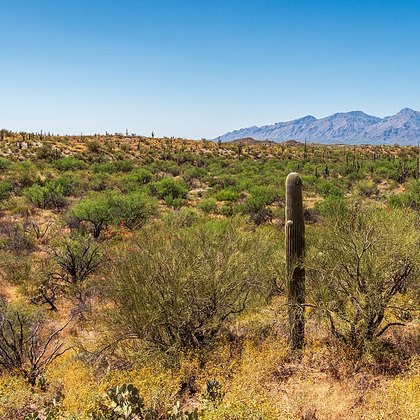
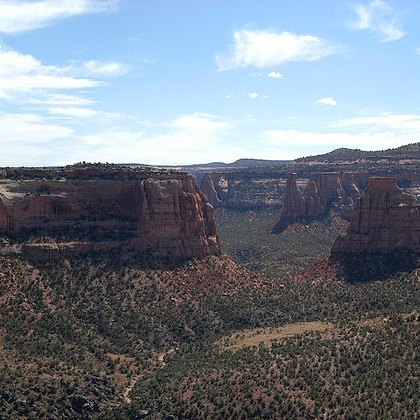
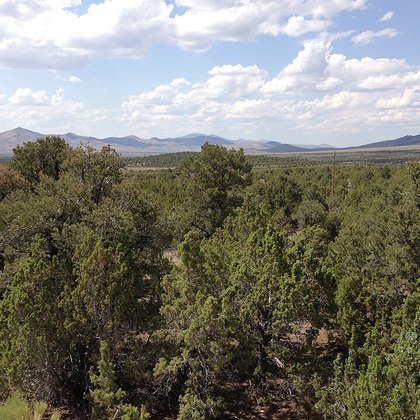
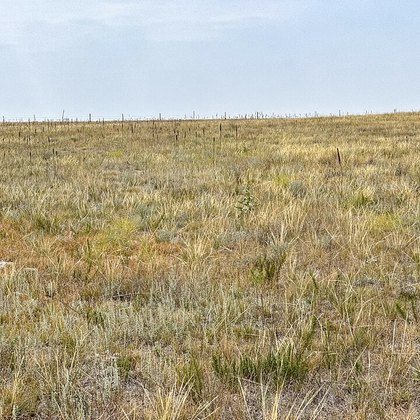
Open desert and semi-desert with scattered shrubs one to three metres high: creosote bush, ocotillo, cholla, mesquite (a thorny pod-bearing shrub of the Southwest that forms dense thickets) and yucca. Also stony canyon walls, dry washes and the lower edge of pinyon (a low-growing pine of the dry southwestern foothills)-juniper woodland, locally above 2000 metres. It avoids bare sand flats without shrubs, and dense cover equally. Outside the breeding season it feeds in small parties on the ground, close to cover.
Where the bird is most often found, arranged by the USNVC — the vegetation classification of the United States and Canada — and CMECS for sea and coast.

Range and movements
The range runs from southeastern Oregon, southwestern Idaho and, locally and in small numbers, eastern Washington south through the Great Basin and the Mojave and Sonoran deserts into central Mexico. In the north it is migratory: those birds leave Nevada, Utah, Colorado and Oregon in September and winter in Arizona, New Mexico, West Texas and northern Mexico. From southern California and southern Arizona to Hidalgo and Jalisco it stays all year. Islands in the Gulf of California and the Baja peninsula hold their own subspecies. Vagrants have reached British Columbia, Saskatchewan, Florida and New Jersey.
- Resident
- Breeding (summer)
- Winter
- Passage
- dark = core range, pale = thinly spread
Where and when to look
Look for it in April and May along a desert road just after sunrise, when males sing from shrub tops; by midday it drops into the shade and becomes almost invisible. The white tail corners as it flushes are often the first thing you see.
Conservation
The IUCN lists the species as Least Concern (LC). Partners in Flight puts the breeding population at about 51 million birds and does not list the species as of concern, yet survey data show a 42 per cent decline between 1970 and 2014. Sustained drought, urban spread across the low desert and the expansion of cheatgrass (an introduced annual grass that crowds out the sagebrush steppe) after fire reduce the scrub it needs; locally the Brown-headed Cowbird lays in its nests.
Scientific name
Amphispiza bilineata | (Cassin, 1850)
John Cassin described the species in 1850 as Emberiza bilineata, from a specimen taken on the Rio Grande in Texas; because it was later moved to another genus, author and year stand in parentheses. Bilineata is Latin for 'two-lined', after the two white stripes on the face. The genus Amphispiza was introduced in 1874 by Elliott Coues, from Greek amphi 'on both sides' and spiza 'finch'; Coues meant a genus standing between two existing groups. The Dutch and English names both name the black throat.