All species › Waterfowl › Ducks, swans and geese › Barrow's Goldeneye
Barrow's Goldeneye | Bucephala islandica
IJslandse brilduiker | Porrón islándico
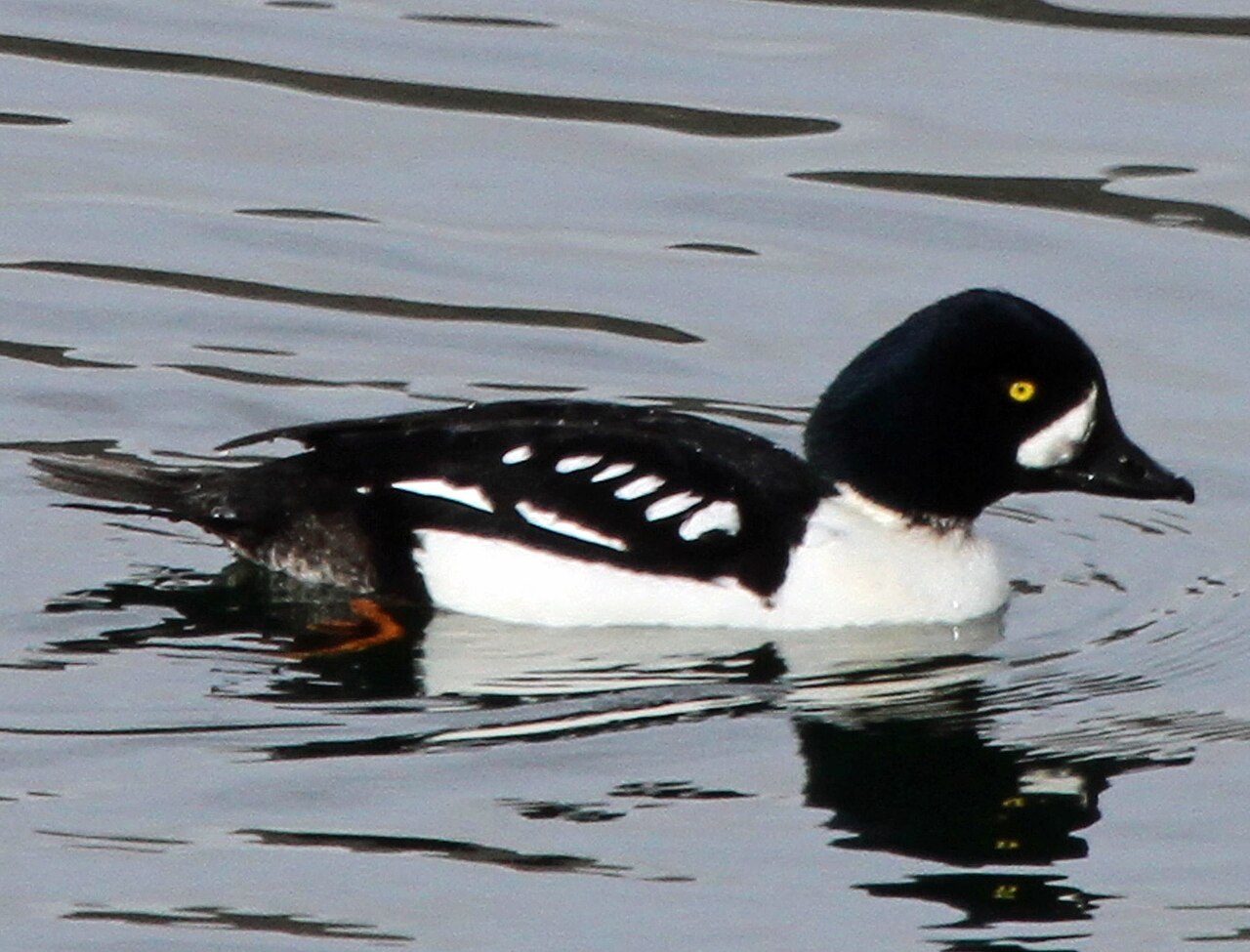
Barrow's Goldeneye is the duck of the wild mountain waters of the northwest: a stocky diving duck with an angular, high-crowned head, named after Iceland yet almost entirely a North American species. The male carries a glossy purple rather than green head and a crescent-shaped rather than round white cheek patch, the key differences from its close relative, Common Goldeneye. Two widely separated breeding areas — the western mountains and northern Quebec and Labrador — plus an isolated population on Iceland itself make up its entire range.
Voice
In courtship the male gives a low, growling or grunting note, softer and less harsh than the rasping courtship call of Common Goldeneye. As in that species, the wings produce a loud, whistling sound in flight, the trait that gives both goldeneyes their English nickname 'whistler'. Outside courtship the species is largely silent; the wing sound is then often the first sign of a passing flock.
Recording: Walter Szeliga — CC BY-NC-SA 4.0 · Washington (near Ellensburg), Kittitas County, Washington, United States · xeno-canto
Identification
The male is black and white with a glossy purple head, a crescent-shaped white patch just in front of the eye, and a row of separate white spots on an otherwise black back and shoulders, instead of the solid white back panel of Common Goldeneye. The steep, high crown and the short, stubby bill give the head an angular, almost squared-off profile. The female is grey-brown with a chocolate-brown head and a bill that turns yellow-orange more often and more brightly than the female Common Goldeneye's, but the most reliable mark on her too is the steep crown and short bill. Juveniles resemble the female.
Confusion species
Common Goldeneye (Bucephala clangula) is the only real confusion species: on the male, check the colour of the head gloss (purple versus green), the shape of the white cheek patch (crescent versus round), and the back pattern (separate spots versus a solid white panel); on both sexes, check Barrow's Goldeneye's steeper crown and shorter, stubbier bill. Bufflehead is considerably smaller and has a triangular rather than crescent-shaped head patch running from behind the eye into the nape. Mixed flocks of both goldeneyes occur on the same waters in winter, and comparing them side by side is often the fastest way to learn the difference.
Habitat
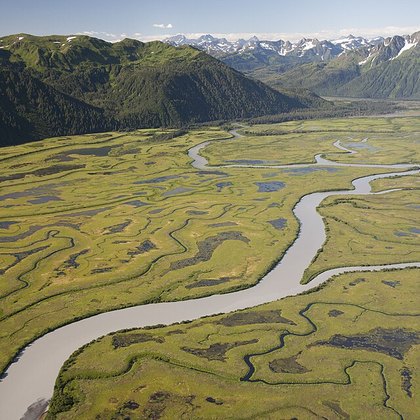
Breeds at clear, cold mountain lakes, rivers and beaver ponds at and above treeline, where it depends for nesting on cavities in old broadleaf trees close to the water or, further north, on rock crevices. Outside the breeding season it is chiefly a bird of rocky coastal waters and sheltered bays, diving among kelp beds and mussel banks for shellfish; in the eastern part of its range it also uses the tidal flats and sheltered waters of large river mouths.
Where the bird is most often found, arranged by the USNVC — the vegetation classification of the United States and Canada — and CMECS for sea and coast.
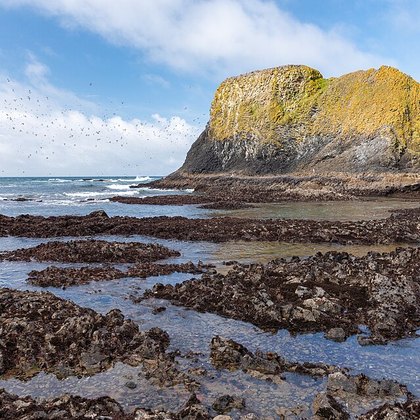
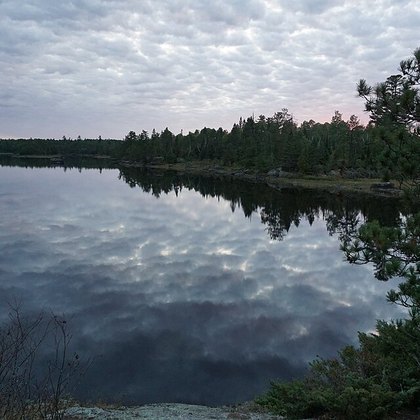
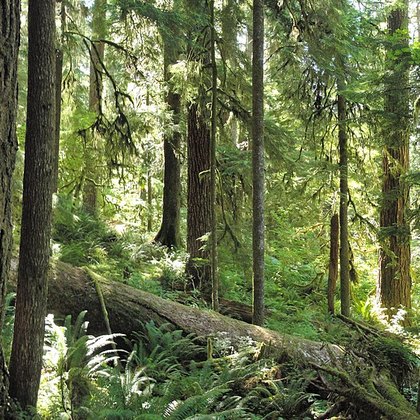
Range and movements
The western breeding population extends from southern Alaska through British Columbia and the Cascades into the mountains of Oregon, with small, isolated breeding groups in Wyoming and Colorado; a separate, much smaller eastern population breeds in the northern conifer forest of Quebec, north of the St. Lawrence River, and in Labrador. It winters in the west along the Pacific coast from southern Alaska to central California, and in the east mostly in and around the mouth of the St. Lawrence River, with smaller numbers further along the coast of the Atlantic provinces to Maine. Apart from this North American range, a third, non-migratory population breeds on Iceland, the only place outside the continent where the species occurs.
- Resident
- Breeding (summer)
- Winter
- Passage
- dark = core range, pale = thinly spread
Where and when to look
Look for the western population in summer on clear mountain lakes above the krummholz line, and in winter among flocks of Common Goldeneyes in rocky bays along the Pacific coast; in the east the best chance is in winter on the tidal flats and in the bays around the mouth of the St. Lawrence River. When in doubt, compare head shape and back pattern with a Common Goldeneye in the same flock.
Conservation
Least Concern (LC), but with a considerably smaller and more scattered population than Common Goldeneye; the eastern population numbers only an estimated few thousand birds and is tracked separately in Canada. Because the species depends on clear mountain waters and specific nesting cavities, degradation of mountain lakes and the loss of old, hollow trees are seen as the main risks to the western part of the population.
Scientific name
Bucephala islandica | (Gmelin, 1789)
Johann Friedrich Gmelin described the species in 1789 as Anas islandica, among the ducks; because it was later placed in another genus, author and year stand in parentheses. The genus Bucephala was introduced in 1858 by Spencer Fullerton Baird, from the Greek bous, 'ox', and kephale, 'head' — 'ox-headed', after the angular, rounded head of these ducks. The species name islandica is Latin for 'of Iceland', after the first specimen described; the type locality accordingly lies in Iceland, even though by far the greater part of the species breeds thousands of kilometres away, in North America.