All species › Passerines › New World blackbirds, troupials and allies › Baltimore Oriole
Baltimore Oriole | Icterus galbula
Baltimoretroepiaal | Turpial de Baltimore
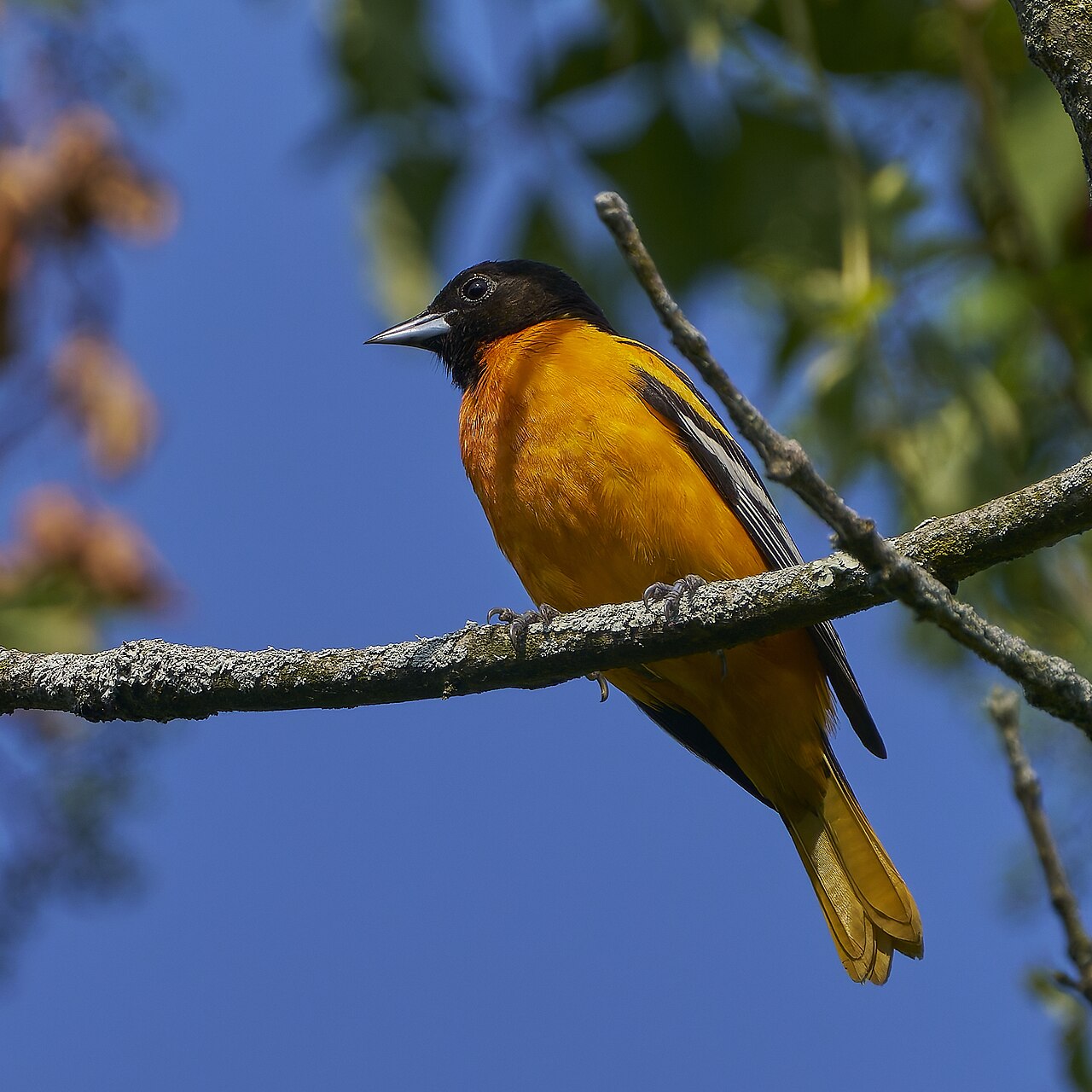
The Baltimore Oriole is the oriole of eastern North America: the male has an entirely black head and back against an orange breast, rump and tail corners. It breeds in tall deciduous trees along woodland edges, in parks and around farmsteads, and leaves as early as August for Central America and northern South America.
Voice
The song is a short series of clear, full whistles with a slightly vibrant tone, two to four notes repeated in pairs and lasting one to two seconds; each male has his own fixed phrase, so individuals can be told apart by song. Calls include a nasal, descending veeer and a low rattling chatter, alongside high tyew-li and kleek notes. Females sing too, more briefly and less regularly.
Recording: Bobby Wilcox — CC BY-NC-SA 4.0 · Tama (near Burlington), Des Moines, Iowa, United States · xeno-canto
Identification
The male has head, throat, upper breast and back wholly black, with no orange in the face, and is deep orange on the lower breast, belly, rump and shoulder. The wing is black with one narrow white bar on the greater coverts and white edges to the flight feathers. The tail is black with orange outer corners. The female is yellowish brown above with a darker, mottled back and orange-yellow below right through to the undertail, with two white wing bars; older females may acquire black on head and throat. First-year males are more orange with a black throat.
Confusion species
Bullock's Oriole, which takes over on the Great Plains, has in the male an orange face with only a black crown, eye-line and narrow throat stripe, and a large white wing panel rather than a narrow bar. Among females, a female Baltimore is evenly orange-yellow from breast to undertail, while Bullock's has a greyish-white belly contrasting with the yellow breast. Orchard Oriole is smaller and shorter-tailed, chestnut in the male; the female is yellower and greener, with no orange. In the narrow contact zone on the Great Plains hybrids occur with an intermediate head pattern.
Habitat
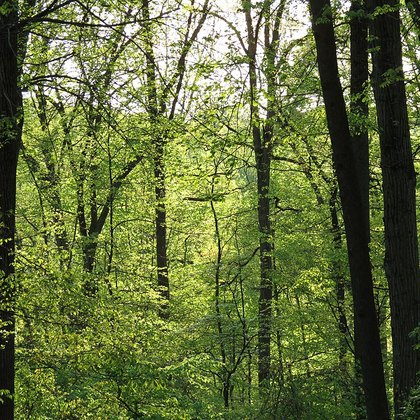
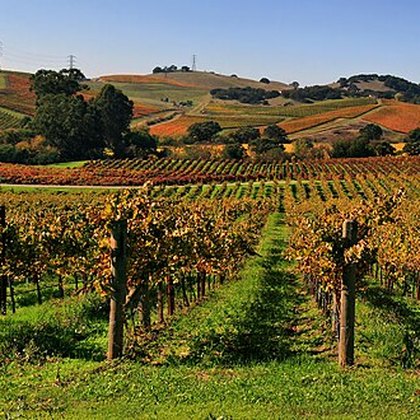
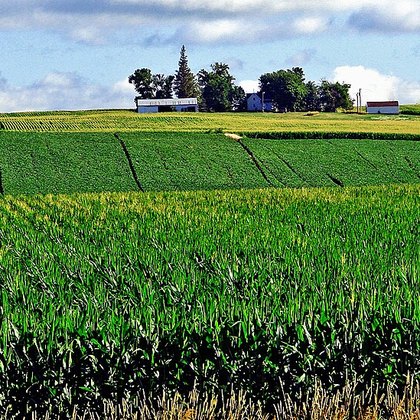
Open deciduous woodland, woodland edges, hedgerows and wooded riverbanks, with tall trees and plenty of open air between them; it avoids closed forest. Elm, cottonwood, maple and willow are commonly used nest trees. It breeds readily in orchards, town parks, cemeteries and streets with old trees. The nest is a deep hanging pouch of plant fibre woven at the end of a thin outer branch, often over a clearing or a road. In winter it uses forest edge, shade-coffee plantations and gardens.
Where the bird is most often found, arranged by the USNVC — the vegetation classification of the United States and Canada — and CMECS for sea and coast.




Range and movements
It breeds from the Canadian prairie provinces and eastern Montana east across southern Ontario, Quebec and New Brunswick, and south through the eastern United States to Louisiana, central Mississippi, Alabama and northern Georgia. The western limit lies on the Great Plains, where it meets Bullock's Oriole; the two interbreed in a narrow zone along the riverside woodlands, which narrowed and shifted westward over the twentieth century. Between 1973 and 1995 the two were treated as one species, the Northern Oriole, until mixing proved limited. It winters from southern Mexico and the Caribbean through Central America to Colombia and Venezuela, with small numbers on the Gulf coast of the United States and in Florida.
- Resident
- Breeding (summer)
- Winter
- Passage
- dark = core range, pale = thinly spread
Where and when to look
Look in May, when the trees are not yet in full leaf and the song carries best: a woodland edge or a park strip with tall elms or cottonwoods gives the best chance. Look high — it forages mainly in the upper half of the canopy. Half an orange or a dish of jelly in the garden often brings it within view in the first days after arrival.
Conservation
The species is listed as Least Concern (LC), but the Breeding Bird Survey shows a decline of more than one and a half per cent a year between 1966 and 2015 in the northern and eastern parts of the breeding range. The loss of American elm to Dutch elm disease removed a much-used nest tree. Loss of woodland edge and hedgerow, pesticides in orchards and the conversion of shade coffee to sun coffee on the wintering grounds play a part as well. Planting native deciduous trees in parks and on farms produces nest sites again.
Scientific name
Icterus galbula | (Linnaeus, 1758)
Linnaeus described the species in 1758 as Coracias Galbula; its placement in another genus puts author and year in parentheses. The genus Icterus comes from Greek ikteros, the name of a yellow bird — for the Greeks the Eurasian Golden Oriole, which was linked with jaundice. The species name galbula is the Latin word for a small yellow bird, likewise the Eurasian Golden Oriole. The name Baltimore refers to the black-and-orange arms of Lord Baltimore, the seventeenth-century proprietor of the colony of Maryland. The specimen described came from 'America', later restricted to Virginia.