All species › Passerines › Finches, euphonias and allies › ʻApapane
ʻApapane | Himatione sanguinea
ʻApapane | ʻApapane
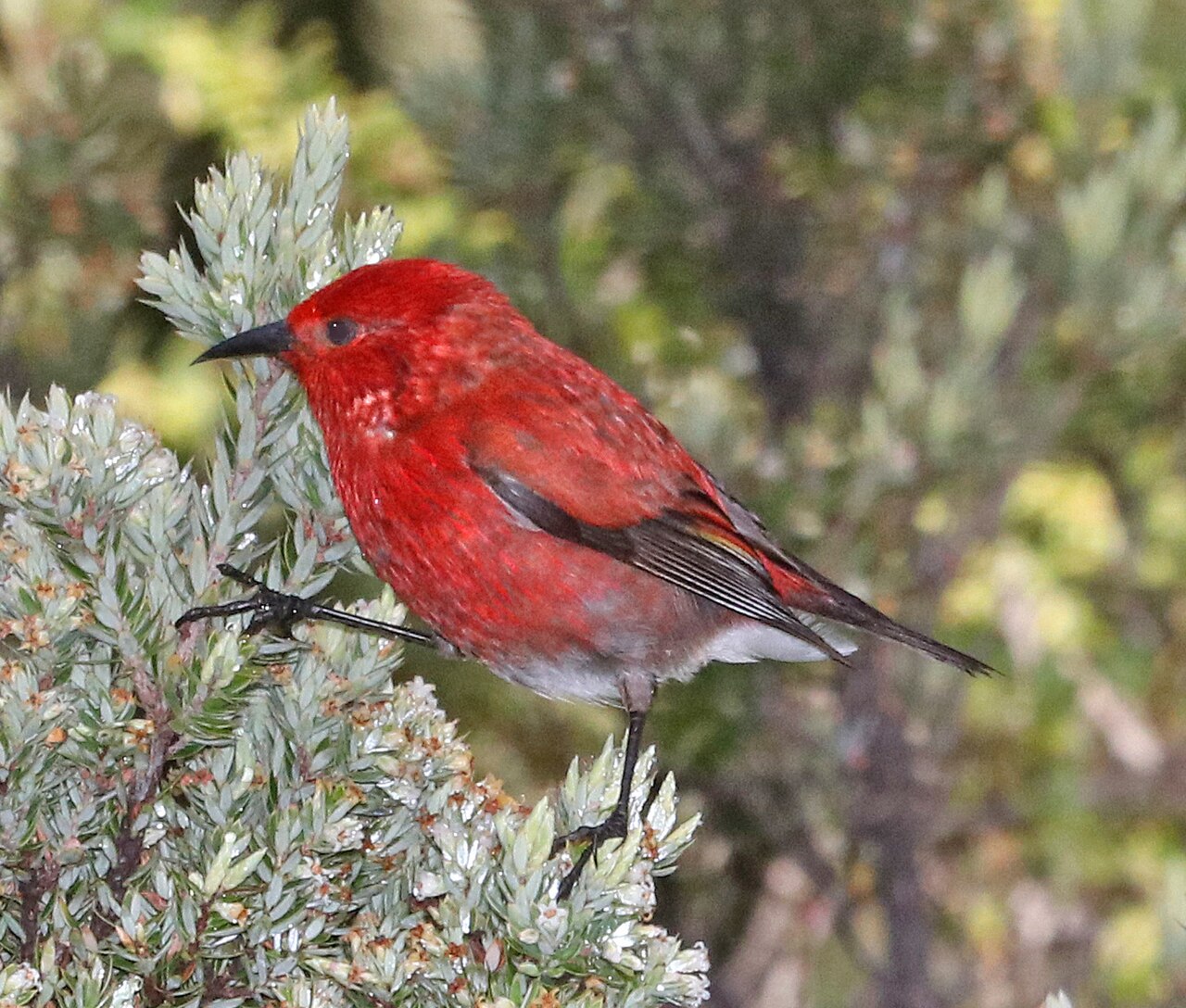
The ʻApapane is the commonest and most widespread Hawaiian honeycreeper: a crimson bird with black wings and a white undertail that moves through the ohia forest in large parties from one flowering crown to the next. It still occurs on all six main islands.
Voice
It is a persistent singer and sings in flight as well. The song consists of bouts of ten to thirty seconds combining squeaks, whistles, rasping notes, melodic trills and clicking sounds, in an order that differs greatly between individuals; dozens of distinct motifs have been described. The wings produce an audible whirring on take-off, which in quiet forest is often the first sign of the species.
Recording: Bobby Wilcox — CC BY-NC-SA 4.0 · Alakai Swamp Trail, Kauai County, Hawaii, United States · xeno-canto
Identification
A small honeycreeper, crimson over head, back, breast and flanks, with black wings and tail and a sharply defined white lower belly and undertail-coverts. The bill is short, black and slightly curved; the legs are black. It often perches with the tail cocked, showing the white. Young birds are yellow-brown and grey and take two years to turn red; those intermediate stages are unevenly blotched.
Confusion species
The ʻIʻiwi is larger, orange-red rather than crimson, has no white under the tail and a long, strongly curved salmon bill. The ʻAkohekohe is far heavier, black and speckled, with a white forehead crest. The extinct Laysan Honeycreeper was long treated as a subspecies of the ʻApapane. Brown-grey young ʻApapane are easily taken for an ʻamakihi; the black wings and the white vent settle it.
Habitat
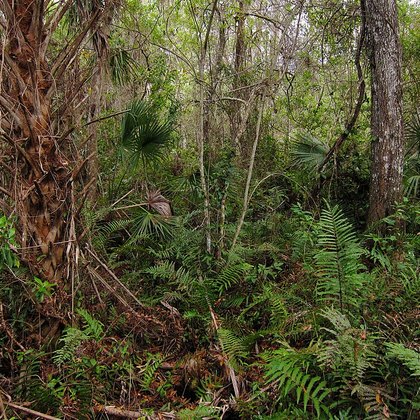
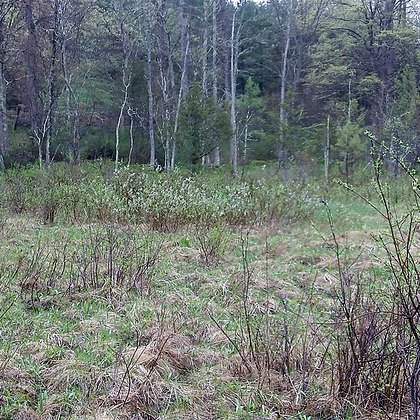
Native wet and mesic forest of ohia lehua and koa (Acacia koa, a native Hawaiian tree), chiefly above about 1200 metres where mosquito pressure is lower. Nectar from ohia flowers makes up most of the diet; flowering determines where the birds are, so they range widely across the slopes through the year. Also in subalpine scrub and along forest edges with flowering shrubs.
Where the bird is most often found, arranged by the USNVC — the vegetation classification of the United States and Canada — and CMECS for sea and coast.
Range and movements
Hawaii, Maui, Kauaʻi, Oʻahu, Molokaʻi and Lanaʻi. The species is still numerous and continuously distributed on Hawaii and Maui, much scarcer on Oʻahu and Lanaʻi and there confined to the highest forest remnants. On Kauaʻi, where no forest remains above the mosquito line, numbers have fallen sharply in recent decades. There is no regular migration, but birds cover long distances between islands and along slopes, following the ohia bloom.
- Resident
Where and when to look
Stand in flowering ohia forest and wait: the birds arrive in parties and give themselves away by the whirring of their wings. Along Crater Rim Drive in Hawaii Volcanoes National Park and at Hosmer Grove on Maui it is the native forest bird most often seen. On perched birds, watch for the sharp border between red breast and white belly.
Conservation
The world population is put at more than one and a half million birds and the species is listed as Least Concern (LC). It is the only native nectar feeder in Hawaii still counted in the millions. It is nevertheless susceptible to avian malaria: on the lower islands and on Kauaʻi numbers have clearly dropped. Because the birds range widely, they can also carry the disease into higher forest. Loss of native forest to livestock and invasive plants remains a further pressure.
Scientific name
Himatione sanguinea | (Gmelin, 1788)
Johann Friedrich Gmelin described the species in 1788 as Certhia sanguinea; because it was later moved to another genus, author and year stand in parentheses. The genus Himatione was introduced in 1851 by Jean Cabanis, from Greek himation 'cloak, outer garment'. The species name sanguinea is Latin for 'blood-red' and refers to the plumage. The Hawaiian name ʻapapane is the traditional name for the bird, whose red feathers were used in feather cloaks and helmets. The type came from the Sandwich Islands, as the Hawaiian archipelago was then called.