All species › Passerines › Thrushes and allies › American Robin
American Robin | Turdus migratorius
Roodborstlijster | Zorzal robín
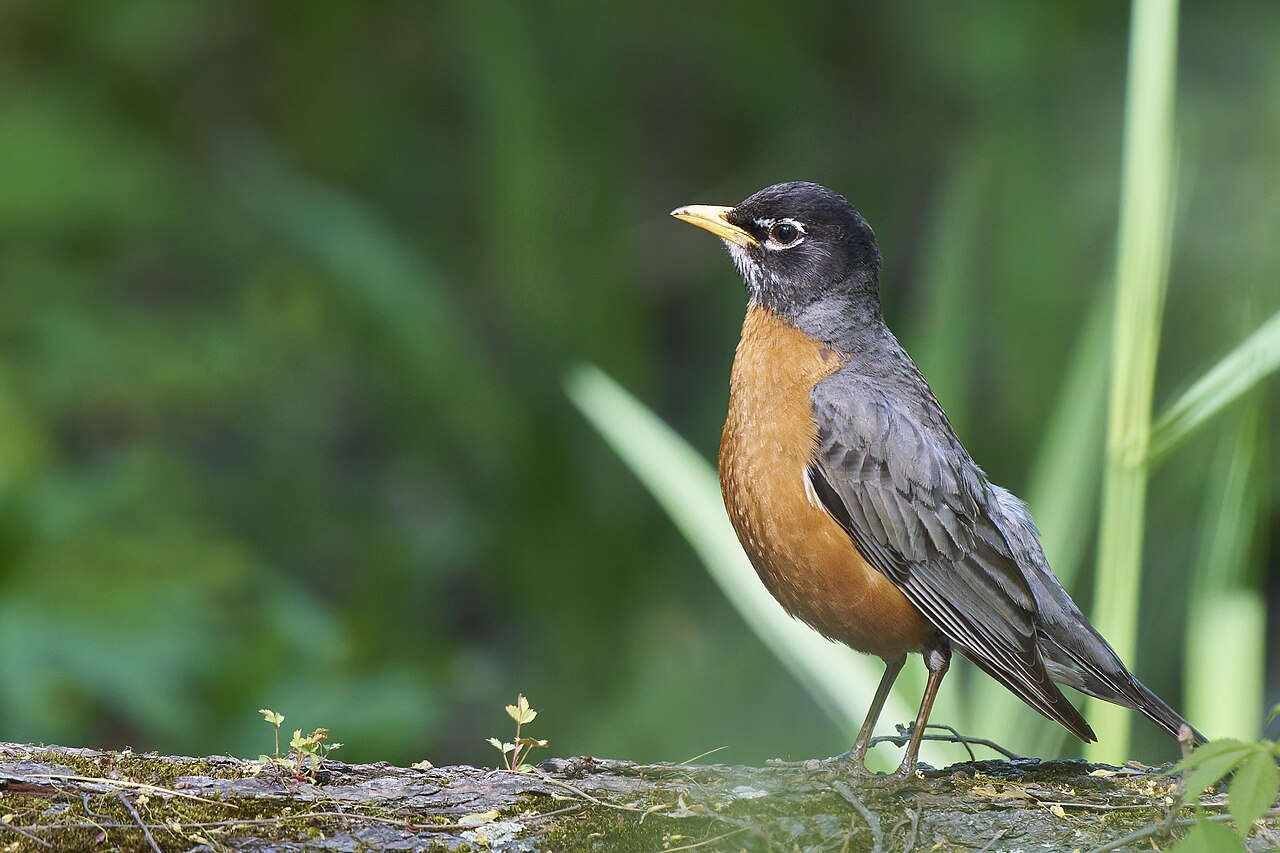
The American Robin is spring's herald for millions of Americans: a heavy-set thrush with a brick-red breast, tilting its head on every lawn as it watches for worms. It is one of the most numerous landbirds on the continent, with an estimated population of 370 million.
Voice
The song is a long, loosely phrased carol of clear whistled notes in short bursts — cheerily cheer-up cheerio — often starting before sunrise and continuing all day. When alarmed it gives a sharp, broken tut-tut-tut, and at a passing hawk a high, sustained squeal. Its song is among the first heard at dawn and the last to fall silent at dusk.
Recording: Andrew McCafferty — CC BY-NC-SA 4.0 · Langford (near Victoria), Capital Regional District, British Columbia, Canada · xeno-canto
Identification
The male has a dark grey back, a black head and a deep brick-red breast and belly, with a broken white eye-ring and a yellow bill. The female is similar but paler, with a greyer head and duller red. Juveniles are heavily spotted on a rufous breast, giving them a look somewhere between a thrush and a starling. In flight it is recognisable by its bulky shape, direct wingbeats and its habit of running low across lawns and pausing upright.
Confusion species
Spotted juveniles are sometimes mistaken for one of the smaller thrushes, but are considerably larger and show a clear rufous ground colour beneath the spotting. In the west, Varied Thrush is the chief confusion species: it shares an equally red breast, but crossed by a black band, and has a bold orange eyebrow stripe. Females and duller autumn birds are sometimes taken for a Fieldfare by anyone familiar with European thrushes, though adult American Robins entirely lack breast spotting.
Habitat
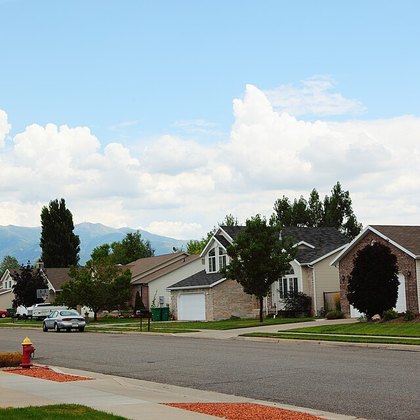
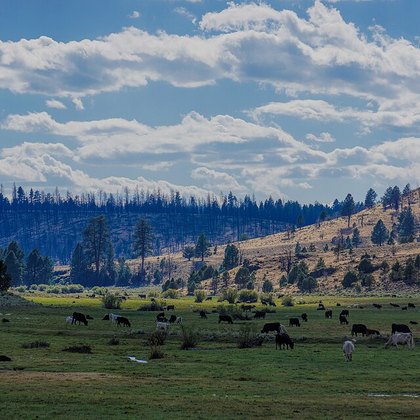
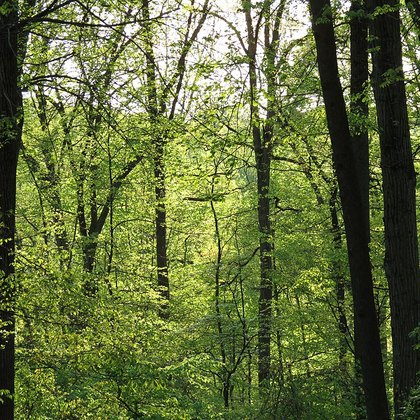
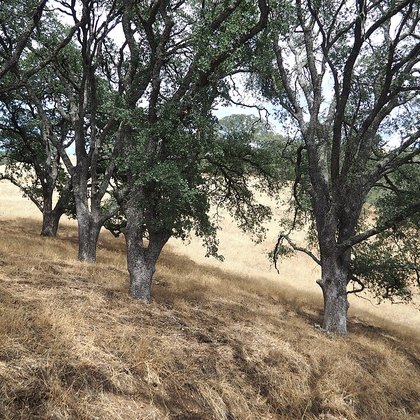
Open lawns, farmland edges, parks and gardens with short grass to forage on, mixed with trees and shrubs for nesting and shelter. Outside the breeding season it trades worms and insects for berries, moving into orchards, thickets and woodland edges where they grow. It avoids dense, unbroken forest without open ground, and the driest desert country.
Where the bird is most often found, arranged by the USNVC — the vegetation classification of the United States and Canada — and CMECS for sea and coast.

Range and movements
Breeds from Alaska and across all of southern Canada to Mexico, and is present year-round across most of the United States; northern birds move south in winter into the southern states and Mexico. Migration proceeds in short hops and depends heavily on the availability of berries, so spring arrival varies widely from year to year and place to place. It is one of the few thrushes that has adapted effortlessly to landscapes altered by people, and the twentieth-century lawn has helped rather than hurt its numbers.
- Resident
- Breeding (summer)
- Winter
- Passage
- dark = core range, pale = thinly spread
Where and when to look
Walk across a lawn early in the morning and watch for a bird that pauses, tilts its head, then strikes — that is not listening for the worm but looking. In late autumn and winter, large, noisy flocks in berry-laden trees are often robins, well away from any lawn.
Conservation
Least Concern (LC) and one of the most numerous landbirds in North America, with an estimated population of 370 million, and numbers have increased over recent decades. Pesticides once applied to lawns were a historical problem, since this is exactly where the bird hunts for worms.
Scientific name
Turdus migratorius | Linnaeus, 1766
Linnaeus described the species in 1766 as [Turdus] migratorius, in the genus Turdus where it still stands, so author and year appear without parentheses. migratorius is Latin for 'migratory', for its migration. The English name 'robin' recalls the European Robin, which early colonists thought it resembled in colour, though the two are not related. The type locality was given only vaguely as 'in America septentrionali' in the original description and has never been further restricted.