All species › Owls › Bay owls and barn owls › American Barn Owl
American Barn Owl | Tyto furcata
Amerikaanse kerkuil | Lechuza de campanario
The American Barn Owl is the pale owl of open farmland, drifting along the verge like a white ghost in the headlights at night and vanishing into a barn or a hollow tree by day. In the arrangement this guide follows it is a species in its own right, separate from the Western Barn Owl (Tyto alba): the American bird is larger and more heavily spotted.
Voice
The scream is delivered in flight, usually by the male going round his territory at dusk, and sounds like tearing linen: it comes out of the dark unannounced and is out of all proportion to so light a bird. Anyone hearing it for the first time thinks of a person or a fox rather than an owl. At the nest hole the pair exchange soft purring and chirruping notes that carry only ten metres or so and that you hear only from close by. A hunting Barn Owl, though, cannot be heard: the soft comb on the leading edge of the wing makes the flight completely silent, and the bird can pass just above your head without your noticing.
Recording: JAYRSON ARAUJO DE OLIVEIRA — CC BY-NC-SA 4.0 · Itaguatins, Itaguatins, Tocantins, Brazil · xeno-canto
Identification
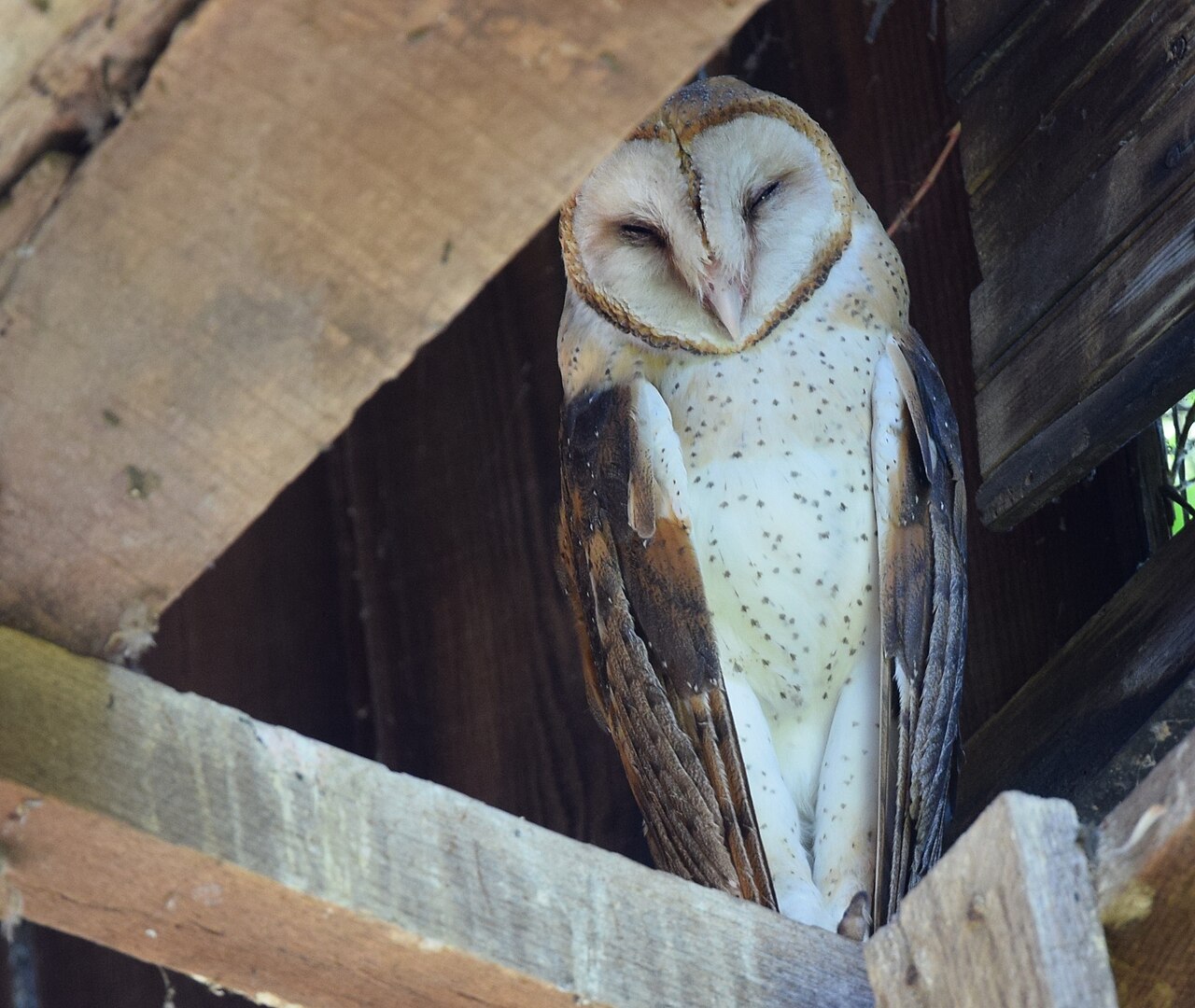
White to pale rusty buff below with fine black speckling; above marbled golden brown and ash grey, dusted with white and black pinheads. The heart-shaped face is white and sharply outlined, the eyes small, black and glossy, the head narrow and tall. Females average darker, buffier and more heavily spotted than males, which can be almost pure white below; the difference is clear enough to tell the pair apart at a nest box. Young birds are barely distinguishable from their parents once they have left the nest. In headlights you see a large, pale, short-tailed bird with long wings turning low over the verge.
Confusion species
The Short-eared Owl (Asio flammeus), the pueo of Hawaii, hunts the same open country and sometimes still in daylight: it is ochre-brown and streaked, with yellow eyes in a dark-rimmed face, and flies with deep, moth-like beats. In the north the Snowy Owl is the other white owl, but far heavier in build, yellow-eyed and barred, and it sits out in the open on the ground or a post by day. A Barn Owl lit up by headlights is regularly taken for a passing gull or even a small heron; the broad round head, the short tail and the slow, turning flight settle that quickly.
Habitat
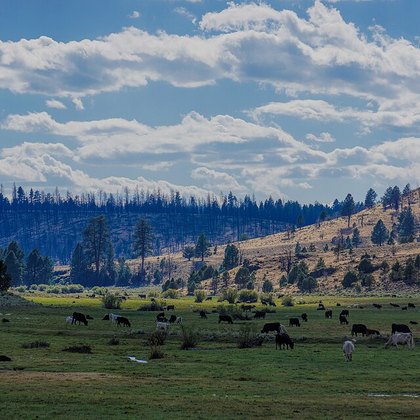
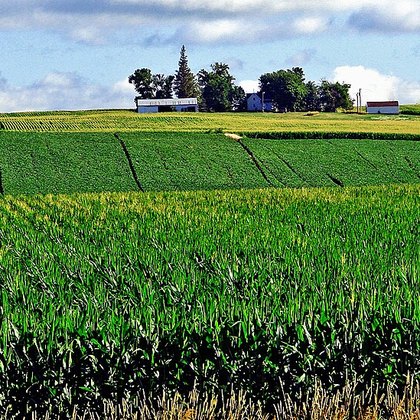
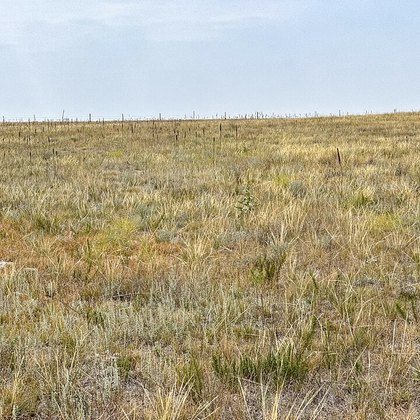
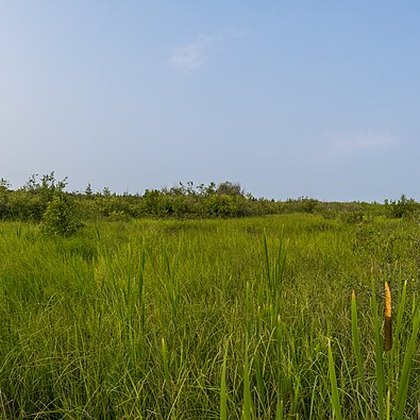
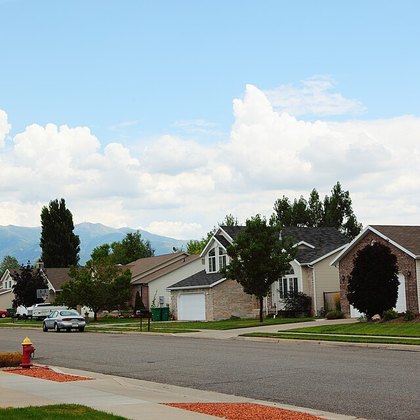
Open, low country with plenty of mice: pasture, field margins and stubble, prairie, rough verges and dykes, marsh edges, and in the southwest desert scrub and irrigated farmland as well. For the nest it needs a dark, dry cavity — a barn, a church tower, a hollow tree, a rock crevice, a steep earth bank or a nest box — and that cavity often decides more than the hunting ground around it. It avoids closed forest and high mountains. Where snow lies for long it cannot hold on: it carries almost no fat reserve and cannot reach prey through a crust of snow.
Where the bird is most often found, arranged by the USNVC — the vegetation classification of the United States and Canada — and CMECS for sea and coast.
Range and movements
From southern British Columbia and southern Ontario across the whole of the United States, Mexico, Central America and part of the Antilles, and on from there far into South America, which lies outside the area covered by this guide. The northern edge is not fixed: it advances where barns, nest boxes and mild winters give it a foothold, and falls back after a hard winter with deep snow. On Hawaii it does not belong. Between 1958 and 1963 eighty-six birds were released there to control rats in the farmland; the species settled on all the main islands, took mostly mice rather than rats, and now preys on native seabirds itself.
- Resident
- Breeding (summer)
- Winter
- Passage
- dark = core range, pale = thinly spread
Where and when to look
In the first hour after sunset drive at walking pace along open pasture and irrigation ditches and look low: a Barn Owl hunts just above the ground and often crosses the road right in front of the car. Those same verges are where it is killed, so keep it slow. On still evenings in late spring an occupied barn gives itself away by the scream of the male on his round; look at the ridge of the roof from a distance rather than going inside, because a disturbed pair will desert the clutch.
Conservation
The IUCN has not yet assessed the American Barn Owl separately since the split: it stands as NE, not evaluated, and the Red List still covers the barn owl in the broad sense. For that broad species Partners in Flight arrived at 3.6 million birds, with a slight increase between 1966 and 2021. What threatens it in North America is well enough known: rodenticide accumulating in mice and reaching the owl, collisions along motorways where the verge is its best hunting ground, and the loss of old barns and hollow trees. Nest boxes in farmland are taken up quickly and act as a counterweight.
Scientific name
Tyto furcata | (Temminck, 1827)
Temminck described the species in 1827 as Strix furcata, from a bird from Cuba; because it was later moved to Tyto, author and year stand in parentheses. The genus Tyto was introduced by Billberg in 1828, after Greek tutō, 'night owl', a word that imitates the call. furcatus is Latin for 'forked'. The European bird, Western Barn Owl, carries the name Tyto alba, which Scopoli gave in 1769 to a bird from Friuli; now that the two are treated as separate species, the American bird takes Temminck's name, with Cuba as its type locality.