All species › Passerines › New World sparrows › Abert's Towhee
Abert's Towhee | Melozone aberti
Zwartkintowie | Toquí de Abert
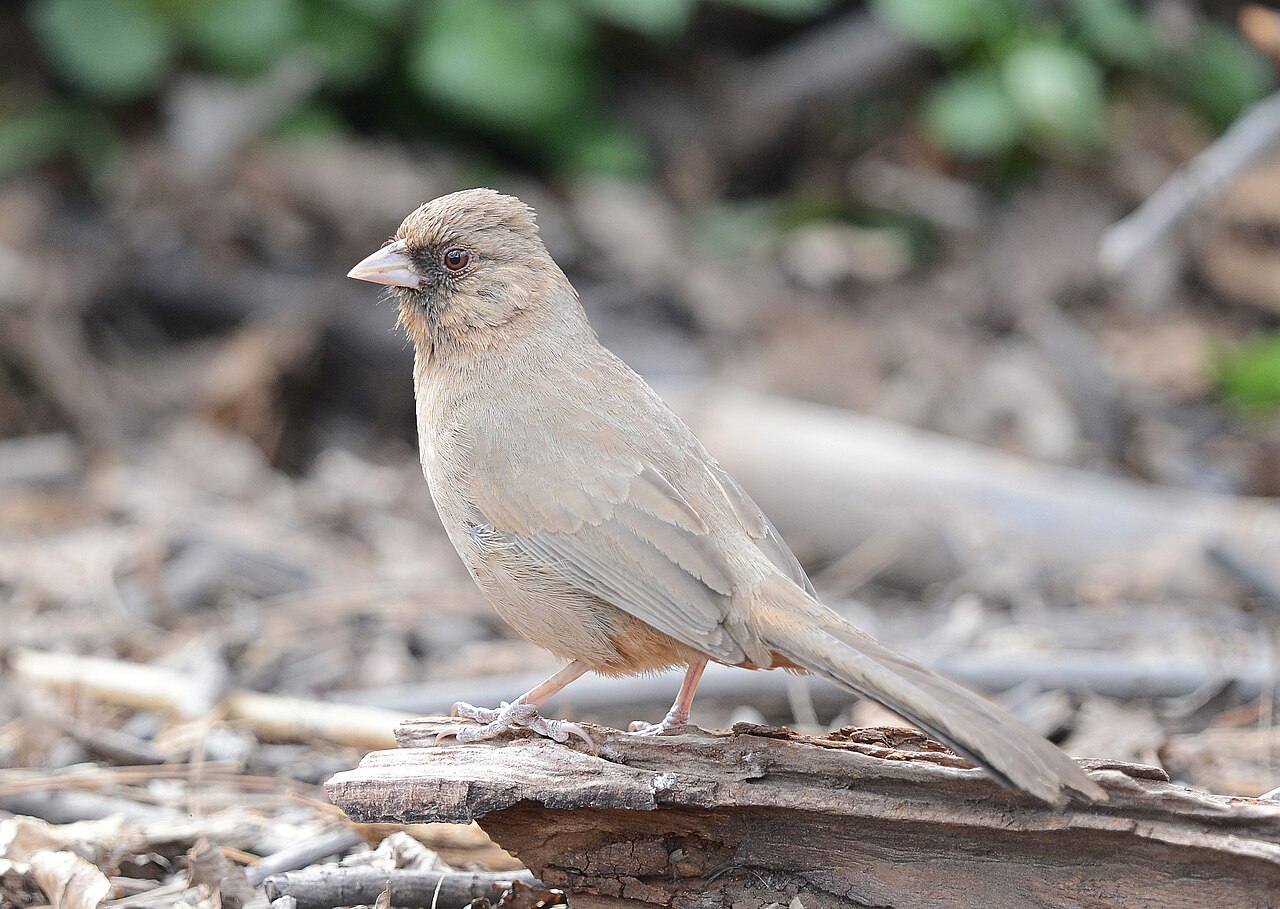
Abert's Towhee has the smallest range of all the towhees: it belongs to the river valleys of the Sonoran Desert, above all the Colorado and Gila drainages. More than ninety per cent of the world population is in Arizona. The black patch around bill and chin is the mark the bird is named for in Dutch.
Voice
The male's song is a simple series of clear, staccato peep notes on one pitch, usually introduced by a single lower note. More telling is the pair's squeal duet: a rapid jumble of scratchy, squealing notes delivered together, which places the birds at once in dense cover. Alongside it is a high, ringing seep used as contact and alarm note. On taking flight the bird sometimes produces an audible wing flutter.
Recording: Scott Crabtree — CC BY-NC-SA 4.0 · Finisterra, Pima County, Arizona, United States · xeno-canto
Identification
A large, long-tailed, uniformly grey-brown sparrow without streaking, with a rusty patch under the tail. The mark to look for is the black face: a blackish patch around the pale bill, across the lores and on the chin, set against the grey-brown head. At ten to twelve centimetres the tail is long, which makes the bird recall a thrasher rather than a sparrow. Male and female look alike. It forages on the ground with a double backward scratch.
Confusion species
Canyon Towhee is paler, lacks the black face and instead has a rufous crown, a necklace of throat streaks and a dark breast spot; it also sits on dry stony slopes rather than in riparian scrub. California Towhee overlaps only in the extreme southeast of California and has an orange-tinged throat border with fine streaks instead of a black face. Crissal Thrasher, which often shares the same scrub, has a long, strongly curved bill and lacks the black face.
Habitat
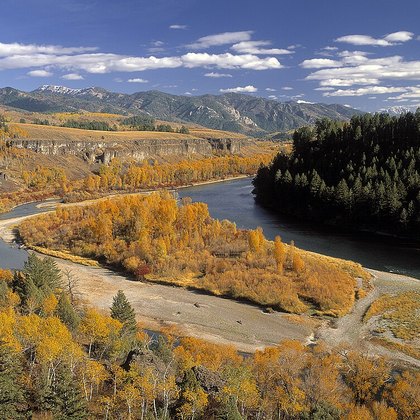
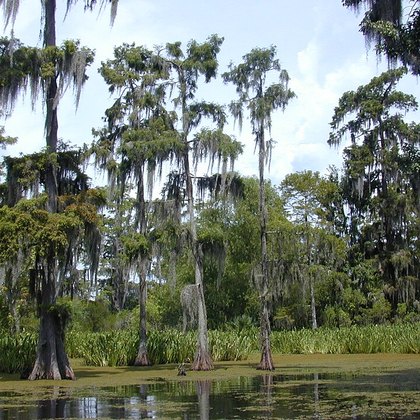
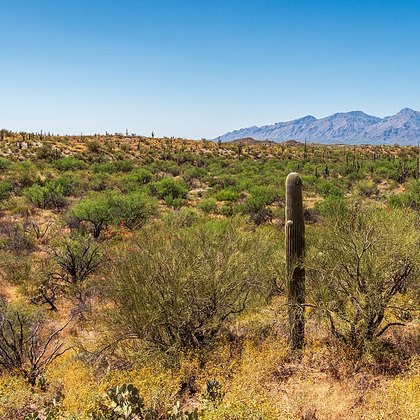
Originally cottonwood-willow forest and mesquite bosque along the lowland rivers of the Sonoran Desert, of which about five per cent remains. The species now also uses stands of introduced saltcedar and suburbs with dense planting, from Phoenix to Tucson. By day it stays under thick brush. Insects make up more than 95 per cent of the summer diet and still more than 70 per cent in winter: beetles, ants, grasshoppers, cicadas and caterpillars, supplemented with seeds of grasses and amaranths.
Where the bird is most often found, arranged by the USNVC — the vegetation classification of the United States and Canada — and CMECS for sea and coast.


Range and movements
Resident in central and southern Arizona, southeastern California, extreme southern Nevada, southern Utah along the Virgin River, southwestern New Mexico and northwestern Sonora as far as the Colorado delta in Baja California. There is no migration; young birds move at most along the watercourses. At the edges of the range, occurrence follows the rivers almost exactly.
- Resident
- Breeding (summer)
- Winter
- dark = core range, pale = thinly spread
Where and when to look
The duets are the quickest way in: walk a river trail or a desert park in Phoenix or Tucson early in the morning and wait for the scratchy jumble from the thicket. The bird rarely comes far into the open; watch for the long tail projecting from the shrub and for the pale bill with its black surround.
Conservation
The IUCN lists the species as Least Concern (LC). Partners in Flight puts the breeding population at 840,000 birds and records an estimated twenty per cent increase since 1970; the Continental Concern Score is 12 out of 20. Against that, up to 95 per cent of the original riverside forest in the Southwest has been converted to farmland or housing or degraded by water abstraction and grazing. Riparian restoration and the exclusion of livestock, carried out for the endangered Southwestern Willow Flycatcher, also yield habitat for this species.
Scientific name
Melozone aberti | (Baird, 1852)
Spencer Fullerton Baird described the species in 1852 as Pipilo aberti; because it later moved to Melozone, author and year stand in parentheses. The genus Melozone is from Greek mēlon 'cheek' and zōnē 'girdle, band'. The species name aberti honours the American army officer and ornithologist James William Abert (1820–1897), who collected the type during a military survey. The type locality stood at first simply as 'New Mexico' and was restricted in 1962 by Allan Phillips to the vicinity of Gila Bend, Maricopa County, Arizona.