All species › Nightjars › Nightjars and nighthawks › White-throated Nightjar
White-throated Nightjar | Eurostopodus mystacalis
Baardnachtzwaluw | Chotacabras bigotudo
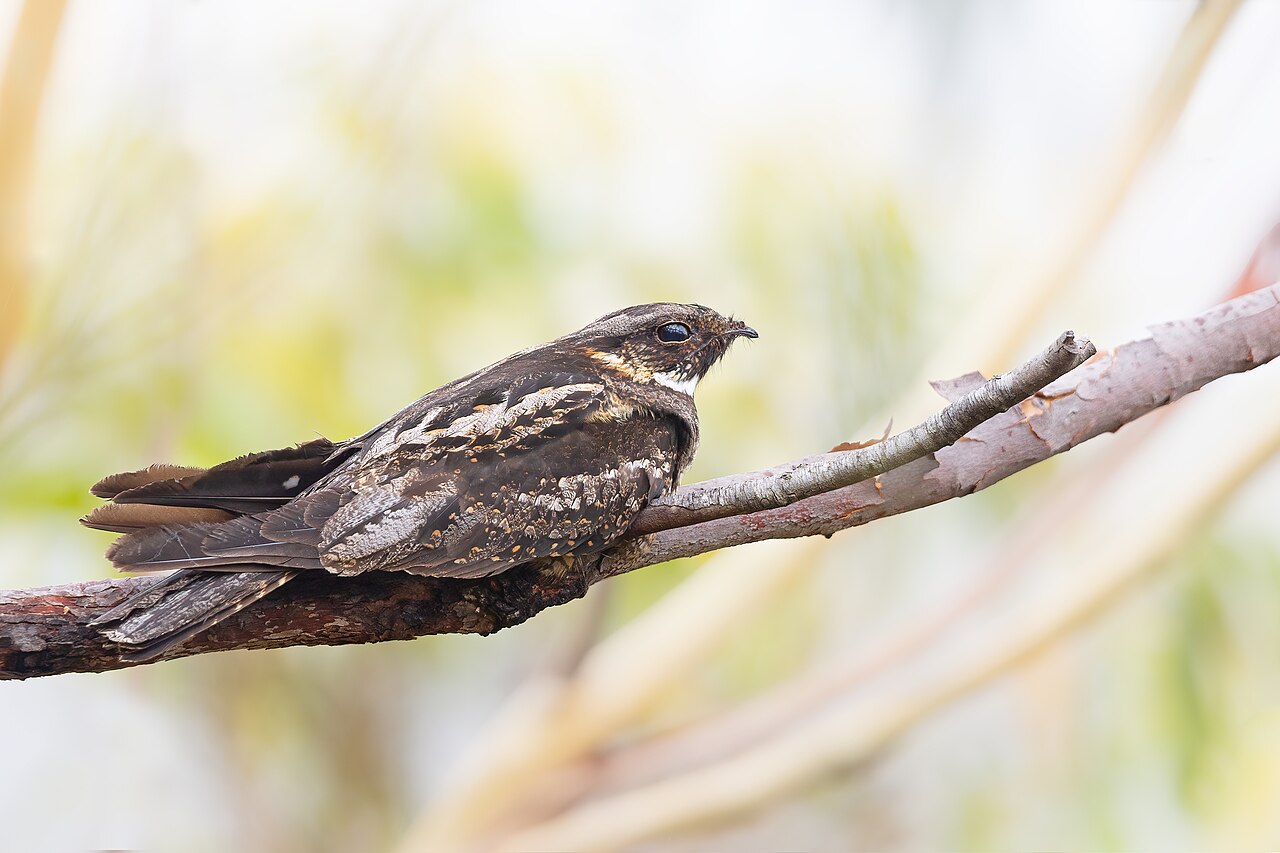
The White-throated Nightjar is the largest nightjar in Australia and the bird of the wooded ridges along the east coast. By day it lies motionless in the leaf litter of a dry slope, all but indistinguishable from the ground; at night it gives itself away with an accelerating, laughing song delivered from the highest point around. The two large white patches on either side of the throat give the species its name.
Voice
Voice is the deciding character here, because the bird is rarely seen. The song runs three to six seconds and opens with about ten hollow notes rising slowly in pitch, whook whook whook whook, which come faster and faster and then break into a rolling, shrieking cackle of laughter that has kept many a camper awake. It sings from the ground or from a low bare branch on a hilltop or ridge, mainly in the first hour after sunset and again in the last hour before light, and loudest on moonlit nights between October and December. At the nest come low husky contact notes between adult and chick, and when disturbed it barks, hisses and claps the bill.
Recording: Mike FitzGerald — CC BY-NC-SA 4.0 · Barkers Vale, Kyogle Council, New South Wales, Australia · xeno-canto
Identification
A substantial nightjar of thirty to thirty-seven centimetres, clearly larger than any other bird of similar build in the region. The plumage is dark and variably mottled grey-brown, with broad blackish-brown streaks across the upperparts and none of the pale, densely spotted patterning of the Spotted Nightjar. A large white patch stands on either side of the throat, reading like a half-collar on a perched bird. Small white spots mark the four outer primaries, clearest in the male; the tail is brown speckled with black and carries no white at all — and that absence is the most useful distinction in flight. The wings are long and pointed, the tail long, and the flight is high, buoyant and swerving, often just above the canopy.
Confusion species
Spotted Nightjar (Eurostopodus argus) is the close relative and the main pitfall: smaller at 25–28 cm, far paler and more rufous-spotted, and with large white windows in the primaries that flare the moment it flies. It also belongs to the dry interior rather than the humid eastern ranges, so range and wing patch together usually settle it. Large-tailed Nightjar (Caprimulgus macrurus) has broad white tail corners and a completely different knocking call, and overlaps only in north-east Queensland. Australian Owlet-Nightjar (Aegotheles cristatus) is much smaller, flies low and fluttering, and roosts in tree hollows. Tawny Frogmouth (Podargus strigoides) sits upright along a branch by day rather than flat on the ground, and has a heavy grey bill.
Habitat
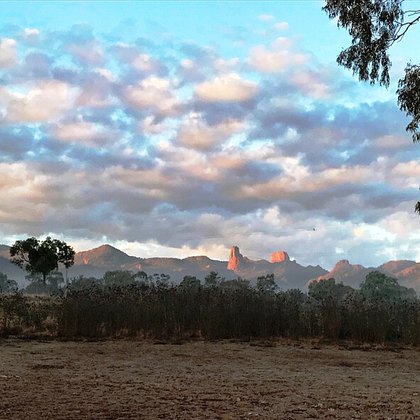
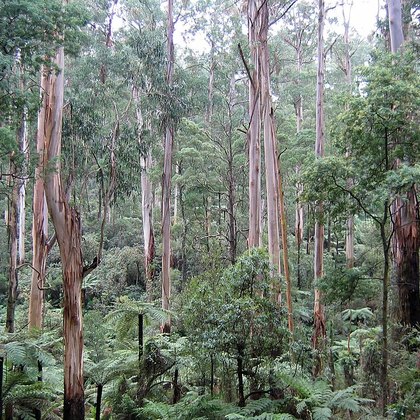
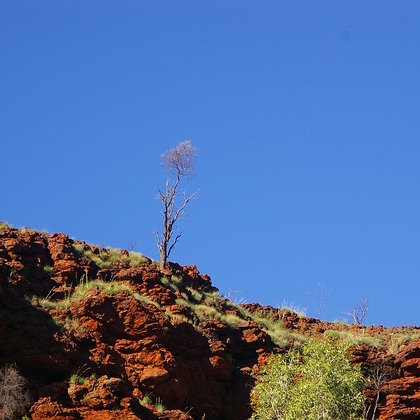
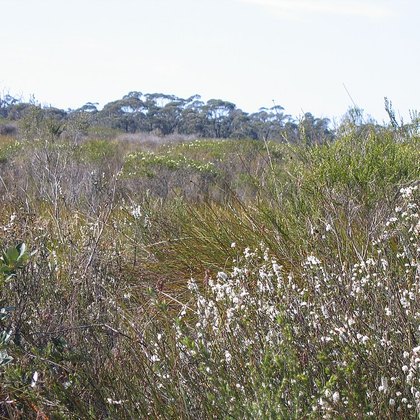
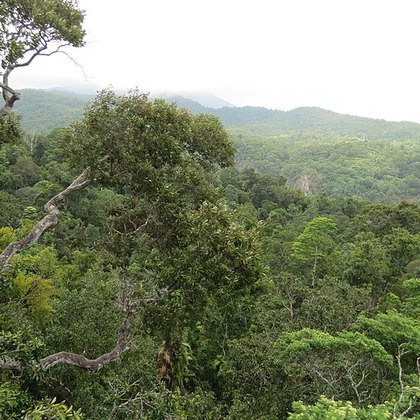
Dry, open eucalypt forest and woodland with a sparse understorey, especially on ridges, rocky crests and steep slopes; the highest points in a patch of forest are its song posts. Recently burnt ground is particularly favoured, since it offers both a roost and a nest site. In New South Wales it also uses rainforest and mangrove edges, and further north wet eucalypt forest and eastern heath. Closed forest without openings, and bare desert, it passes over.
Where the bird is most often found, arranged by main group and formation.
Range and movements
Eastern Australia, almost entirely on and east of the Great Dividing Range, from Cape York and northern Queensland south into eastern Victoria, with the highest densities in Queensland and New South Wales. Southern birds are summer visitors: they breed from September to February and leave Australia between February and April to winter in New Guinea, and remarkably they make that crossing by day, keeping the nights free for hunting. In central and northern Queensland some birds stay all year. The species does not occur in New Zealand.
- Resident
- Breeding (summer)
- dark = core range, pale = thinly spread
Where and when to look
Find a forest ridge or hilltop — the highest point on a walking track is almost always the song post — and stand there listening in the last minutes of dusk; the rising series and the laugh that follows are unmistakable among Australian birds. Pick a clear evening between October and December, since it often stays silent on moonless or wet nights. Sweep a torch low across the ground: the eyes throw back a deep red shine, and that finds the sitting bird before it flushes.
Conservation
Least Concern (LC): the range is large and there is no sign of rapid decline. Even so the bird is nowhere numerous, and its nocturnal life makes it poorly monitored, so a fall would go unnoticed for a long time. The pressures are those of any ground-nester with a single egg: feral cats and foxes, altered fire regimes that remove the open recently burnt patches or bring them round too often, and collisions on forest roads where the bird settles on warm bitumen.
Scientific name
Eurostopodus mystacalis | (Temminck, 1826)
Temminck described the bird in 1826 as Caprimulgus mystacalis; because it was later moved to another genus, author and year stand in parentheses. The genus Eurostopodus was introduced by Gould in 1838, from Greek eurostos, 'sturdy', and pous, 'foot'. mystacalis goes back to Greek mystax, 'moustache' or 'upper lip', for the white throat patches sitting like a beard below the head — exactly what the Dutch name refers to. The type locality is New Holland, later restricted to New South Wales. Older literature also lists the species as Eurostopodus albogularis.