All species › Waders, gulls and terns › Skimmers, noddies, terns and gulls › White-fronted Tern
White-fronted Tern | Sterna striata
Tara-stern | Charrán maorí
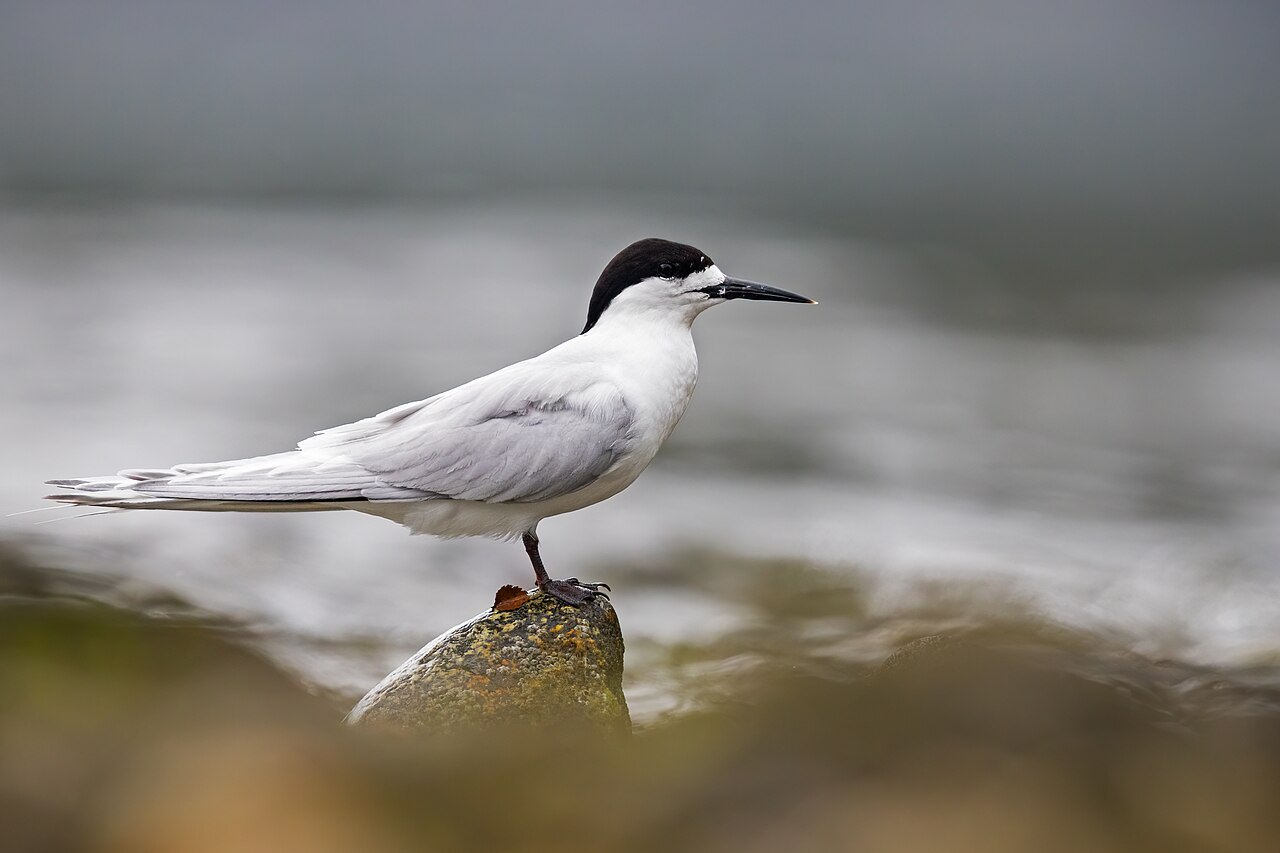
The White-fronted Tern is New Zealand's everyday tern: if you see a tern hovering over the surf there, this is it until proved otherwise. It is bigger and whiter than most of the terns it gets confused with, with a long all-black bill and black legs, and takes its name from the narrow white band that stays between the black cap and the base of the bill in breeding plumage. Tara is the Maori word for tern.
Voice
The everyday call is a high, sharp, short seet, passed between birds over the sea and cutting through the noise of the surf. In excitement — over a shoal of bait, at a Kelp Gull coming too close — it turns into a rasping, drawn-out kee-yah kee-yah. A colony on a shellbank is an unbroken shrill chorus. Over a work-up, where tuna or kahawai drive bait to the surface, hundreds call at once, and that sound shows fishermen the spot.
Recording: Ken George — CC BY-NC-SA 4.0 · Kaiaua, Waikato, New Zealand · xeno-canto
Identification
A large, markedly pale tern of just over forty centimetres: the upperparts are so light a grey that at distance the bird reads as white, the underparts are clean white, and rump and tail are white too. The bill is long — over five centimetres, the longest of any tern in this guide apart from the crested terns and Caspian Tern — slender and entirely black; the legs are black and short. In breeding plumage a narrow white forehead band stands between the black cap and the bill, the character the English name points at; outside the season the black retreats to the hindcrown. The tail is deeply forked with long streamers. Young birds are mottled and scaled grey-brown on mantle and shoulders, with a dark ear patch.
Confusion species
Common Tern (Sterna hirundo) is a size smaller, greyer below, shorter-billed, and in winter plumage carries a dark carpal bar that the White-fronted Tern lacks. Arctic Tern (S. paradisaea) is smaller and very short-legged, with a translucent hand and a razor-thin black trailing edge. Roseate Tern (S. dougallii) is likewise ice-pale with a black bill, but much smaller, with a red bill base when breeding and a stiffer, shallower beat; it occurs only in tropical Australia and so barely overlaps. Black-naped Tern (S. sumatrana) has a white crown with a black nape band. On the braided rivers of Canterbury it shares ground with Black-fronted Tern (Chlidonias albostriatus), which is smaller, grey below and has an orange bill and orange legs — there, leg colour is the quickest split.
Habitat
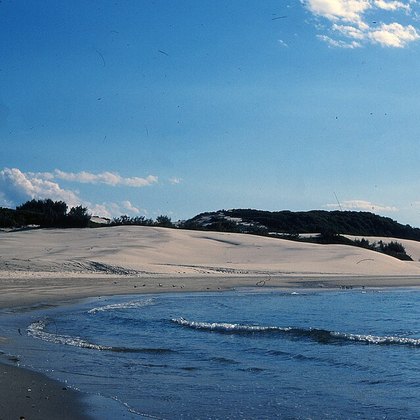
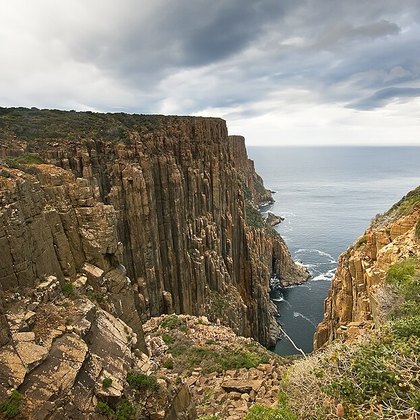
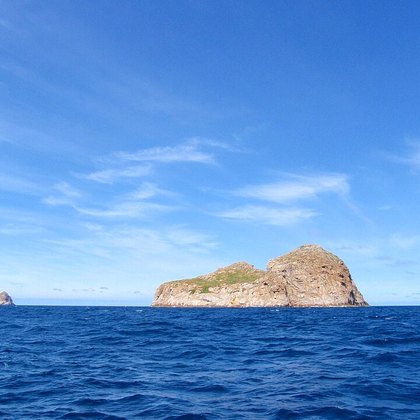
Rocky coasts, sandy beaches, shellbanks, sandspits and estuaries make up the core, but it also nests on the shingle of the braided rivers of Canterbury and Marlborough, sometimes tens of kilometres inland. It hunts in the surf, over shallow bays and over shoals of baitfish on the shelf, often alongside shearwaters and fur seals. Outside the breeding season it roosts in large flocks on sandbanks and harbour walls.
Where the bird is most often found, arranged by main group and formation.


Range and movements
Breeds almost entirely in New Zealand — both main islands, the Chatham Islands and the Auckland Islands — with only a handful of pairs beyond that on islets in Bass Strait and along the Tasmanian coast. In practice that makes it a New Zealand endemic. In the southern autumn, mainly young birds cross the Tasman Sea to Victoria and New South Wales and winter along those coasts.
- Resident
- Breeding (summer)
- dark = core range, pale = thinly spread
Where and when to look
In New Zealand start from this species and make any other tern prove itself: begin with the length of the black bill and the white, unshaded underparts. In Australia work the other way — in winter, scan coastal tern flocks in Victoria and New South Wales for a bird larger and whiter than a Common Tern carrying a long black bill. At sea, follow a screaming party of terns: over a work-up they gather in hundreds.
Conservation
Near Threatened (NT), and that is a recent worsening. The colonies sit on beaches, shellbanks and riverbeds that are exactly reachable by the animals that do not belong here: stoats, rats, cats and hedgehogs. Add Kelp Gulls taking eggs and chicks, vehicles and dogs clearing whole colonies off a beach, and braided rivers choking with lupin and broom or losing their shingle to hydro schemes. Years poor in baitfish also feed straight through into breeding success.
Scientific name
Sterna striata | Gmelin, 1789
Johann Friedrich Gmelin described the species in 1789 as Sterna striata, after Latham's 'Striated Tern'; it remains in the same genus, so author and year carry no parentheses. striata means 'striped' and refers to the streaked, scaled pattern of the juvenile, not to the adult. The material described came from Queen Charlotte Sound (Totaranui) on the South Island, collected on Cook's voyages. The Dutch name borrows the Maori word tara, meaning tern; the English name points at the white forehead band.