All species › Waders, gulls and terns › Sandpipers and allies › Wandering Tattler
Wandering Tattler | Tringa incana
Amerikaanse grijze ruiter | Playero de Alaska
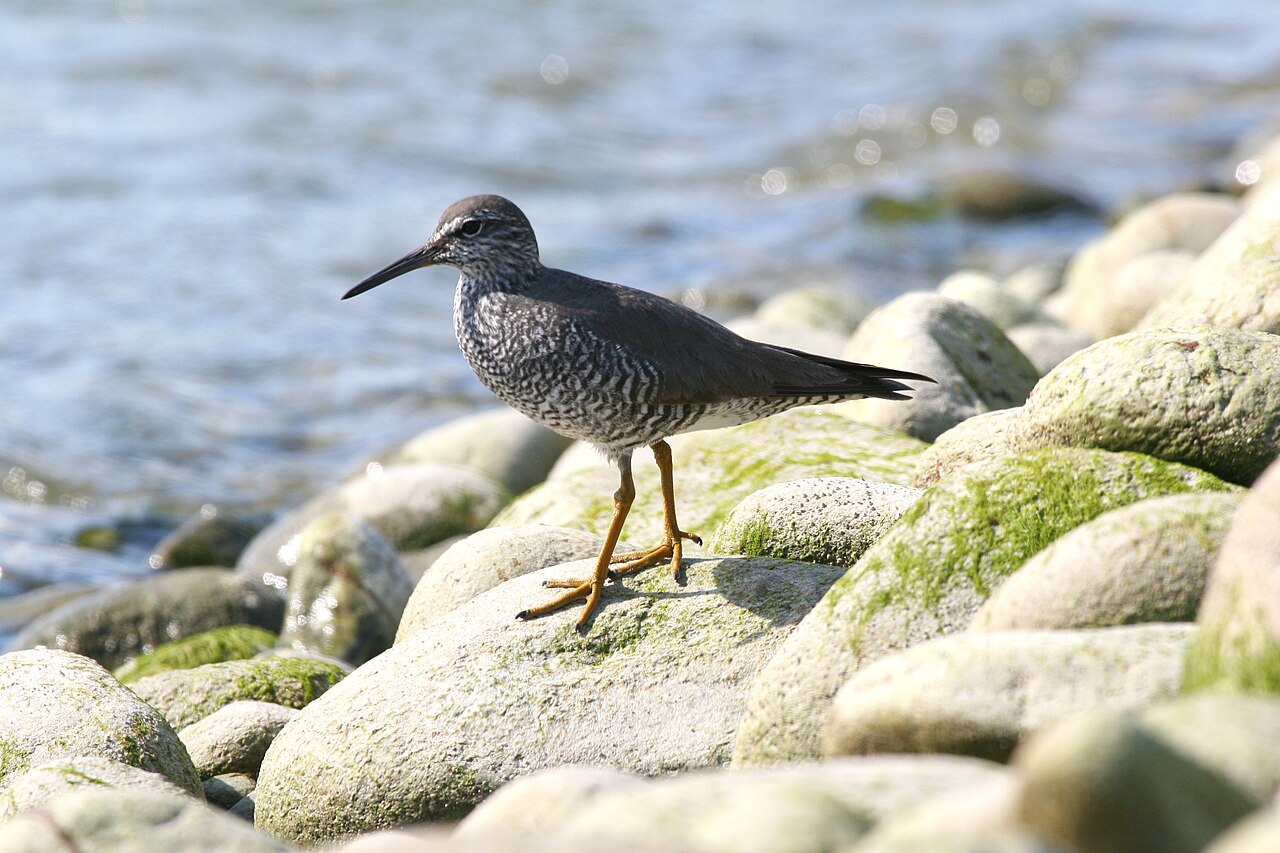
The Wandering Tattler is the rock specialist of the Pacific: a compact, dark grey wader of just over a quarter of a metre, with short yellow legs, a straight dark bill and plain unpatterned upperparts. Within this map window Norfolk Island is its stronghold — it is there every year on the surf rocks — while on the Australian and New Zealand mainland it remains a rarity.
Voice
The call is a rippling, whistled trill of six to ten fast notes tumbling over one another on one pitch, usually given against the background of breaking surf where the bird sits. It is a sustained, quavering sound, quite unlike the short two-part too-wheet of Grey-tailed Tattler, and in the field that difference is the fastest and most reliable way to separate the two. When disturbed the trill quickens and sharpens.
Recording: Logan McLeod — CC BY-NC-SA 4.0 · Stikine Region (near Bear Camp), Stikine Region, British Columbia, Canada · xeno-canto
Identification
A compact shank of about twenty-seven centimetres and a hundred and twenty grams, plain dark grey on upperparts, underwing, face and neck, with a white belly. The bill is straight and dark, with a nasal groove running more than half its length. The legs are short and dull yellow. Over the eye there is only a short white supercilium that does not run behind the eye, and that often meets its partner on the forehead. In breeding plumage the whole underside is heavily barred, right onto the belly and undertail coverts; in non-breeding plumage the breast and flanks are plain grey with a white lower breast and belly. At rest five primary tips project beyond the tertials.
Confusion species
Grey-tailed Tattler (Tringa brevipes) is the only real confusion species and is thousands of times more numerous in Australia; start from that. The differences, in order of usefulness: the call (a two-part rising whistle against a rippling trill), the supercilium (bold and running behind the eye on the grey-tailed, short and ending before the eye here), the nasal groove (shorter than half the bill against longer), the breeding plumage (barring on breast and flanks only against barring onto the belly) and the wing tip (four or fewer primaries beyond the tertials against five). Common Greenshank (Tringa nebularia) and Marsh Sandpiper (Tringa stagnatilis) have a white back wedge that is entirely absent here. Ruddy Turnstone (Arenaria interpres) shares the rocky shore but is pied black-and-white with orange legs.
Habitat
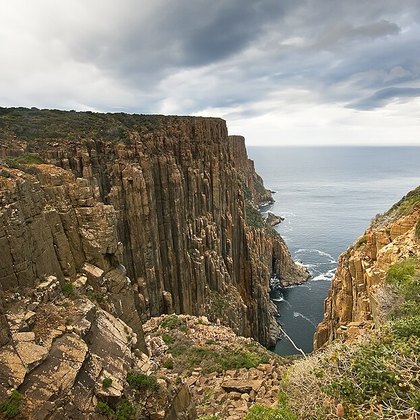
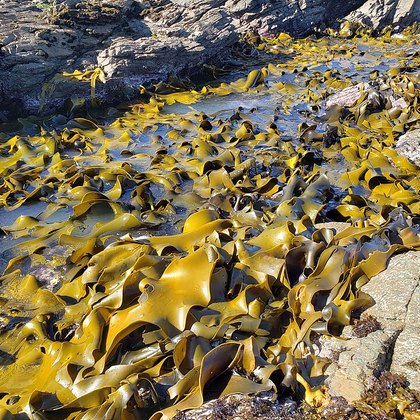
Almost exclusively hard substrate on open coast: surf rocks and sea cliffs, coral platforms and reef edges that dry at low water, boulder beaches, breakwaters and harbour moles. There it works alone or in twos across the weed-covered and barnacled platforms, teetering its rear end continuously and picking small crustaceans and worms from the crevices. Sandy beaches and soft mudflats it seldom uses, and inland water not at all.
Where the bird is most often found, arranged by main group and formation.


Range and movements
Within this map window, Norfolk Island is its regular place: it is present there every year on the rocky shores, and of the three parts of the guide area that island supplies by far the most records. On the Australian mainland it is scarce and confined to rocky headlands and coral cays of the east coast and the Coral Sea. It does not reach New Zealand every year, and mostly as single birds: there are records from Spirits Bay in the far north to Brooklands Lagoon in Canterbury, and further from the Kermadecs, the Chathams and the Auckland Islands. Birds come between September and April, followed by oversummering immatures.
- Resident
- Breeding (summer)
- dark = core range, pale = thinly spread
Where and when to look
Go to Norfolk Island or to a rocky headland on the east coast on a falling tide, and work the surf edge rather than the flats: this bird sits where the water hits the rock. Let the call decide — wait for it to fly and listen for a rippling trill or two rising notes — and photograph the head in profile if in doubt, because the length of the supercilium and the nasal groove can be measured off a sharp image.
Conservation
Least Concern (LC): the species breeds along mountain streams and glacial rivers in Alaska, northwestern Canada and the far northeast of Siberia, and winters scattered across the islands of the whole Pacific as far as South America. That spread is its best protection: because it does not depend on large tidal flats, the reclamation around the Yellow Sea barely touches it, unlike most of the waders in this guide. It is, though, sensitive to disturbance of rocky shores and to oil pollution, and its small world population — a few tens of thousands of birds — leaves little margin.
Scientific name
Tringa incana | (Gmelin, 1789)
Gmelin described the species in 1789 as Scolopax incana, from a bird taken at Eimeo, the modern Moorea in the Society Islands; because of the later move to Tringa, author and year stand in parentheses. The epithet incana means 'grey, hoary', after the plain grey plumage. The genus name Tringa goes back through Neo-Latin to Aristotle's trungas. The English name ties its wandering across the Pacific to the loud alarm-calling; the Dutch name points to the American breeding grounds, against those of its Siberian relative.