All species › Passerines › Thornbills, scrubwrens, gerygones and allies › Tasmanian Scrubwren
Tasmanian Scrubwren | Sericornis humilis
Tasmaanse bruine struiksluiper | Sedosito pardo
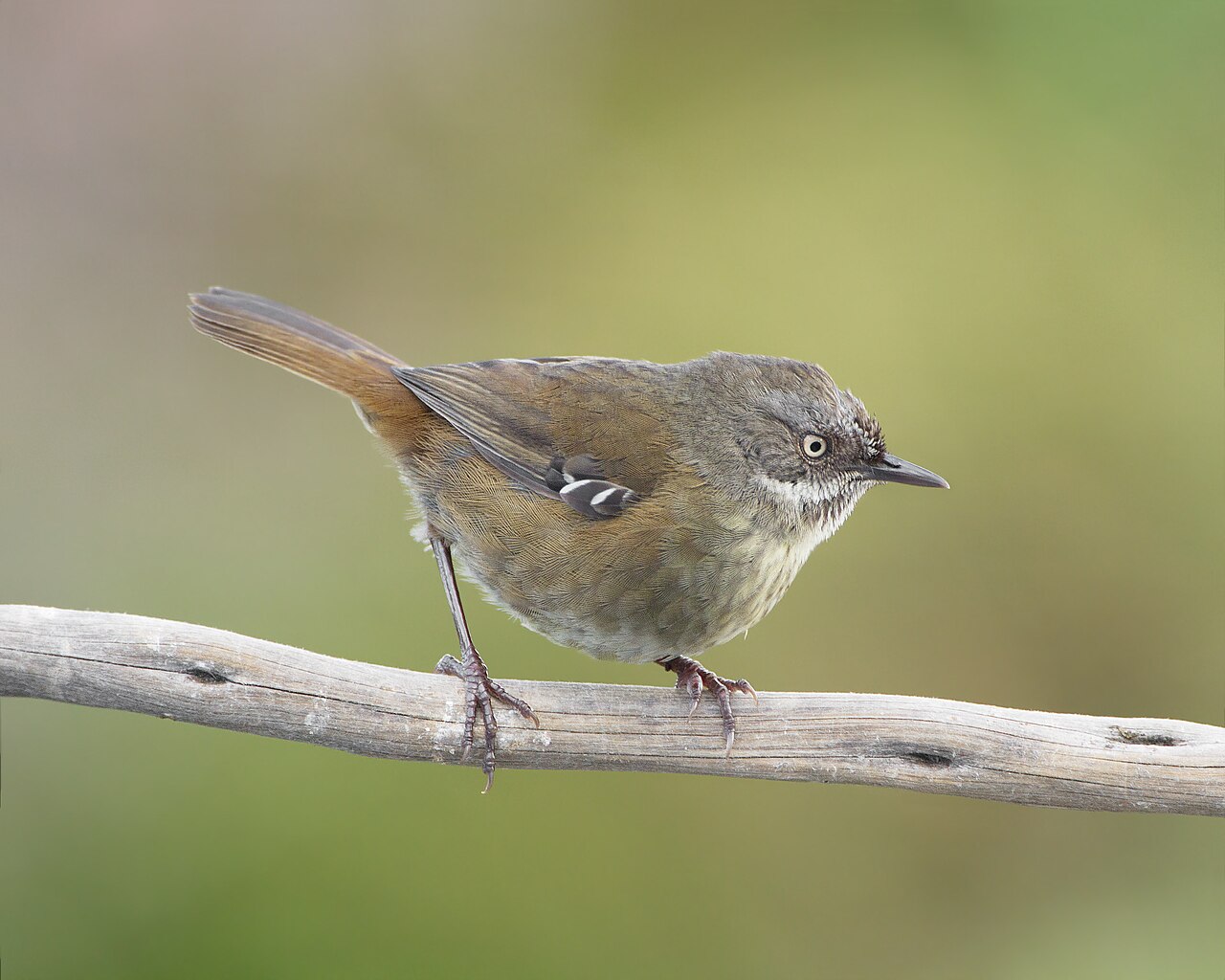
The Tasmanian Scrubwren is the scrubwren of Tasmania: darker, heavier and less white on the throat than its mainland relatives. It works the lowest metre of fern gullies, rainforest and coastal scrub, and is heard long before it is seen. In Tasmanian gardens with a dense shrub layer it is an everyday bird.
Voice
The song is a sustained, slightly grating squeak often likened to an unoiled wheel: a run of high, faintly rasping notes that goes on for several seconds and starts over again. Alongside it comes a soft peep that keeps a pair in contact inside cover, and, in alarm, a rattling scolding chatter startlingly loud for so small a bird. Calls are given all year; the full song is heard mainly from August to December, when territories are being set out.
Recording: Erin Harris — CC BY-NC 4.0 · Pegarah, King Island Council, Tasmania, Australia · xeno-canto
Identification
Twelve to fifteen centimetres, dark olive-brown above with a rusty wash on back, rump and uppertail. The underparts are dirty cream with grey, diffuse streaking on throat and breast. The cream eye-ring and pale iris stand out, with a dark grey lore between them; the shoulder carries a black patch flecked with white. The male has darker, almost black lores and a darker crown than the female, which shows grey-brown lores and a finer-streaked throat. Young birds are duller and lack the crisp face pattern.
Confusion species
White-browed Scrubwren (Sericornis frontalis) of the eastern mainland is the nearest relative and was formerly lumped with this species; it is smaller and paler, with a sharply drawn white eyebrow and a cleaner white throat, and does not occur in Tasmania — the separation is wholly geographical. The same holds for Spotted Scrubwren (Sericornis maculatus) of south-western Australia. Within Tasmania the only real pitfall is Scrubtit (Acanthornis magna), which is smaller, much shorter-tailed, lacks the black-and-white shoulder patch and works higher in the shrub layer. Tasmanian Thornbill (Acanthiza ewingii) is smaller, forages in foliage and has a dark eye.
Habitat
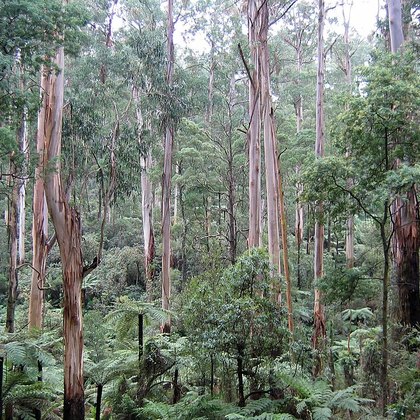
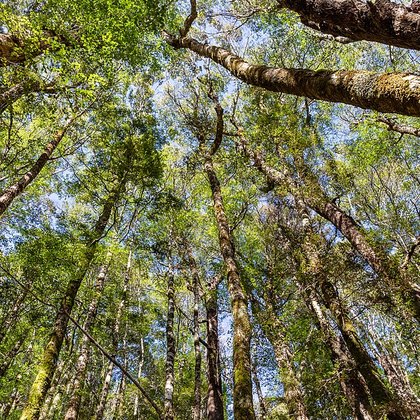
Dense understorey is the one hard requirement. It occupies cool temperate rainforest with tree ferns, wet eucalypt forest with a gully and a creek, drier forest as long as the shrub layer stays closed, coastal scrub and even swamp thicket. It moves on or just above the ground, among fallen trunks, fern stools and litter, and seldom rises above two metres. Gardens with dense native shrubbery are occupied as readily as the forest itself, which makes it a garden bird in Hobart and Launceston.
Where the bird is most often found, arranged by main group and formation.
Range and movements
Endemic to the Tasmanian region: all of Tasmania, King Island and a string of smaller islands in Bass Strait and off the Tasmanian coast. The nominate form holds Tasmania itself, the subspecies tregellasi is confined to King Island. It is sedentary in the strictest sense: territories are small, held year-round, and there is no seasonal movement. The species does not occur on the Australian mainland.
- Resident
- dark = core range, pale = thinly spread
Where and when to look
Walk a track through a wet gully or rainforest and stop where the litter rustles. A short soft chip or the grating squeaky-wheel song gives it away; stand still and a dark little bird usually appears within a minute, scuttling over a fallen trunk. Picnic grounds and car-park edges in national parks such as Mount Field are often easiest, because the birds there are used to people.
Conservation
Least Concern (LC). The species is common and widespread within its restricted island range, and Tasmanian forest still offers plenty of suitable understorey. Forestry that removes the shrub layer and too-frequent fire make ground unusable for a time, but the bird returns as soon as the thicket closes. Feral cats are a local risk to a species that spends most of its life on the ground. On King Island, where much native forest has been cleared, the subspecies tregellasi is more exposed than birds on the main island.
Scientific name
Sericornis humilis | Gould, 1838
Gould described the species in 1838 as Sericornis humilis, from material out of southern Tasmania; author and year stand without parentheses because the genus has never changed. Sericornis is formed from Greek serikos (silken) and ornis (bird), after the soft, silky plumage of the group. humilis is Latin for 'low' or 'humble' and refers to the habit of staying near the ground. The Dutch name names island and colour at once, setting the species apart from the two white-browed scrubwrens.