All species › Waders, gulls and terns › Sandpipers and allies › Swinhoe's Snipe
Swinhoe's Snipe | Gallinago megala
Siberische snip | Agachadiza del Baikal
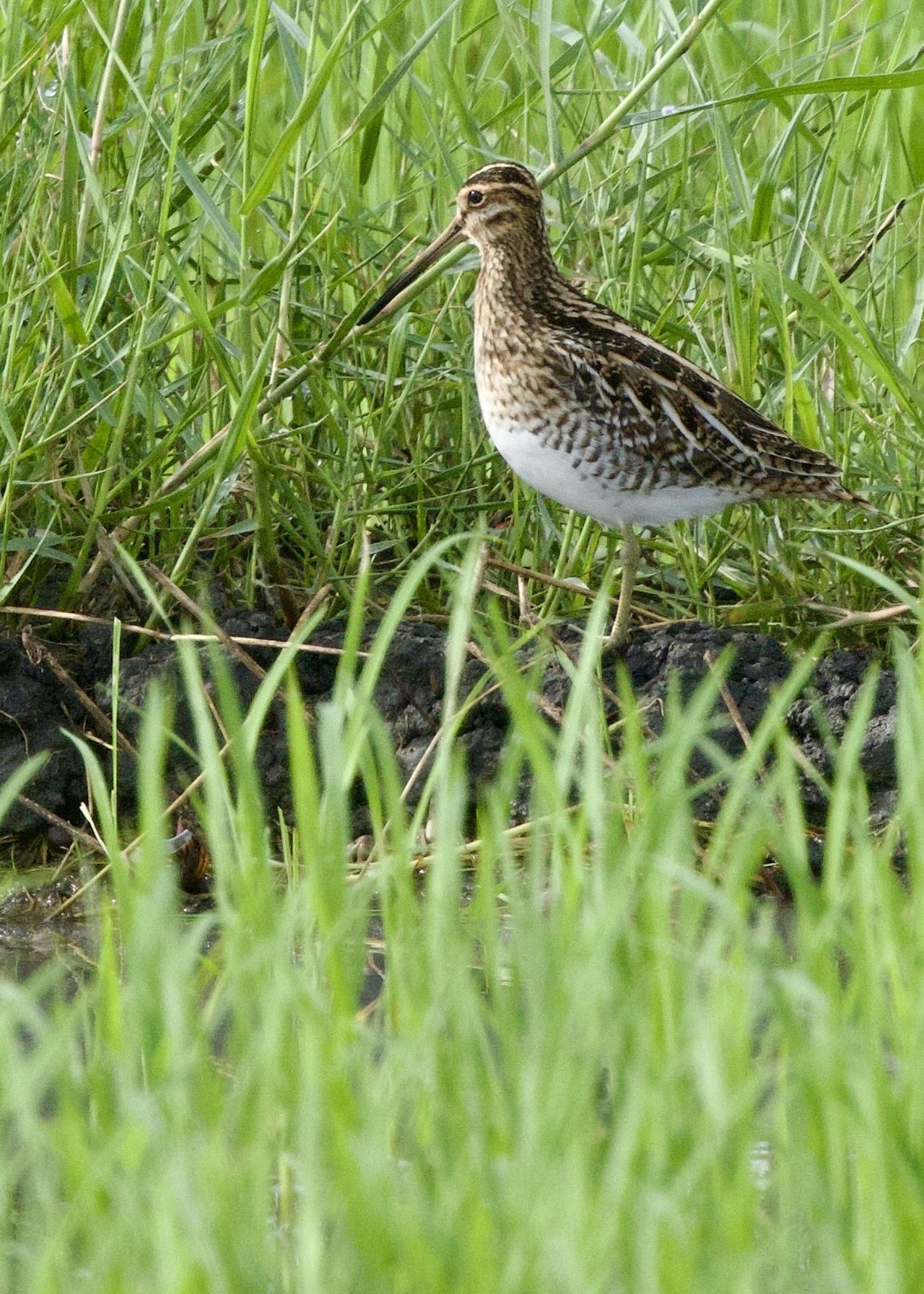
Swinhoe's Snipe is the snipe of the Australian north: a squat, cryptically brown bird that comes from Siberia and Mongolia to the billabongs (cut-off river channel that flows only at high water) of the Kimberley, the Top End and Cape York. It is a little smaller than Latham's Snipe and flushes lower, straighter and more quietly. In the field many a record stops at snipe species.
Voice
On flushing it gives a hoarse, muffled call repeated only once or twice and then stopping; it is noticeably lower and duller than Pin-tailed Snipe and less shrill than Latham's Snipe. A badly startled bird calls a little more often, but on the non-breeding grounds the species is largely silent. Song and display flight belong to the breeding grounds in Siberia and Mongolia and are not to be heard here.
Recording: Stanislas Wroza — CC BY-NC-SA 4.0 · Kabansky District, Buryatiya Republits, Russian Federation · xeno-canto
Identification
A medium-sized, squat snipe of twenty-seven to twenty-nine centimetres, a wingspan of thirty-eight to forty-four centimetres and about a hundred and twenty grams. The bill is straight and solid and roughly twice the length of the head, brown with a dark tip; the legs are short and olive to grey-green. The supercilium is broader than the depth of the eye at the base of the bill, which is not the case in the common snipes of Europe, and in flight a pale panel shows across the median upperwing coverts. The white trailing edge to the secondaries is all but absent, and the toes project only slightly beyond the tail. In the hand the decisive mark is the number of tail feathers: twenty to twenty-two, the outer five to seven pairs narrowing gradually without ever becoming needles.
Confusion species
Latham's Snipe (Gallinago hardwickii) is the first to rule out: larger, longer-tailed, more pointed in the wingtip, flushing higher and further and in a more obvious zigzag, and with eighteen broad tail feathers. Range helps as well: south of a line from Camooweal to Iron Range almost every snipe is Latham's, while north of it both occur, and Pin-tailed Snipe cannot be ruled out. Pin-tailed Snipe (Gallinago stenura), which this guide does not treat because it is not accepted for Australia with certainty, has twenty-four to twenty-eight tail feathers with the outer ones narrowed to true pins, flushes higher and calls more shrilly. The same northern swamps hold Australian Painted-Snipe (Rostratula australis), but its drooping bill tip, white shoulder band and slow flight on rounded wings with dangling legs confuse only someone who has never seen one.
Habitat
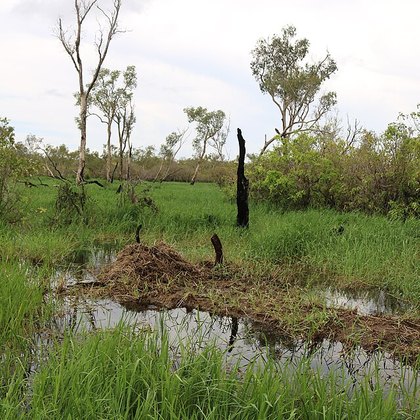
Shallow fresh and brackish wetland with mud and plant cover: billabongs, lagoons, the choked margins of creeks and small dams, wet grassland and inundated flats. It likes slightly drier and grassier edges than Latham's Snipe and feeds mainly at dusk and by night, probing into soft mud under a thin film of water. Cover within walking distance is the condition: it never moves far from the reed fringe or the sedge clump.
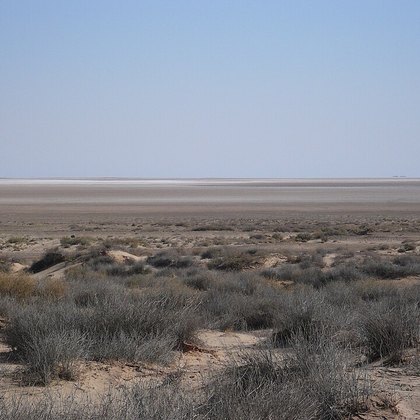
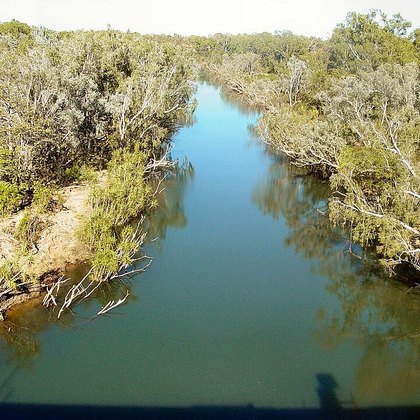
Where the bird is most often found, arranged by main group and formation.
Range and movements
Within the map window it is a non-breeding visitor to the far north of Australia only: from the Kimberley in Western Australia through the Top End of the Northern Territory to Cape York Peninsula, with regular records at McMinns Lagoon near Darwin among others. Further south and east it becomes very rare. It arrives from late August into early September, a little later than Latham's Snipe, and leaves again in March and April. It does not occur in New Zealand or on Norfolk Island.
- Breeding (summer)
- dark = core range, pale = thinly spread
Where and when to look
Look for it from November to February along a Top End billabong, on the grassy, just-not-wet margin where it prefers to stand rather than out on bare mud. Walk slowly and note where the bird comes down again, because a second flush usually gives the better view of tail and wing. Photograph every snipe you put up in the north: the identification is almost always made afterwards off the image, and a shot of the spread tail during preening is worth a great deal.
Conservation
Least Concern (LC): the breeding range across central and southern Siberia and Mongolia is vast and thinly settled, and there is no evidence of meaningful decline. In Australia the species is too scarce and too hard to count for a trend to be hung on it. Such risks as exist lie outside the map window: the loss of staging wetlands in East Asia and hunting of snipe in parts of Southeast Asia. Within Australia it occurs almost entirely in thinly populated northern wetland, where pressure is low.
Scientific name
Gallinago megala | Swinhoe, 1861
Robert Swinhoe described the bird in 1861 as Gallinago megala, from material out of China, and because the species has never changed genus author and year carry no parentheses. The epithet megala is Greek for 'great' and refers to its size relative to the common snipe of Europe. The genus name Gallinago is late medieval Latin for 'woodcock, snipe'. The English name honours Swinhoe himself, a British consular officer in China who was first to describe hundreds of East Asian birds; the Dutch name refers to the breeding range.