All species › Passerines › Thornbills, scrubwrens, gerygones and allies › Striated Thornbill
Striated Thornbill | Acanthiza lineata
Twijgdoornsnavel | Acantiza estriada
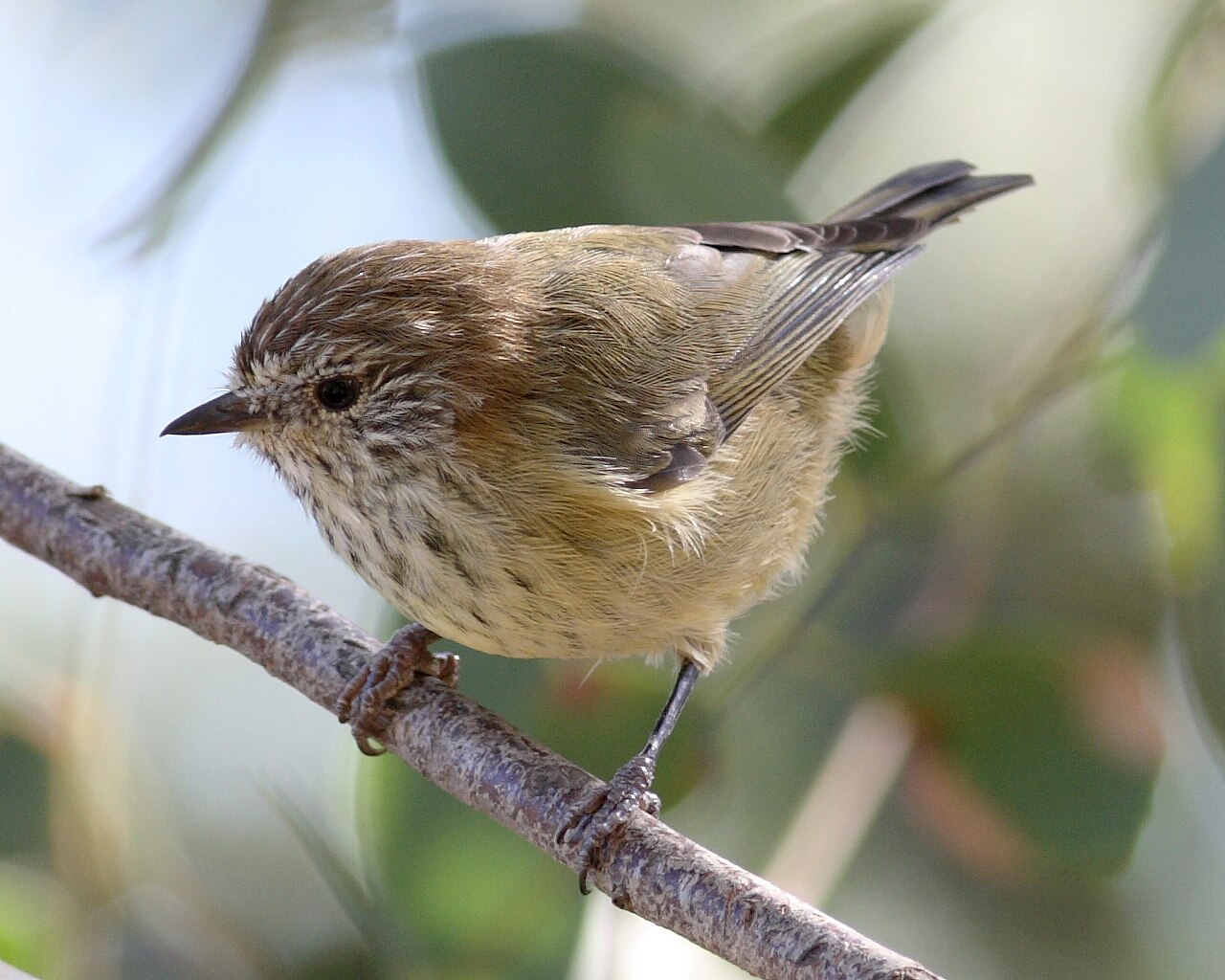
The Striated Thornbill is the thornbill of the canopy: nine to ten centimetres, seven grams, with an orange-brown crown finely streaked white and a breast full of black streaks. Where the Brown Thornbill rummages in the understorey, this one hangs upside down from the outer twigs high in the eucalypt crowns, in parties of seven to twenty.
Voice
High, insect-like notes: a thin tsizz-tsizz that comes steadily out of the canopy and keeps a party in touch. The pitch is noticeably higher and thinner than the Brown Thornbill's, and often that sound is the only hint that there are birds above you at all. The song is a soft, rapid warble delivered between those high notes.
Recording: Zebedee Muller — CC BY-NC-SA 4.0 · Denman Prospect, Australian Capital Territory, Australia · xeno-canto
Identification
Nine to ten centimetres, about seven grams. Yellow-green to olive above, with an orange- to rufous-brown crown clearly streaked cream; that is the mark everything turns on. Throat and breast are cream-white and heavily streaked black, the flanks washed olive-grey. The eye is dark. Sexes are alike; young birds are less streaked below.
Confusion species
Yellow Thornbill (Acanthiza nana) shares the range and often the very tree: it is yellow below, finely streaked on the ear-coverts but plain on the crown, and dark-eyed. Brown Thornbill (A. pusilla) has a scalloped rufous forehead with no white streaking, a dark red eye, and stays in the understorey. Buff-rumped Thornbill (A. reguloides) shows a buff rump, a pale eye and no streaking, and feeds much on the ground. Tasmanian Thornbill (A. ewingii) occurs only on Tasmania and lacks the streaked crown. Weebill (Smicrornis brevirostris) works the same canopy but has a short pale bill and is unstreaked.
Habitat
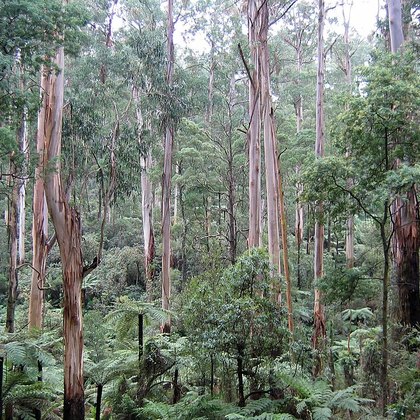
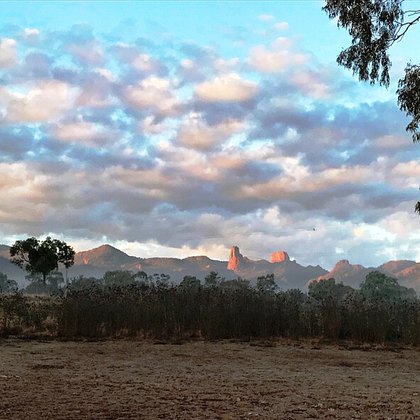
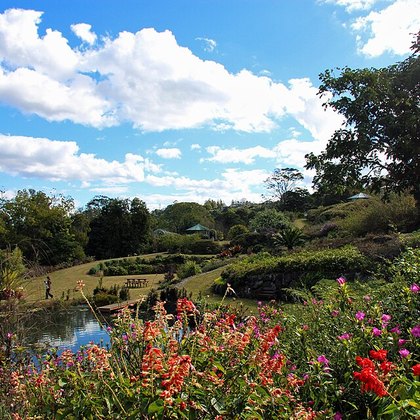
Open eucalypt forest and woodland with a well-developed shrub layer, from wet montane forest to drier coastal forest. It takes to parks and gardens once the planting is ten years old and the trees have grown tall, and in farmland it holds on in remnant patches and in the tree lines along roads and creeks.
Where the bird is most often found, arranged by main group and formation.
Range and movements
Southeastern mainland Australia only, from southern Queensland through New South Wales and Victoria into eastern South Australia, Kangaroo Island included. It is absent from Tasmania. Four subspecies are recognised. It does not migrate, but outside the breeding season parties of seven to twenty birds wander the forest, often in mixed company.
- Resident
- dark = core range, pale = thinly spread
Where and when to look
Look up, not into the bushes. Stand under a flowering or freshly flushing eucalypt, listen for the thin tsizz, and find the birds hanging upside down from the outermost leaves. Once you have one in the glass, check the crown: cream streaks on orange-brown, not plain. You will rarely see it on the ground.
Conservation
Least Concern (LC) and still common in southeastern forest; it is rated secure in every state where it occurs. It does depend on tall eucalypt forest with a shrub layer, and it drops out of landscapes left with nothing but scattered paddock trees. Old gardens with high native trees, by contrast, hold it well.
Scientific name
Acanthiza lineata | Gould, 1838
John Gould described the species in 1838 directly in the genus Acanthiza, so author and year stand without parentheses; the type locality is Sydney, New South Wales. Latin lineatus means 'lined' or 'streaked' and refers to the streaked crown and underparts. The genus Acanthiza was introduced by Vigors and Horsfield in 1827, from Greek akantha, 'thorn', and zao, 'to live': the bird of the thorn-brake. The Dutch name points to its habit of feeding on the outermost twigs.