All species › Passerines › Thornbills, scrubwrens, gerygones and allies › Slender-billed Thornbill
Slender-billed Thornbill | Acanthiza iredalei
Mulgadoornsnavel | Acantiza zafiro
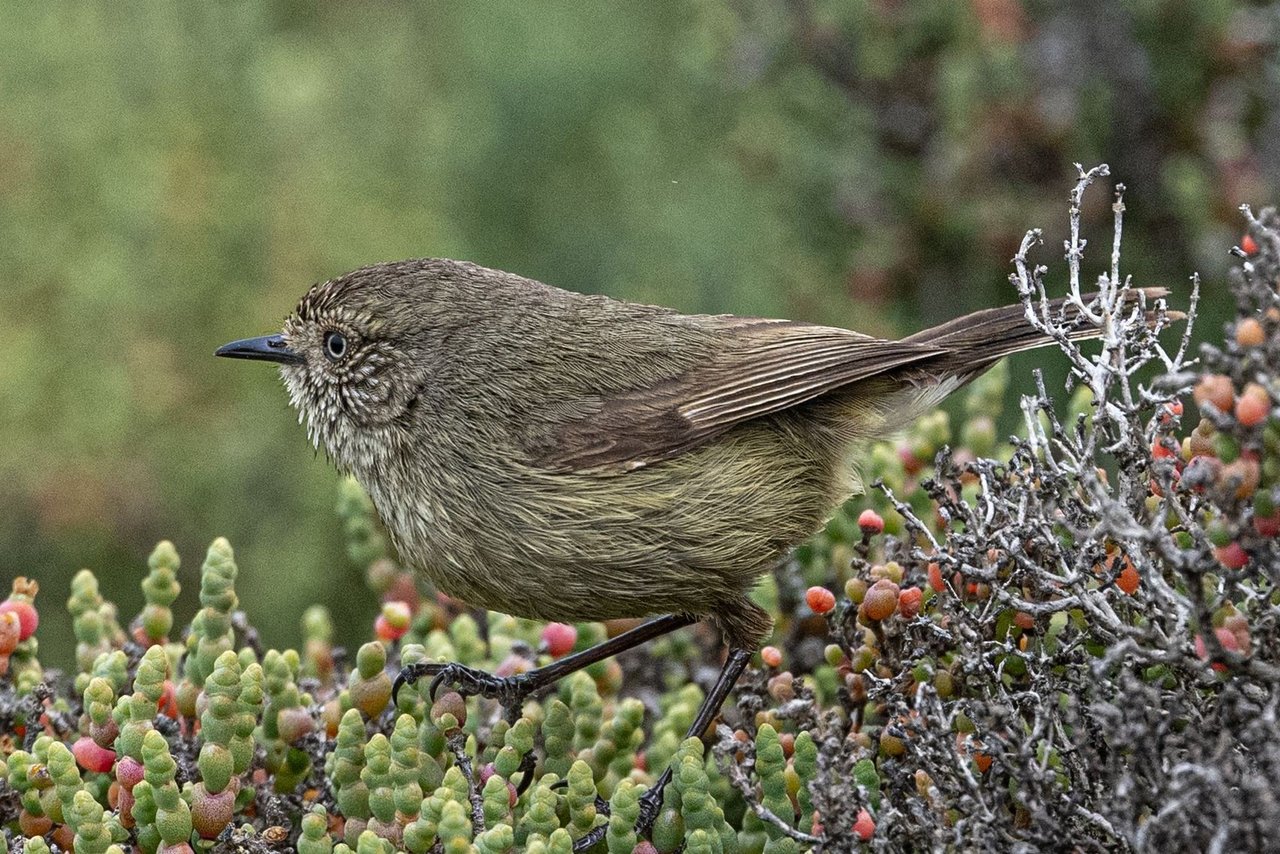
The Slender-billed Thornbill is the thornbill of the salt flat: a tiny bird with a markedly fine bill that lives in low, treeless samphire (low, succulent saltmarsh shrubland on tidal mud) and chenopod vegetation around salt lakes and in heath on sandplains. Its Dutch name points to the mulga (acacia scrub of the dry interior, dominated by Acacia aneura), but it is Slaty-backed Thornbill that belongs there; this species makes its living in vegetation in which almost no other songbird persists.
Voice
A thin, high, rapid chattering that a party keeps up among itself as it moves through the low bushes, with a faint, slight song between. It carries poorly and the wind takes it easily on an open plain; on a still morning the continuous high chirping over a samphire flat is often the first sign of the species.
Recording: Eddy Smith — CC BY-NC-SA 4.0 · Port Gawler, Adelaide Plains Council, South Australia, Australia · xeno-canto
Identification
Nine to ten centimetres, with an olive-grey to dark olive-brown back and an olive-yellow wash at the base of the tail — a wash, not a sharply defined rump. The underparts are plain cream, without streaking. The forehead carries a coarse cream or cream-buff scalloping. The iris is cream-yellow in adults and bluish-grey or brown in young birds. The bill is black and proportionally very thin and fine, which the English name records. Three subspecies are recognised: iredalei, hedleyi and rosinae.
Confusion species
Habitat does most of the work here: no other thornbill holds on in treeless samphire. The inland relatives must still be ruled out. Chestnut-rumped Thornbill (Acanthiza uropygialis) is also pale-eyed but has a rich, sharply defined chestnut rump and sits in mulga and mallee (low, multi-stemmed eucalypt scrub of dry southern Australia) with trees. Slaty-backed Thornbill (Acanthiza robustirostris) has a slate-grey back, a cinnamon rump, a reddish-brown iris and a heavier bill. Inland Thornbill (Acanthiza apicalis) has a red iris, a rufous rump and a streaked throat and breast. Yellow-rumped Thornbill (Acanthiza chrysorrhoa) is larger, with a bright yellow rump, a black-and-white spotted crown and a dark eye-stripe. Buff-rumped Thornbill (Acanthiza reguloides) has a similarly faint buff-yellow rump and a pale iris but is a bird of eastern dry woodland and does not overlap with this species in the field.
Habitat
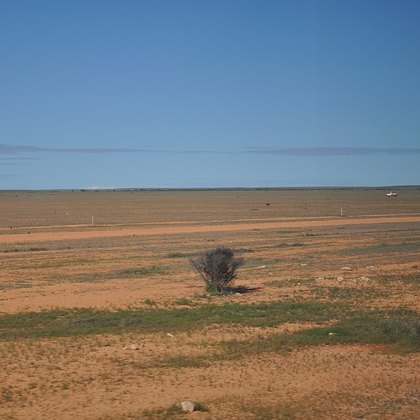
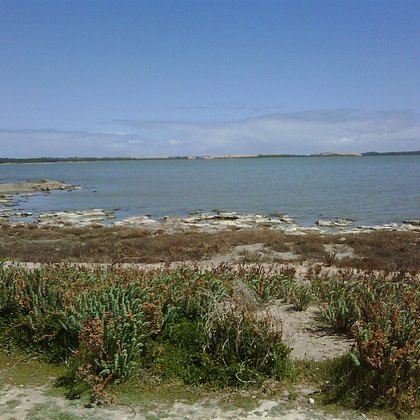
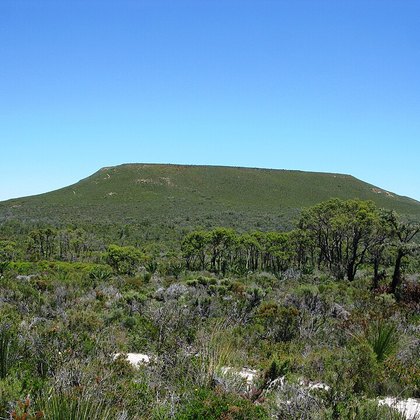
Low, often treeless shrub vegetation: chenopod scrub of saltbush (salt-tolerant dwarf shrubland of saline plains) and bluebush (blue-grey salt-tolerant shrubland of the semi-arid interior), samphire flats and saline ground around salt lakes and sea inlets, and low heath on sandplain with scattered woody plants. The birds forage in flocks of eight to ten, or in pairs, almost always in the bushes themselves and rarely on the ground; food is insects and spiders. The nest is a small structure of grass and plant debris low in a shrub, with up to three eggs, in a breeding season running from July to November.
Where the bird is most often found, arranged by main group and formation.
Range and movements
Scattered across southern Australia in a strongly fragmented pattern of separated populations. The nominate iredalei holds several isolated areas in Western Australia and the adjoining west of South Australia, reaching the Carnarvon region; hedleyi occupies south-eastern South Australia and western Victoria; rosinae is confined to the saltmarsh around northern Gulf St Vincent and the eastern side of Spencer Gulf. The species has been lost from northern Australia. It is sedentary and moves hardly at all.
- Resident
- dark = core range, pale = thinly spread
Where and when to look
Search for the habitat rather than the bird: a plain of samphire or bluebush without trees, preferably along the edge of a salt lake or a saline inlet. Walk slowly and listen for high chirping; the birds usually come to look from a short distance and then vanish back into the scrub. Then take the pale iris and the fine, thin bill, and above all what you do not see: no contrasting rump and no streaking on the breast.
Conservation
As a species Least Concern (LC), but that verdict masks the state of the individual subspecies. Both rosinae and the nominate iredalei rank as vulnerable in Australia and hedleyi as near threatened; the populations are small, isolated and tied to a vegetation type that is easily lost. Clearance of saltmarsh, industry and salt production around Gulf St Vincent, grazing of chenopod shrubland and changes in water regime are the main causes. The form from northern Australia is extinct — the only native bird lost there since European settlement.
Scientific name
Acanthiza iredalei | Mathews, 1911
Gregory Mathews described the species in 1911 and named it for Tom Iredale, the English-Australian naturalist with whom he collaborated for years; the French Acanthize d'Iredale still shows that dedication. The English name Slender-billed Thornbill takes the fine bill. The Dutch mulgadoornsnavel is less happy, since the species is precisely not a mulga bird; that is Slaty-backed Thornbill (Acanthiza robustirostris). The Spanish acantiza zafiro is not descriptive either and follows neither character.