All species › Gamebirds › Partridges, pheasants, grouse and allies › Red Junglefowl
Red Junglefowl | Gallus gallus
Bankivahoen | Gallina silvestre
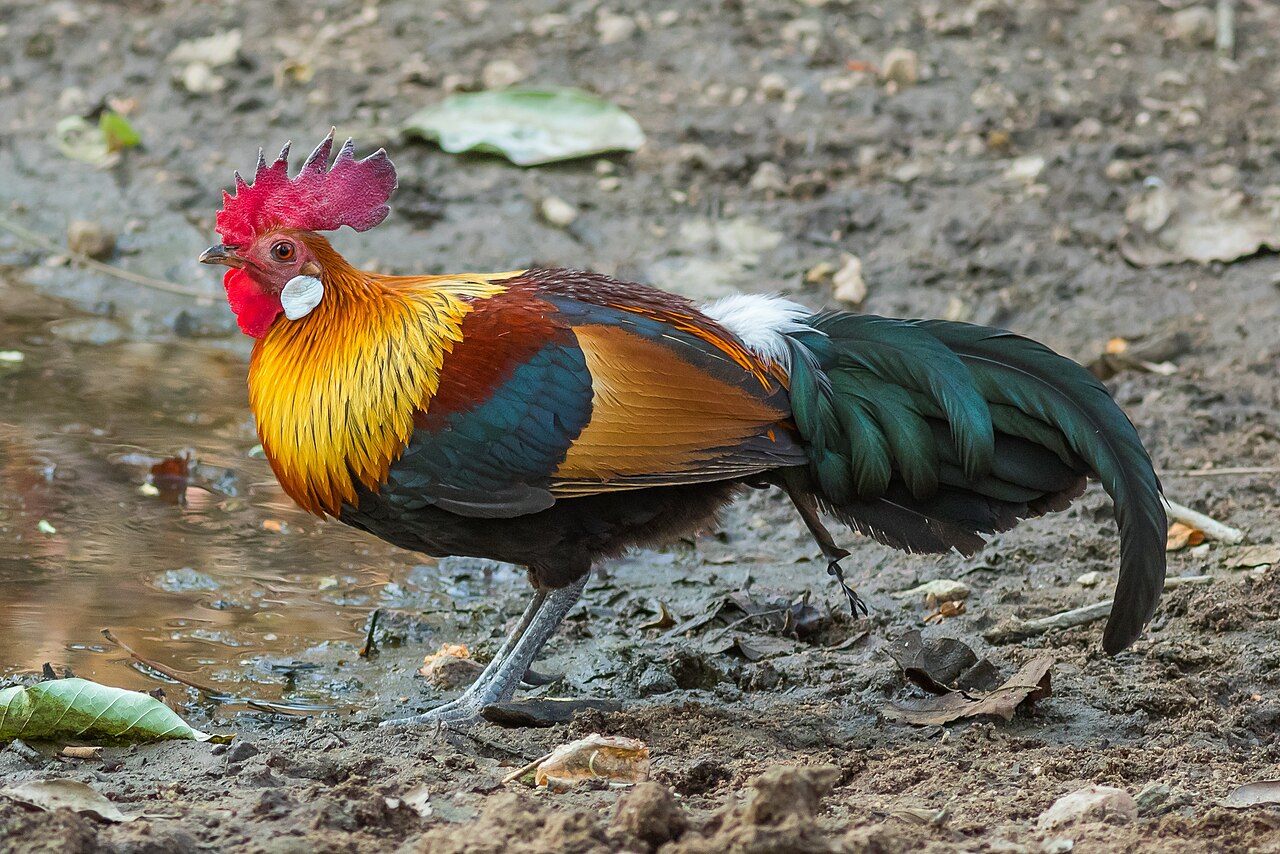
The Red Junglefowl is the wild ancestor of the domestic chicken, and in the guide area it is not a bird of the farmyard but of self-sustaining feral populations: on Norfolk Island they run everywhere, deep inside the forest as much as around the houses. A cock is a slim, long-legged bird with golden neck hackles, a dark green-glossed tail carrying long sickle feathers, and a red comb; the hen is small, plain brown and inconspicuous.
Voice
The cock crows year-round and most fiercely in the hours around sunrise: a high, shrill cock-a-doodle-doo that is shorter than most farmyard roosters' and is cut off abruptly at the end instead of dying away. There is also a low throaty tuk-tuk-tuk as a contact note, a fast shrill cackle of alarm when a cat or a hawk comes near, and the soft clucking of a hen with chicks. In forest the scratching in the leaf litter often gives it away before the voice does.
Recording: Aku Kalliomäki — CC BY-NC-SA 4.0 · Virrat, Finland · xeno-canto
Identification
The cock reaches about seventy centimetres including the tail and weighs a kilo and a half: neck and saddle carry long pointed hackles of golden orange to russet, breast, belly and tail are black with a blue-green metallic gloss, and the two central tail feathers grow into sickles nearly thirty centimetres long. Comb and wattles are red, with a white ear patch in wild-type birds; the legs are slate grey. The hen, at forty to forty-five centimetres, is much smaller, dull red-brown and finely marked, with a small comb and short tail. On Norfolk, centuries of mixing with domestic stock have left the plumage highly variable, from plain black, white or red-brown to showy metallic-green mantled and speckled birds. From June to October true junglefowl cocks wear an eclipse plumage in which the golden hackles are replaced for a time by black ones.
Confusion species
There is no wild bird in the guide area to confuse it with; the question is always whether a bird is a feral junglefowl or a strayed farmyard chicken. Look at build and weight — a wild-type cock stays around a kilo and a half where many breeds reach three to five — at the slate-grey rather than yellow or flesh-coloured legs, at the white ear patch, and above all at the eclipse plumage in the southern winter, which no domestic breed shows. The other feral gamebirds of the region are plainly different: Helmeted Guineafowl (Numida meleagris) is grey with white spots and carries a horny casque, Indian Peafowl (Pavo cristatus) speaks for itself, and California Quail (Callipepla californica), which shares the same ground on Norfolk, is a twenty-five-centimetre quail with a black plume.
Habitat
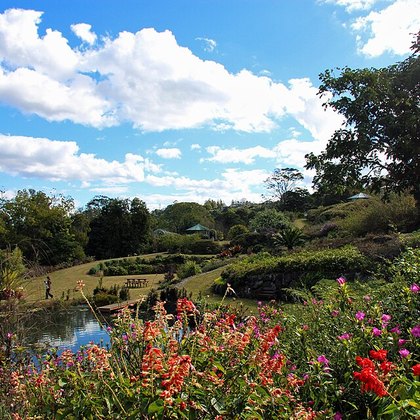
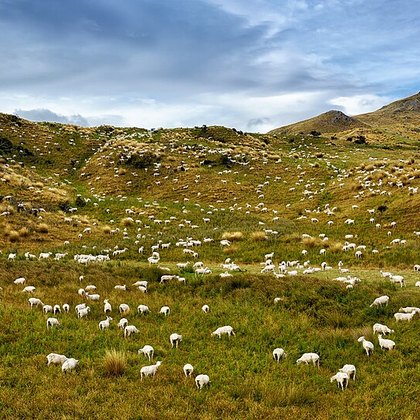
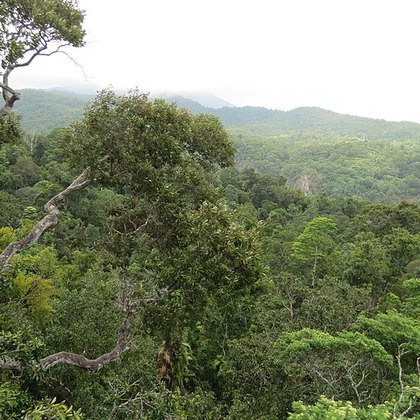
Feral birds stay near people and at the same time far beyond them: gardens, yards, road verges, parks and the settlement itself, but equally pasture, crop edges and the floor of subtropical rainforest, where they turn the litter over. They roost low in trees and dense shrubs and need cover to run into. Open, bare and dry country they avoid; damp, shade and food around buildings keep numbers high.
Where the bird is most often found, arranged by main group and formation.

Range and movements
Within the guide area Norfolk Island is the place: the feral fowl is common all over it, from Kingston and the settlement to the middle of the national park. In Australia's Indian Ocean territories — Christmas Island and the Cocos (Keeling) Islands — it is an uncommon resident; on Christmas Island the wild birds still show characteristics of genuine junglefowl stock, while domestic strains run loose on both island groups. It has not established as a wild bird on the Australian mainland or in New Zealand. Its original Asian range lies well off this map and is left aside here.
- Resident
- dark = core range, pale = thinly spread
Where and when to look
On Norfolk you need not look for it: walk a forest track in the national park at first light and follow the crowing and the rustle in the litter. To judge how 'wild' a bird is, check the legs and the ear patch and time the crow — short and abruptly cut off points to junglefowl blood. In the southern winter the eclipse plumage with its black hackles is the most reliable pointer, and that is exactly the moment when people fail to recognise the bird.
Conservation
The species is Least Concern (LC) worldwide, and here it is an introduction, so the question runs the other way: not how to protect it but what it does. On Norfolk Island the feral fowl's constant scratching holds back the regeneration of native plants and threatens the island's critically endangered land snails; the national park has been trying to reduce numbers for years without lasting success. Feral chickens also form a reservoir of diseases that can pass to native birds.
Scientific name
Gallus gallus | (Linnaeus, 1758)
Linnaeus described the species in 1758 as Phasianus gallus; the move to the genus Gallus, which Brisson introduced in 1760, puts author and year in parentheses. gallus is simply the Latin word for a cockerel. The type locality was originally given as 'India orientali, Pouli condor' and was later restricted to the island of Pulo Condor off the mouths of the Mekong, in southern Vietnam. The Dutch name bankivahoen goes back to the subspecies bankiva of Java and Bali, whose name is taken from the Javanese word for the bird.