All species › Kingfishers, bee-eaters and rollers › Kingfishers › Red-backed Kingfisher
Red-backed Kingfisher | Todiramphus pyrrhopygius
Roodrugijsvogel | Alción culirrojo
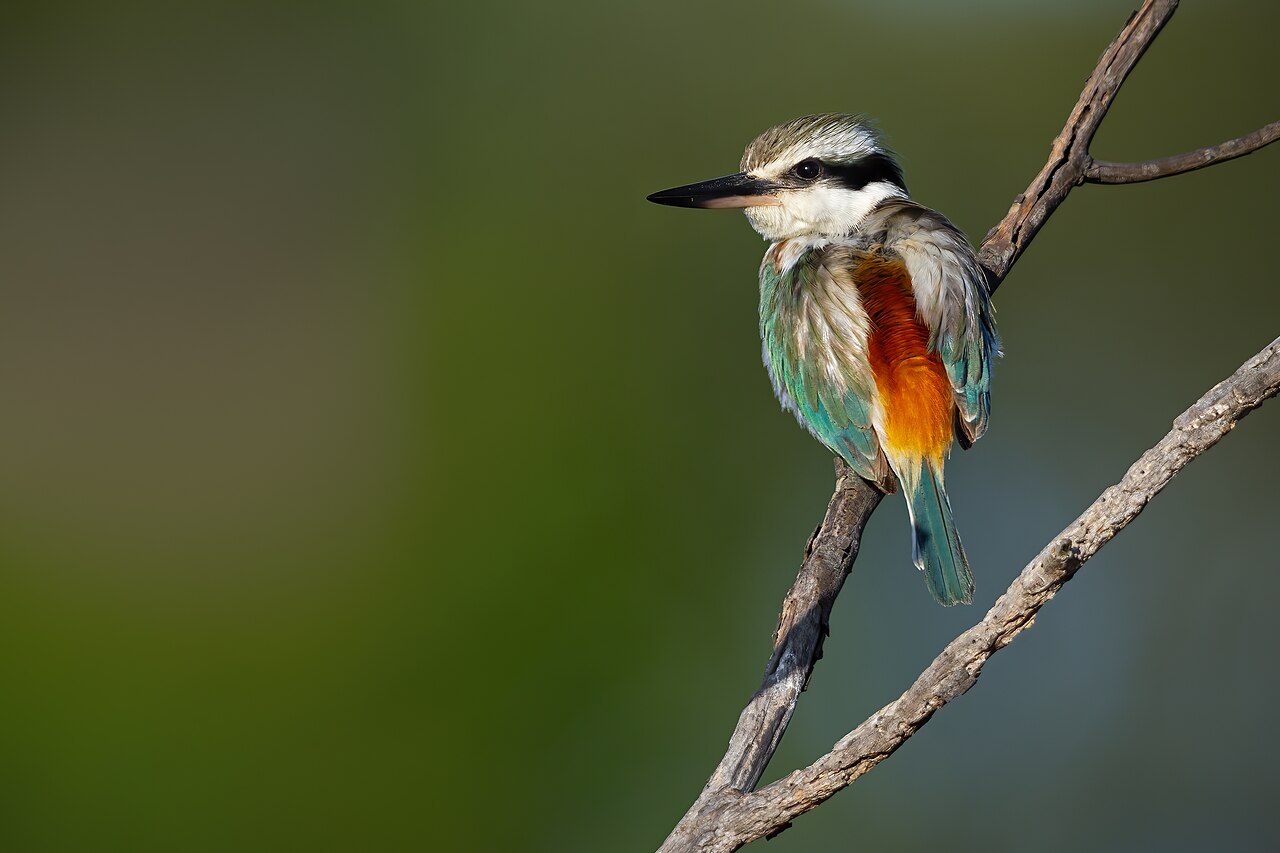
The Red-backed Kingfisher is the kingfisher of the dry interior, and for most of the year it gets by without water at all. It stands out by a pale, finely streaked crown and by the chestnut lower back and rump that light up only as it flies away from you. Its mournful, falling whistle belongs to the Australian outback as much as flies to a mulga (acacia scrub of the dry interior, dominated by Acacia aneura) bush.
Voice
From a bare branch, a fence or a telephone wire comes, every few seconds, a descending, mournful whistle: kee-ip, one note at a time, kept up for hours, and audible far across flat country. In the breeding season a hard, parrot-like chatter is added, and at alarm an excited harsh scolding. It is a sound of spring: outside the breeding season the bird is often silent.
Recording: Louis Masarei — CC BY-NC-SA 4.0 · Jupiter Well (near Gibson Desert North), Shire of East Pilbara, Western Australia, Australia · xeno-canto
Identification
A kingfisher of a good twenty centimetres with a green-and-white streaked crown that reads pale and mottled at a distance — no other kingfisher here has that. A broad black band runs through the eye, a white collar sits below it, and wings and tail are blue-green. Lower back, rump and uppertail coverts are chestnut to rufous; that panel shows only from behind or in flight. The underparts are white. The female is duller with an even more heavily streaked crown.
Confusion species
Sacred Kingfisher (Todiramphus sanctus) is the usual comparison: plain dark green crown, cream underparts and no rufous rump, and it keeps to moister, better-vegetated country. Forest Kingfisher (Todiramphus macleayii) has a deep blue crown, pure white underparts and a white wing panel in flight. Torresian Kingfisher (Todiramphus sordidus) is bigger and tied to coastal mangrove. On a bird facing you, with the rump hidden, the streaked pale crown decides it.
Habitat
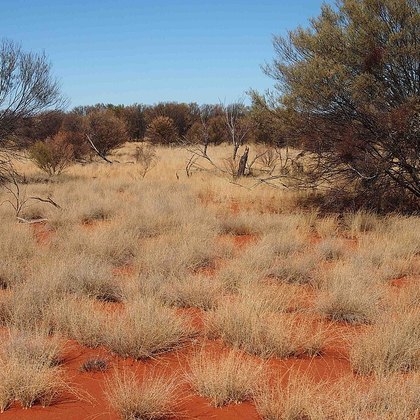
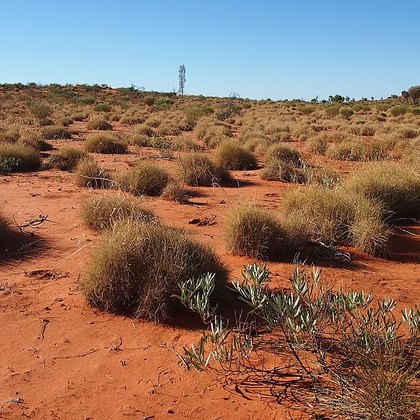
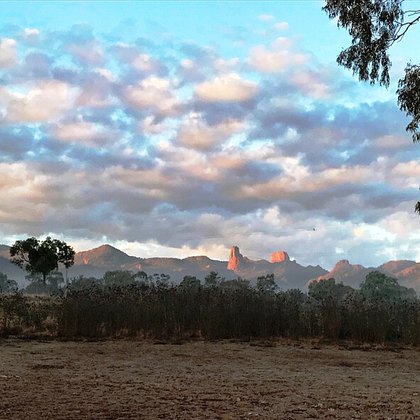
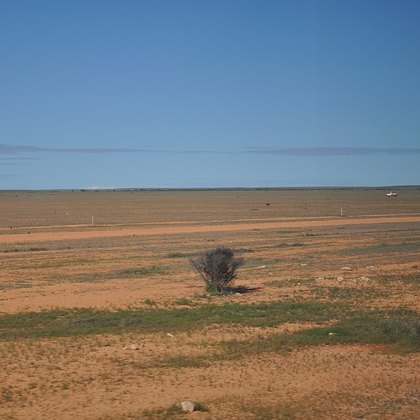
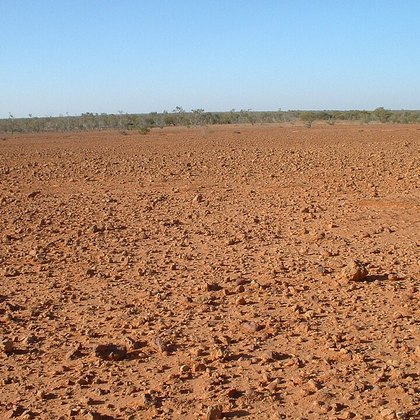
Arid and semi-arid country: mulga and acacia scrub, spinifex (spiny, hummock-forming desert grass of the interior) plains with scattered trees, dry eucalypt woodland and saltbush (salt-tolerant dwarf shrubland of saline plains) plains, often tens of kilometres from open water. It hunts lizards, grasshoppers, beetles and small snakes from a high, exposed lookout. For the nest it does need a bank: it digs a tunnel half a metre to over a metre into the top third of a steep sandy bank along a creek, into a road cutting or the wall of an old mine shaft, and in the north it also uses termite mounds.
Where the bird is most often found, arranged by main group and formation.
Range and movements
Nearly all of Australia except Tasmania, the far southwest and the southeast corner; the weight of the range lies in the arid and semi-arid interior and the north. In the south and southeast it is a summer visitor, further north it stays year-round or wanders with the rains. It occurs nowhere outside Australia: this is one of the few kingfishers that keeps entirely to the continent.
- Resident
- Passage
- dark = core range, pale = thinly spread
Where and when to look
Drive an inland road in spring and stop at a road cutting or a dry creek bank; that is where the bird sits and where it breeds. Listen for the single mournful whistle with long silences between, because the sound carries further than the eye reaches. If the bird is on a wire, wait until it takes off: the chestnut rump closes the case.
Conservation
Least Concern (LC), with a range covering nearly a whole continent and an increasing trend. The species has gained from human work in the interior: road cuttings, railway embankments, dams and stock watering points supply both nest walls and hunting ground. Drought and fire press on numbers locally, but the bird is nomadic enough to move away.
Scientific name
Todiramphus pyrrhopygius | (Gould, 1841)
John Gould described the species in 1841 as Halcyon pyrrhopygia; since it now sits in Todiramphus, author and year take parentheses. The epithet is built from Greek purrhos, 'flame-coloured', and pugē, 'rump' — exactly the panel that gives the bird away in flight, and the Dutch name roodrugijsvogel points at the same thing. The type locality is given as the interior of New South Wales.