All species › Passerines › Fairywrens, grasswrens and emu-wrens › Purple-crowned Fairywren
Purple-crowned Fairywren | Malurus coronatus
Purperkruinelfje | Maluro coronado
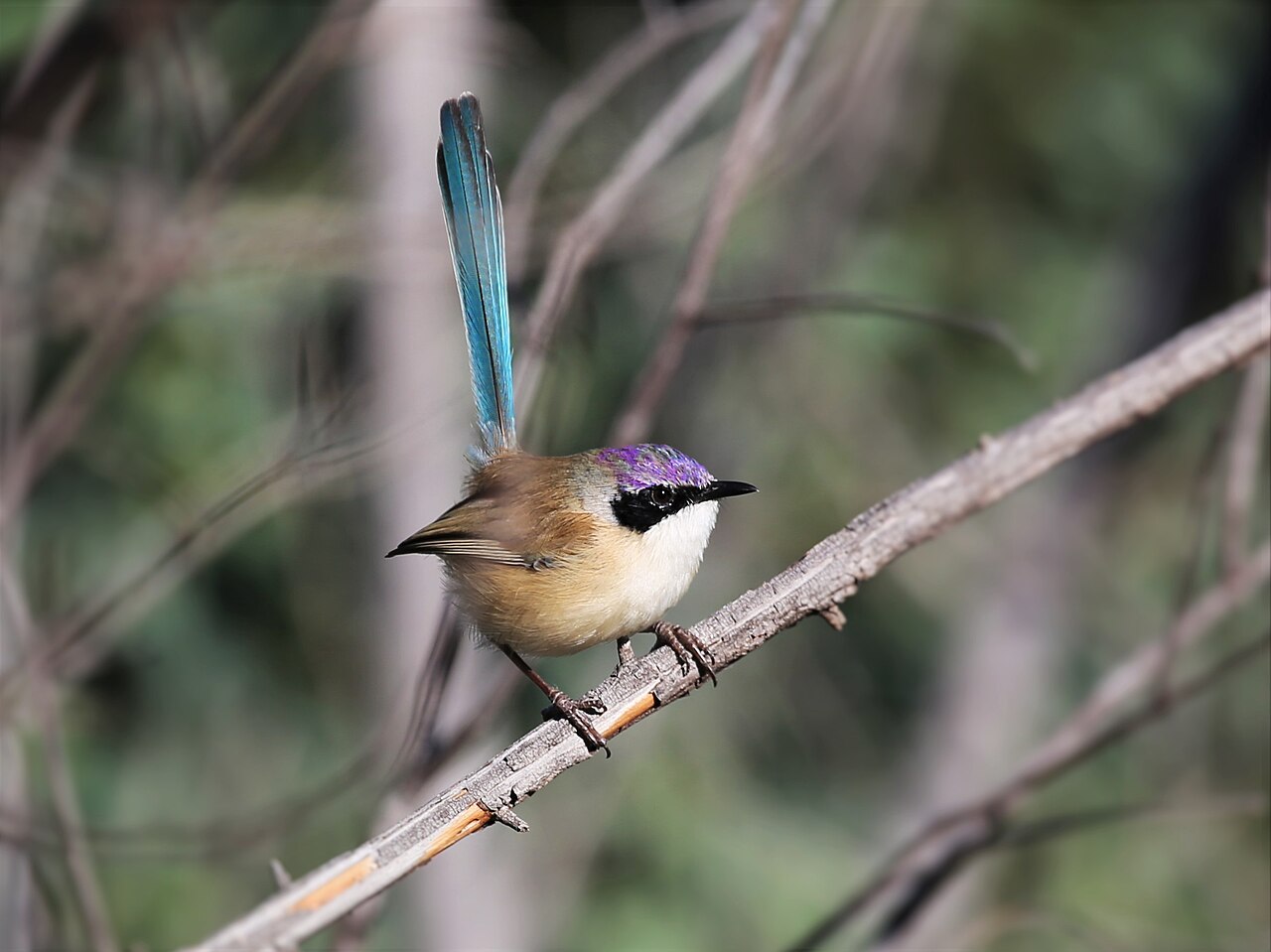
The Purple-crowned Fairywren is the heaviest-built of the fairywrens and the only one tied to running water: it lives in the dense growth along the rivers of tropical northern Australia and nowhere else. In the breeding season the male wears a purple ring of crown feathers with a black spot in it, framed by a black mask.
Voice
The song is lower-pitched and considerably louder than that of the other fairywrens — a reeling cheepa-cheepa-cheepa that carries across the water. A breeding pair duets to keep wandering birds off the territory. Besides that there is a soft chet as a contact note between foraging group members and a harsh zit as an alarm.
Recording: nick talbot — CC BY-NC-SA 4.0 · Kununurra, Shire of Wyndham-East Kimberley, Western Australia, Australia · xeno-canto
Identification
About fourteen centimetres. The plumage is mostly brown with greyish-brown wings and a cream-buff belly; the long, cocked tail is deep blue and all but the central pair of feathers are broadly tipped white. The breeding male has a bright purple crown ring with a black spot on top and a black face mask; out of season the crown is grey-brown and black cheek patches and a pale orbital ring remain. The female has a blue-tinged grey crown, chestnut ear coverts and a greenish-blue tail. The western subspecies is slightly larger and browner-backed with a buff breast, the eastern bluer on crown and nape with a white belly.
Confusion species
In northern Australia this is the only fairywren with cheek patches and a deep blue tail. The Red-backed Fairywren (Malurus melanocephalus) shares the country but has no blue in the tail at all and keeps to tall grass rather than riverside growth; Purple-backed Fairywren (Malurus assimilis) has chestnut shoulders and sticks to rocky rises and acacia scrub; White-winged Fairywren (Malurus leucopterus) is smaller and lives in open dry country. The female is identifiable by the chestnut ear coverts against a grey crown, in a genus where brown birds are usually anonymous.
Habitat
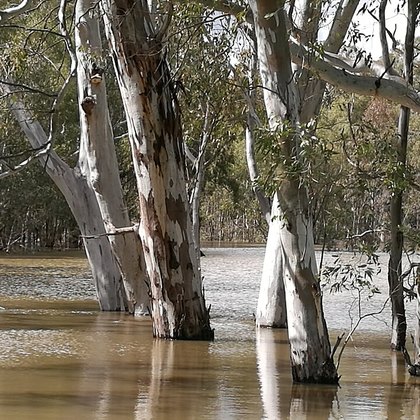
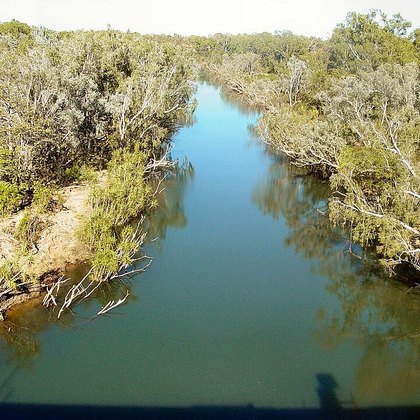
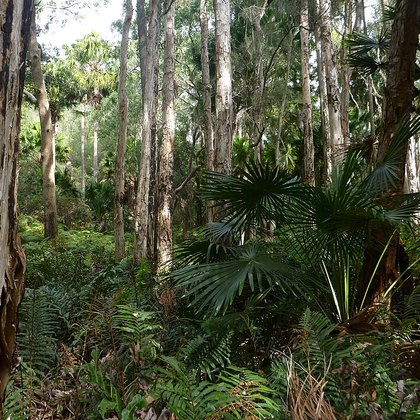
A strict riparian specialist: dense vegetation along permanent fresh water, with a well-developed mid-storey of screw palm (Pandanus aquaticus) or freshwater mangrove (Barringtonia acutangula) in the Kimberley, or one and a half to two metre thickets of river grass (Chionachne cyanthopoda) in the Victoria River District. Above it stands a canopy of river red gum and melaleuca, into which the birds retreat when floods submerge the mid-storey.
Where the bird is most often found, arranged by main group and formation.
Range and movements
The wet-dry tropics of northern Australia: the Kimberley in Western Australia, the Victoria River country of the Northern Territory, and the south-western Gulf of Carpentaria into Queensland. Across those fifteen hundred kilometres it is everywhere limited by the quality of the riverside vegetation; a gap of some three hundred kilometres of unsuitable country separates the two subspecies. Resident, with territories strung like beads along the bank, often fifty to three hundred metres of river to a group.
- Resident
- Winter
- dark = core range, pale = thinly spread
Where and when to look
Walk a permanent creek and listen: the low, loud song and the duet of a pair give the group away before the eye does. Unlike most fairywrens this one is not promiscuous — a pair stays faithful, which is exactly why you hear a duet more often than a solo. Spring rain brings the moult forward, so the purple crown is at its best earlier after a wet season.
Conservation
The species as a whole is listed as Least Concern (LC), but in 2015 the Australian federal government moved the western subspecies from vulnerable to endangered, and the eastern one meets the criteria for near threatened. The causes are everywhere the same: stock and introduced grazers eating and trampling the riverside vegetation, fires that burn too hot, invasive weeds, and predation by feral cats and black rats. The bird vanished from the lower Fitzroy around 1920 and from the Ord valley after the dam was built. Only seventeen per cent of the western subspecies' habitat lies in reserves; the Australian Wildlife Conservancy manages millions of hectares in the Kimberley with its EcoFire burning programme partly for this bird.
Scientific name
Malurus coronatus | Gould, 1858
John Gould described the species in 1858 from material the explorer Joseph Ravenscroft Elsey collected in 1855 and 1856 on the Victoria and Robinson Rivers; the Victoria River in the Northern Territory is the type locality. coronatus is from Latin corona, crown, for the male's purple crown ring. The species was once placed in a genus of its own, Rosina, but protein evidence confirmed its place in Malurus.