All species › Passerines › Woodswallows, bellmagpies and allies › Little Woodswallow
Little Woodswallow | Artamus minor
Roetspitsvogel | Artamo chico
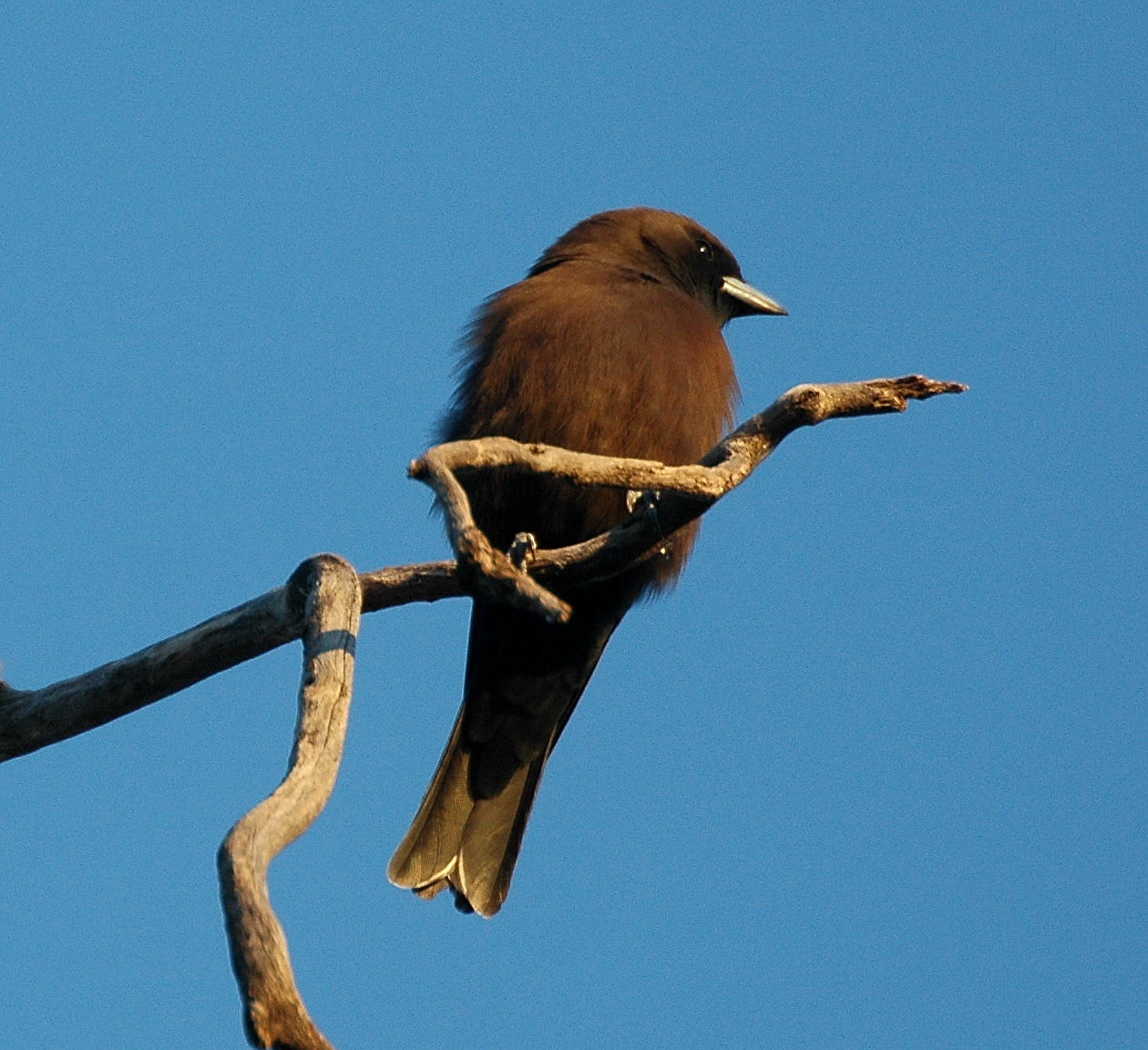
The Little Woodswallow is the smallest and the darkest of the genus, and the only one that lives off rock. Where the other woodswallows soar above woodland and plain, this species belongs to gorges, escarpments and overhanging cliffs across the north and the interior, where it nests and roosts in crevices. In flight, with its short tail and quick, flickering wingbeat, it looks almost like a bat.
Voice
A high, thin and slightly metallic pit-pit or tchek, appreciably sharper and thinner than the soft nasal contact call of the larger woodswallows — for anyone standing in a gorge, often the first sign the bird is there. Alongside it a short, scratchy chattering subsong, now and then with imitation of other species. At the nest comes a fierce, repeated alarm. Because the sound bounces off the rock wall, it seems to come from every side at once.
Recording: nick talbot — CC BY-NC-SA 4.0 · Lake Argyle, Shire of Wyndham-East Kimberley, Western Australia, Australia · xeno-canto
Identification
A strikingly small, compact bird with a very short tail, which makes the gliding silhouette look broad and blunt rather than slender. Head, neck, breast and belly are dark sooty brown to almost chocolate, considerably darker and warmer than in any other woodswallow. Against this the blue-grey wings stand out, with black primaries; from below the wing is dark with a paler panel. The tail is black with a narrow white tip, visible only when spread. The face is barely marked: at most a darker wash around the lore, no mask and no brow. The bill is blue-grey with a black tip, the eye dark. The sexes are alike. Northern birds are larger and slightly paler than those of the interior.
Confusion species
Size and dark colour usually settle the identification within seconds, but the trap is Dusky Woodswallow (Artamus cyanopterus), which is also brown: that species, however, is noticeably larger, longer-tailed, and carries a sharp white stripe along the leading edge of the wing which this species lacks entirely. Black-faced Woodswallow (Artamus cinereus) is paler grey with a clear black loral patch and a broad white tail tip. Female Masked Woodswallow (Artamus personatus) is grey-brown and much paler below. A second, more practical pitfall is the company: in mixed flocks over the interior four or five woodswallow species often fly together, and then the Little Woodswallow is recognised as the small, dark bird shooting between the others — read the proportion to its neighbours rather than the bird on its own. From the swallows, with which the group can be confused at a distance, it differs in the broad triangular wing, the level glide and the blue-grey bill.
Habitat
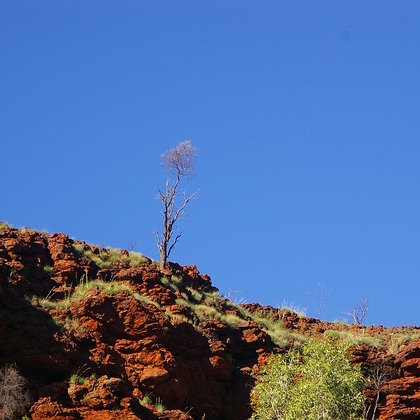
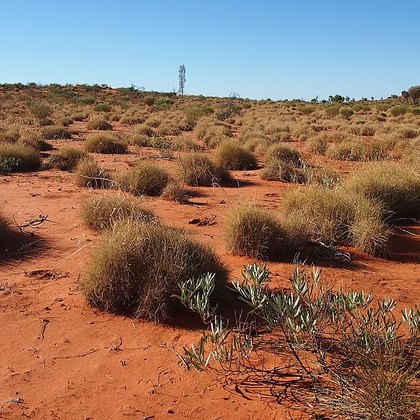
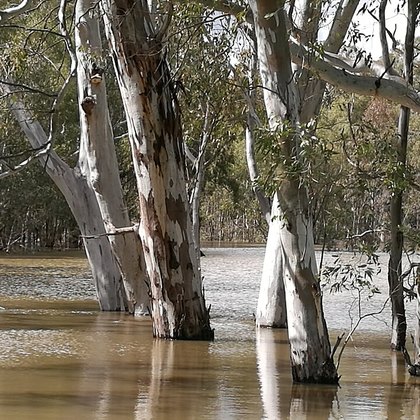
Rocky country sets the scene: gorges, escarpments, weathered sandstone cliffs and scree slopes, with spinifex (spiny, hummock-forming desert grass of the interior) country and eucalypt savanna in the immediate surroundings, and gallery woodland along the creeks that run through the gorges. The nest is a small cup in a rock crevice, under an overhang or in a hollow of the wall — a nest site no other woodswallow uses. Hunting is done from a projecting rock point or a dead branch, in quick circuits above the gorge, the party often staying close to the wall.
Where the bird is most often found, arranged by main group and formation.
Range and movements
Widespread across northern and inland Australia, from the Kimberley and the Top End through the Gulf Country to northern Queensland, and south through the dry ranges and gorge systems of the centre into northern South Australia and the interior of Western Australia. Everywhere the species is resident and strongly tied to its site, with at most local shifts; it makes no great wanderings of the kind seen in Masked and White-browed Woodswallow. Where rock is absent, so is it.
- Resident
- dark = core range, pale = thinly spread
Where and when to look
Look for it where it can be expected: stand in a gorge or below an escarpment and scan up the wall. Small, dark woodswallows shuttling just above the rock and vanishing into crevices are almost certainly this species. Read the short tail — on fast birds that is easier than colour, and the difference from the long-tailed Dusky Woodswallow is striking.
Conservation
The species is listed as Least Concern (LC). The range is enormous and the habitat — gorge, cliff and scree in thinly settled country — is by its nature little exposed to clearing, so that the chief pressures on the Australian avifauna largely fall away here. The bird is nowhere particularly numerous but is present wherever suitable rock lies. Quantitative trend data are largely lacking, which is no surprise for a species of hard-to-reach terrain.
Scientific name
Artamus minor | Vieillot, 1817
Louis Pierre Vieillot described the bird in 1817 as Artamus minor, from material from the 'Terres Australes', in practice Shark Bay in Western Australia. The epithet minor is simply Latin for 'smaller', and so it is: the smallest of the genus. The English name Little Woodswallow and the Spanish artamo chico follow that meaning directly. The Dutch name roetspitsvogel picks another character and names the dark, sooty colour; spitsvogel refers to the pointed, triangular wing. The genus name Artamus comes from Greek artamos, 'butcher', after the kinship with the butcherbirds, which impale their prey on a thorn or branch.