All species › Passerines › Honeyeaters › Gilbert's Honeyeater
Gilbert's Honeyeater | Melithreptus chloropsis
Swandiadeemhoningeter | Mielero nuquiblanco occidental
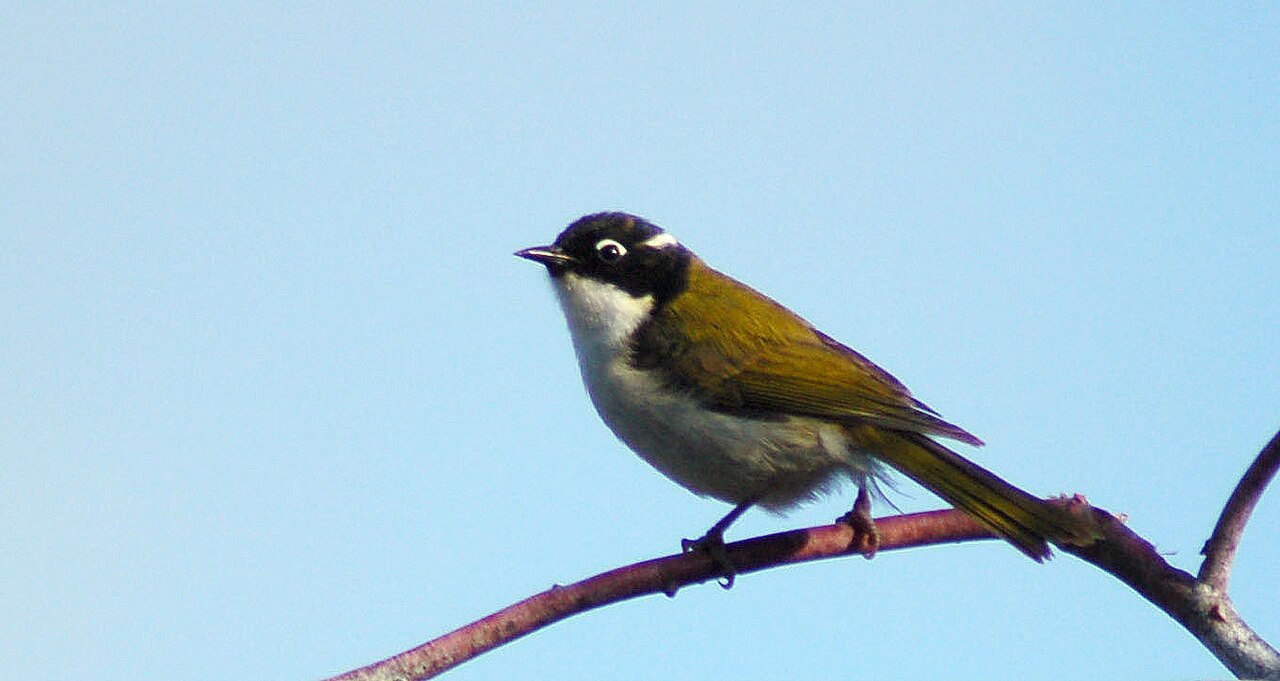
Gilbert's Honeyeater is the only black-headed Melithreptus of south-western Australia, and until 2008 it was still treated as the western subspecies of the White-naped Honeyeater. It looks almost the same too: black head, a white nape band like a diadem, olive-green back and white underparts. The difference lies in the bare skin above the eye, here greenish-white to pure white rather than red — exactly what the scientific name chloropsis, 'green-faced', refers to. It belongs to the jarrah, marri and karri forests of the south-west corner and occurs nowhere else.
Voice
Clear, slightly nasal whistled calls repeated in short series, and a sharp chip that keeps the canopy parties moving. The song is a quick, cheerful run of clear notes, closely resembling that of White-naped Honeyeater (Melithreptus lunatus) in the east; until recently the two bore one name. Since the two never meet, voice in practice never has to serve as a distinguishing character.
Recording: Martin Cake — CC BY-NC-SA 4.0 · Donnelly River, Shire of Nannup, Western Australia, Australia · xeno-canto
Identification
A small to medium honeyeater, marginally heavier-looking than its eastern counterpart. The head is black, the upperparts olive-green, the underparts pure white with a light grey-brown wash on the flanks. A clear crescent-shaped white band crosses the nape. Decisive is the bare skin above the eye: a white to greenish-white patch that stands out through the black head like a pale eyebrow. Bill and legs are brownish black, the eye dull red. The sexes look alike; immatures are duller, with a brownish cast to the head and a paler bill base.
Confusion species
Within its own range the only serious confusion species is Brown-headed Honeyeater (Melithreptus brevirostris), which also occurs in the south-west but has a brown rather than black head, a buff rather than white nape band, and a complete creamy yellow to orange ring of bare skin around the eye instead of a pale patch above it. White-naped Honeyeater (Melithreptus lunatus), from which this species was split, is a problem only in pictures and in the literature: there the red crescent above the eye is the difference, while in the field an entire continent lies between them. White-throated Honeyeater (Melithreptus albogularis), Black-chinned Honeyeater (Melithreptus gularis), Strong-billed Honeyeater (Melithreptus validirostris) and Black-headed Honeyeater (Melithreptus affinis) all fail to reach the south-west corner; the first two stay far to the north and east, the last two in Tasmania.
Habitat
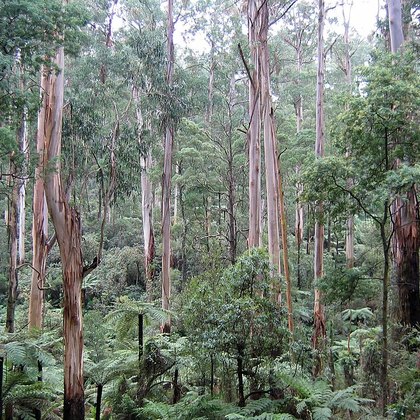
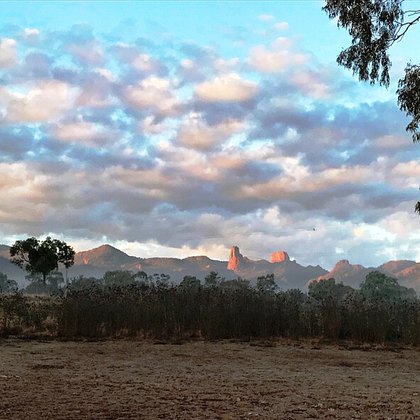
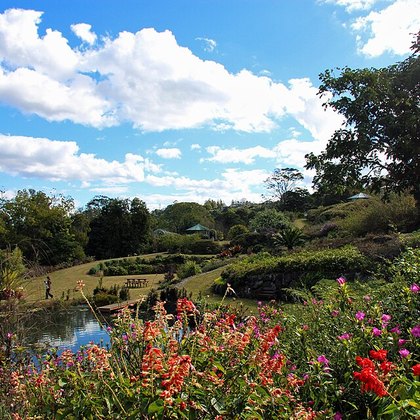
Dry and moist sclerophyll forest and woodland of the south-west corner: jarrah, marri, karri, tuart, wandoo (white-barked eucalypt of south-western Australia, and the woodland it forms) and flooded gum (Eucalyptus rudis, a eucalypt of damp low ground), both coastal and inland, plus older gardens, parks and street plantings where large eucalypts have been kept. It forages in the crown and along the branches and lives mainly on arthropods — insects, spiders and lerp (sugary scale secreted by psyllids, food for honeyeaters) — supplemented with nectar, honeydew and manna. Breeding runs from September to February, with a cup nest of plant fibre high in the crown, usually two spotted eggs, an incubation of about fourteen days and a further fourteen days in the nest.
Where the bird is most often found, arranged by main group and formation.
Range and movements
Endemic to south-western Western Australia, from about Moora and Julimar State Forest in the north, south and east along the coast to Stokes Inlet and Cape Arid, and inland to the Stirling Range and the edge of the wheatbelt. Beyond that it occurs nowhere: not in the rest of Western Australia, not in the east of the continent, not in Tasmania and not in New Zealand. It is largely sedentary, although local movements occur as birds follow eucalypt flowering.
- Resident
- dark = core range, pale = thinly spread
Where and when to look
In the south-west you have only two Melithreptus to separate, and one look at the head settles it: black with a white patch above the eye is this species, brown with a complete pale eye-ring is Brown-headed Honeyeater. Look for it in karri and jarrah forest around Pemberton, Walpole and the Perth Hills, high in the crowns and usually in parties of a handful of birds. A flowering marri draws it reliably; stand beneath one and wait for the party to come through.
Conservation
Least Concern (LC) and common through most of the south-western forests. Clear regional declines have nonetheless been recorded, among others on the Swan Coastal Plain around Perth and in the farming country at Kellerberrin, where the original woodland has been reduced to small remnants. The species depends for food and nest sites on tall eucalypt forest with mature trees, and both urban expansion and clearing for the wheatbelt have cut deeply into that. Added to this is the drying of the south-west corner, which makes the flowering of the key nectar trees less predictable.
Scientific name
Melithreptus chloropsis | Gould, 1848
Gould described the bird in 1848 as Melithreptus chloropsis; author and year stand without parentheses, because the species has always remained in this genus, even though it was long treated as a subspecies of Melithreptus lunatus. chloropsis is built from Greek chloros, 'greenish yellow', and opsis, 'face' or 'appearance', and refers to the greenish-white bare skin above the eye. The English name honours John Gilbert, the collector who worked for Gould in Western Australia; an older English name is Swan River Honeyeater, after the river on which Perth stands. The Dutch name swandiadeemhoningeter and the Spanish mielero nuquiblanco occidental follow suit, naming the river and the western position respectively.