All species › Swifts › Swifts › Fork-tailed Swift
Fork-tailed Swift | Apus pacificus
Siberische gierzwaluw | Vencejo del Pacífico
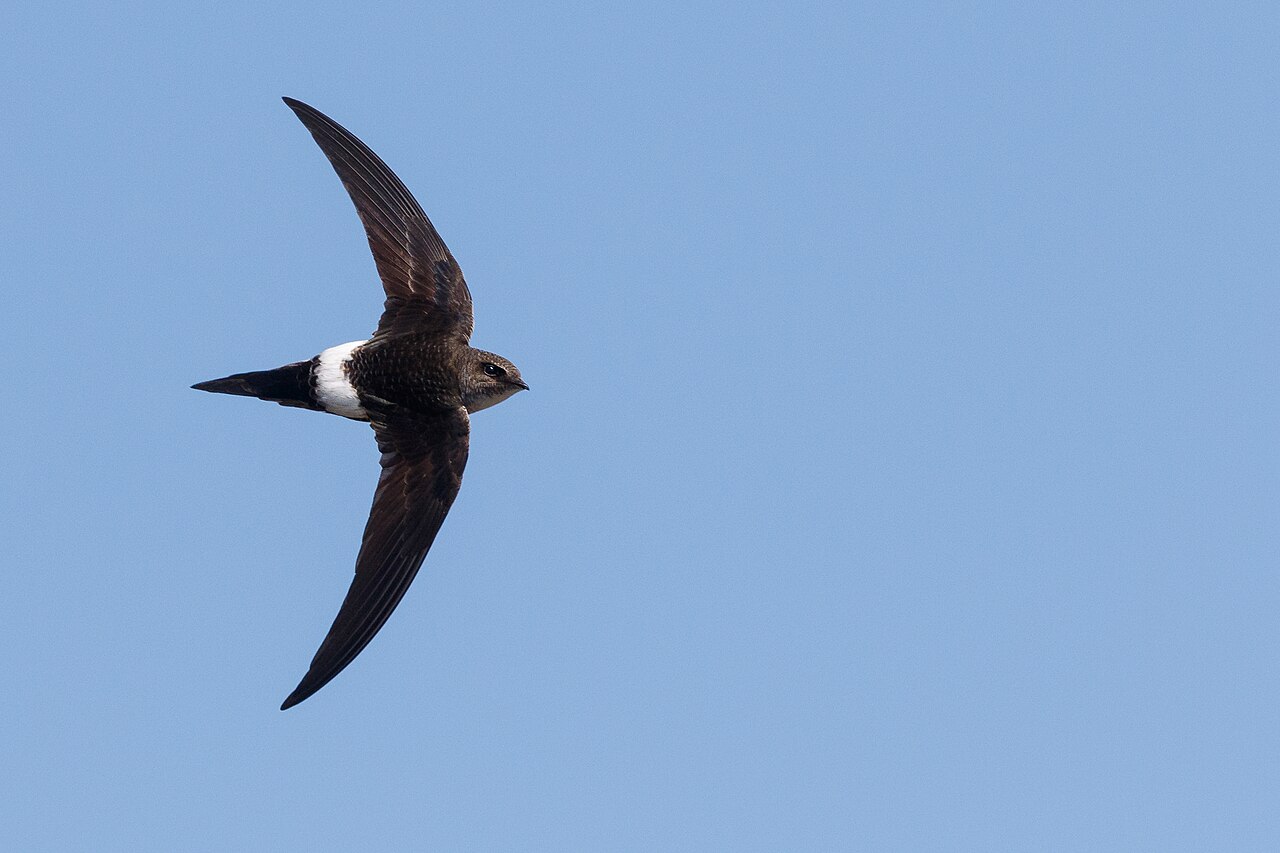
The Fork-tailed Swift breeds in Siberia and Japan and in Australia is strictly a non-breeding summer visitor: from October to April it hunts high over the whole continent, often in flocks of hundreds and by preference in the rising air ahead of a storm front. It is known by the deeply forked tail and the broad white rump band that flashes at every turn. It does not breed here — no nest has ever been found in Australia.
Voice
In Australia it is seldom heard. Over a low-feeding flock there may be a thin, shrill screaming, but many observers see the species year after year without ever catching a sound — this is emphatically a bird for the eye and not the ear. On the breeding grounds it is noisy enough: there come the usual swift screams, a trilled tsiririri and a harsher spee-eer, softer and less screaming than the Common Swift's. That country lies thousands of kilometres outside this guide, so voice plays no part in identification here.
Recording: Ray Tsu 诸仁 — CC BY-NC-SA 4.0 · Jiuduansha Wetland National Nature Reserve, Shanghai, China · xeno-canto
Identification
A slim swift of seventeen to eighteen centimetres with a wingspan of forty-three to fifty-four, with long, narrow, scythe-curved wings and a long body. The tail is deeply forked and is often spread on the glide, at which moment the fork briefly disappears — so look more than once. A narrow, sharply defined white band crosses the rump, and the throat is whitish. The underparts are dark grey-brown with white feather fringes that give a fine scaled pattern at close range and in good light; that is the character by which the species is most securely recorded. Young birds have pale fringes to the wing feathers that adults lack. The flight is fast, stretched and swerving, with long glides.
Confusion species
White-throated Needletail (Hirundapus caudacutus) passes through Australia in the same months and is the main confusion: it is larger and far bulkier, barrel-shaped, with a short square tail, no white rump band but a white horseshoe running forward from the undertail coverts along the flanks. House Swift (Apus nipalensis) is a rare vagrant that can sit within flocks of Fork-tailed Swifts: smaller, shorter-bodied, with blunt wingtips, an all but square tail, a broader rump band and plain dark underparts without scaling. Fairy Martin (Petrochelidon ariel) and Tree Martin (Petrochelidon nigricans) also show a pale rump but are far smaller and flutter; Australian Swiftlet (Aerodramus terraereginae) is tiny and has no white at all.
Habitat
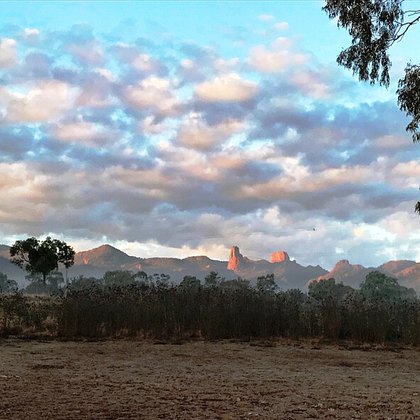
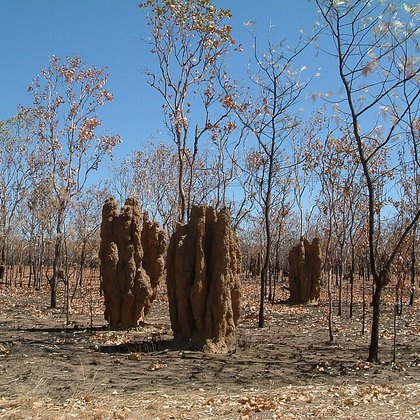
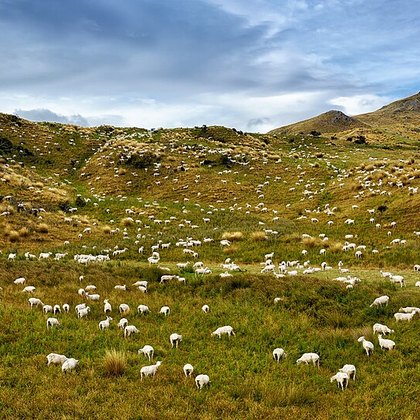
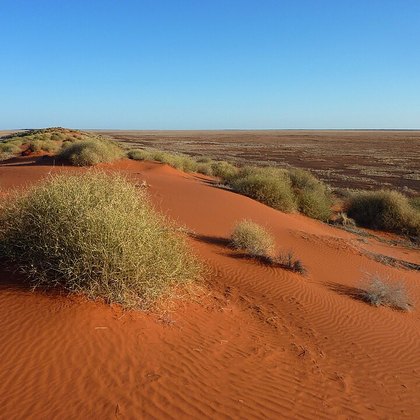
It lives in the air and uses the landscape only as something to hunt above: dry eucalypt forest and woodland, savanna, cropland and pasture, the air over towns and harbours, and in the dry season over sand-dune desert and salt lakes of the interior as well. It eats flying insects — termites, ants, beetles, flies and ballooning spiders — lifted by thermals and by the updraught ahead of a shower or a cold front, and follows those weather fronts across the country. It probably sleeps largely on the wing; regular ground roosts are hardly known in Australia.
Where the bird is most often found, arranged by main group and formation.

Range and movements
It breeds from June to August in Siberia, from the Ob east to Kamchatka, and on Sakhalin, the Kurils and in Japan; within this guide it is therefore a visitor only and no breeding bird. In Australia it appears from October to April — the southern summer — and then across almost the whole continent, from the north-west of Western Australia to Victoria and onto Tasmania, with the largest numbers in the north and the interior during the monsoon season. The flocks are nomadic and turn up wherever the weather lifts insects, so a place may go without the bird for years and then see hundreds pass. New Zealand it reaches only as a great rarity, with a handful of records including a bird at Taiaroa Head on Otago Peninsula.
- Breeding (summer)
- dark = core range, pale = thinly spread
Where and when to look
Look up on a sultry afternoon between November and March, especially with a thunderstorm or a cold front coming in: that is when the flocks drop low enough for the tail fork and the rump band to be seen with binoculars. In the north, search over Darwin and Broome in the wet season, where flocks of hundreds are ordinary. Follow one bird for a while rather than scanning the flock, since the tail is spread and closed by turns and the fork only shows in the latter state; and check each time whether one bird is shorter and blunter than the rest, because that may be a House Swift.
Conservation
Least Concern (LC), with an enormous breeding range across north-east Asia and a population that is not falling fast. In Australia it is not a breeding bird, so the country's responsibility is chiefly for the quality of the airspace in which it spends the summer here: the decline of flying insects through the conversion of grassland and woodland reaches it through its food. Collisions with wind turbines are a second concern for high-flying swifts, though little is yet known of the scale.
Scientific name
Apus pacificus | (Latham, 1801)
Latham described the bird in 1801 as Hirundo pacifica, among the swallows; because it was later moved to another genus, author and year stand in parentheses. The genus Apus was introduced by Scopoli in 1777, after Greek apous, 'without feet' — the old notion that swifts had no legs. pacificus means 'of the Pacific'. Pleasingly, the type locality lies in New Holland, restricted by Mathews to New South Wales: the species was thus described from an Australian bird, in the very country where it does not breed. The Dutch name picks the breeding range and the English name the shape of the tail.