All species › Passerines › Thornbills, scrubwrens, gerygones and allies › Fairy Gerygone
Fairy Gerygone | Gerygone palpebrosa
Zwartkeelmangrovezanger | Gerigón de hadas
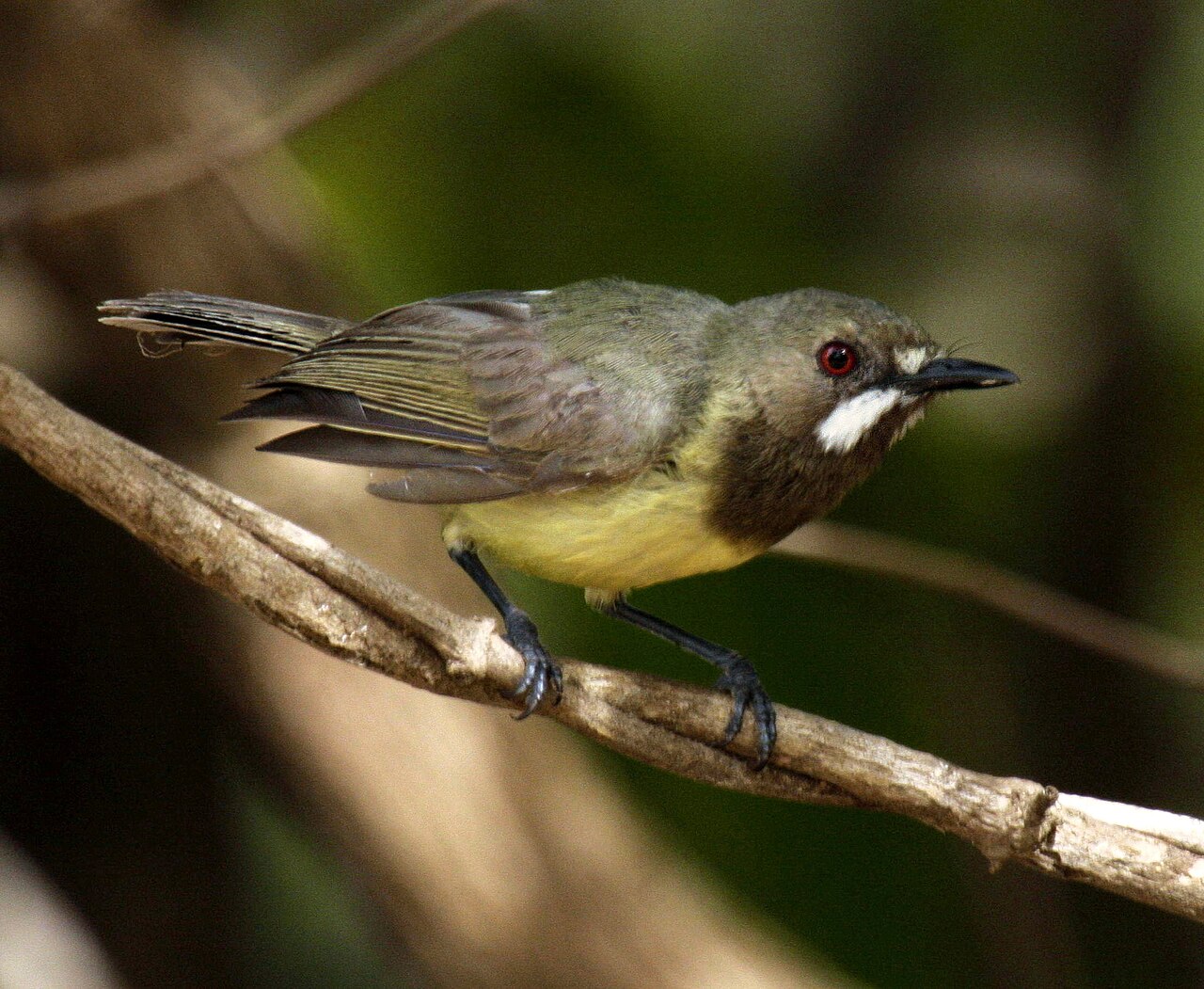
The Fairy Gerygone is the gerygone of the rainforest of northeastern Queensland: eleven centimetres, olive-green above and yellow below, with a red eye and, in the male, a dark throat that sets it apart from all its relatives. It is the only member of the genus in Australia in which male and female differ clearly.
Voice
A high, thin phrase with the falling pitch that marks the genus; the male sings loudly and persistently from the canopy, above all in the early morning. One striking habit is that danger makes it sing harder: when a Black Butcherbird (Melloria quoyi) appears, the male makes a point of being heard rather than keeping quiet.
Recording: Iain Woxvold — CC BY-NC-SA 4.0 · Usage headwaters, West Sepik Province, Papua New Guinea · xeno-canto
Identification
Olive-green to brown-grey above, yellow below, with a red iris and no eye-ring or eyebrow. The male has a dark throat — nearly black in the northern race personata, olive-grey in the southern race flavida — with white streaks along the moustachial line and on the forehead. The female is brown-grey on the head, with a greyish white forehead and a yellowish white throat. In flavida the tail is white-tipped.
Confusion species
White-throated Gerygone (Gerygone olivacea) overlaps in Queensland and is the only real problem: it has a white throat and a white forehead spot where this male is dark, and the females and young of the two are barely separable. Green-backed Gerygone (Gerygone chloronota) lives much further west and has no yellow below. Large-billed Gerygone (Gerygone magnirostris) and Mangrove Gerygone (Gerygone levigaster) share the mangroves locally but are brown or grey without yellow. Brown Gerygone (Gerygone mouki) of the same rainforest is small, brown and yellowless, and Western Gerygone (Gerygone fusca), Dusky Gerygone (Gerygone tenebrosa), Grey Gerygone (Gerygone igata), Norfolk Gerygone (Gerygone modesta) and Chatham Islands Gerygone (Gerygone albofrontata) rule themselves out on range.
Habitat
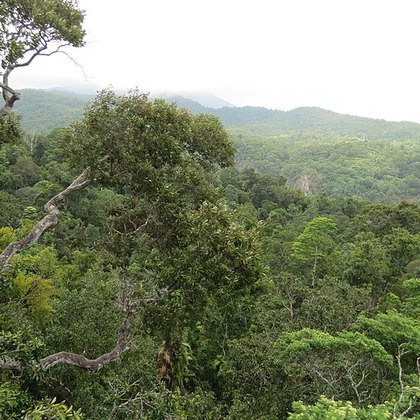
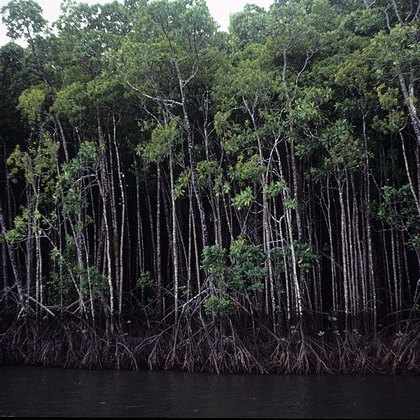
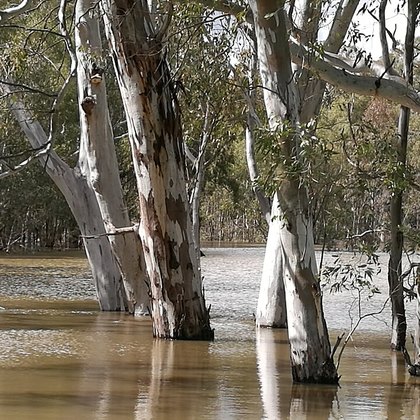
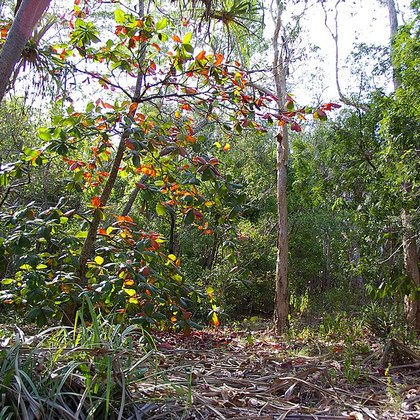
Rainforest and its edges, mangrove, monsoon forest and vine thicket, and the dense growth along creeks and rivers. It stays in the canopy and the upper half of the understorey, gleaning insects and spiders from the leaves. It is territorial and sedentary, and is nearly always seen singly or in pairs.
Where the bird is most often found, arranged by main group and formation.
Range and movements
Northeastern Australia, and beyond that West Papua and New Guinea. Two forms occur in Australia: personata along the coast of Cape York Peninsula and flavida from just south of Port Douglas to Fraser Island in Queensland. The two were once treated as separate species and were later united; where they meet, the throat colours grade into one another.
- Resident
- dark = core range, pale = thinly spread
Where and when to look
Work the forest edge and the tracks where light breaks through, because in closed rainforest you are looking up at a solid canopy. At the first song, watch the male's throat and not the yellow — the White-throated Gerygone has that here too. Its nest hangs strikingly often right beside a wasp nest, which probably buys the bird some cover against nest robbers.
Conservation
Least Concern (LC), with a large range across New Guinea and northeastern Australia and locally common within it. In Australia it is tied to rainforest and mangrove, two habitats that have shrunk badly in Queensland but whose remnants are now largely protected. Fragmentation of coastal lowland rainforest remains the main concern.
Scientific name
Gerygone palpebrosa | Wallace, 1865
Alfred Russel Wallace described the species in 1865 from birds on the Aru Islands, directly in Gerygone, so author and year carry no parentheses. Gould introduced the genus in 1841, from Greek gērugonos, born of sound. palpebrosa comes from Latin palpebra, eyelid, after the markings around the eye and on the face. The English name Fairy Gerygone and the Dutch name Zwartkeelmangrovezanger point at different things: the first at the bird's delicacy, the second at the male's dark throat.