All species › Waders, gulls and terns › Skimmers, noddies, terns and gulls › Black Noddy
Black Noddy | Anous minutus
Witkapnoddy | Cervera negra
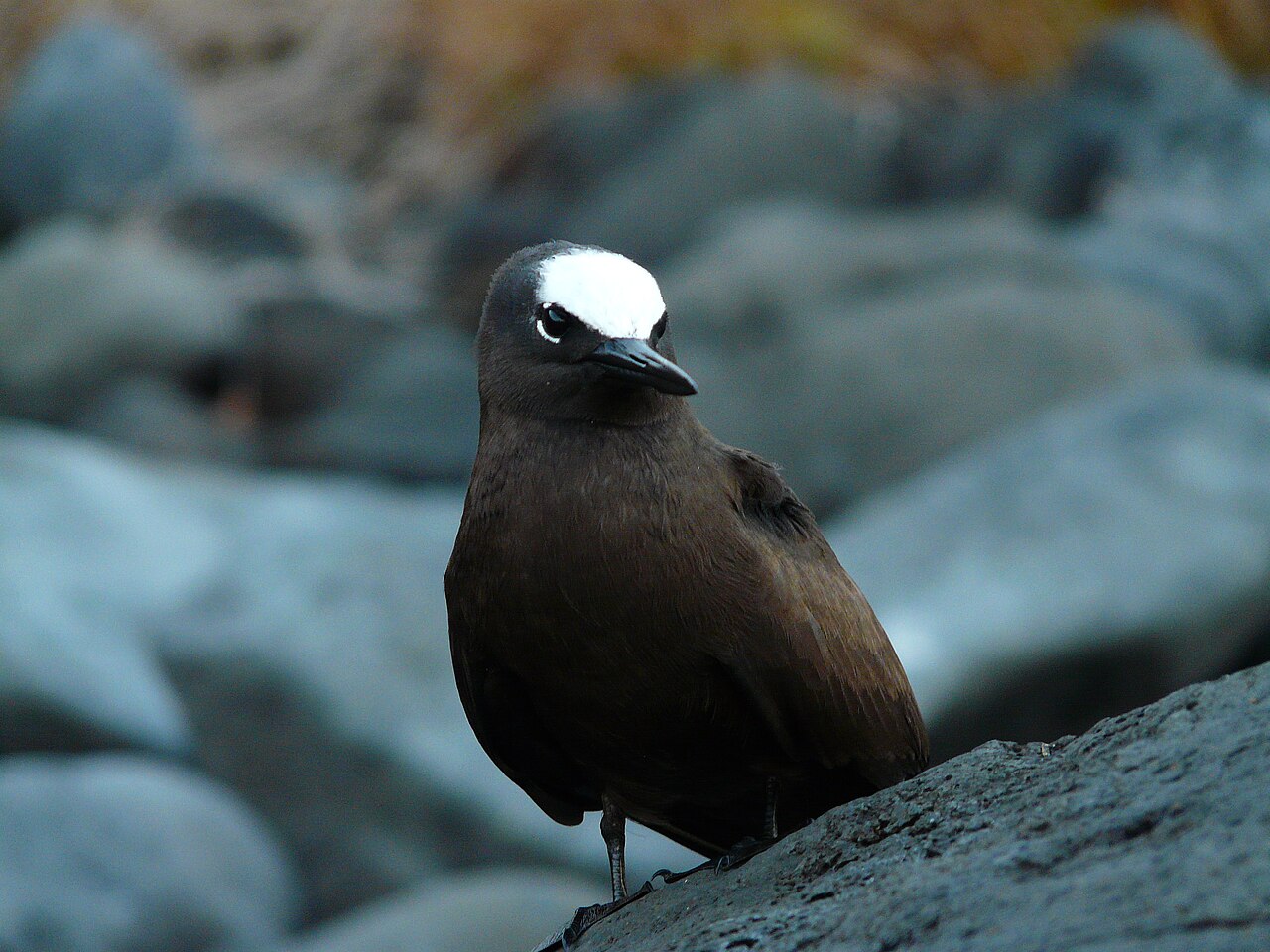
The Black Noddy is the noddy with the sharpest cap: sooty black in the body, with a snow-white crown cut off on the nape as if ruled. It is slimmer and lighter than the Brown Noddy and carries a strikingly thin, long bill. Unlike its relatives it nests in trees — on Heron Island it builds tens of thousands of nests in the Pisonia forest, each a saucer of leaves glued together with droppings.
Voice
A short, dry, high call, far sharper than the low rasp of the Brown Noddy: a repeated kik-kik or tik-tik, running in the colony into a sustained rattling krrr-krrr. Above a Pisonia forest that rattle comes from every side of the canopy and swells at each arriving bird. Chicks beg with a thin squeak; at sea the bird is usually silent.
Recording: Sreekar — CC BY-NC-SA 4.0 · Coral Sea, Gladstone Regional, Queensland, Australia · xeno-canto
Identification
A medium-sized noddy of thirty-five to thirty-nine centimetres, smaller and slimmer than the Brown Noddy, with narrower wings, a shorter and more squarely cut tail and a strikingly thin, long, dead-straight black bill. The plumage is deep blackish brown to black, with a snow-white cap that meets the black on the nape along a sharp, almost drawn edge, and a clear white crescent below the eye. The legs are black. Sexes alike; young birds have an equally white but narrower cap and pale fringes on the coverts. The flight is lighter and more agile than the Brown Noddy's, with quicker beats and much turning just above the water.
Confusion species
Brown Noddy (Anous stolidus) is the first check: clearly larger, warm brown rather than black, with a heavier bill, a longer wedge-shaped tail and a cap that grades away into the brown of the nape instead of breaking off. Lesser Noddy (Anous tenuirostris) is the closest match, but is smaller and greyer brown, with a finer bill still and a pale grey cap running down below the eye, where Black Noddy keeps black lores; range separates them almost completely in any case — Lesser Noddy occurs only at the Houtman Abrolhos in Western Australia, Black Noddy chiefly on the eastern side and on Norfolk and Lord Howe. Grey Noddy (Anous albivitta) is pale blue-grey and no real problem. Juvenile Sooty Terns (Onychoprion fuscatus) are dark too, but show white drop-shaped spots on the back and a deeply forked tail.
Habitat
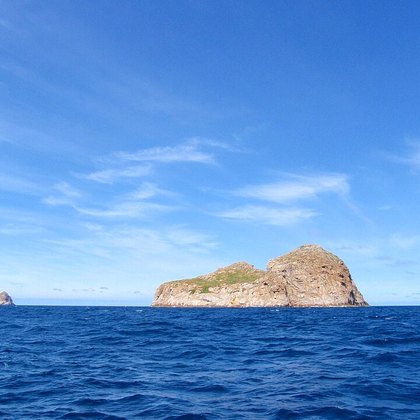
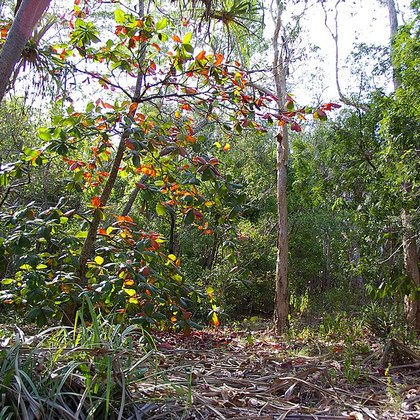
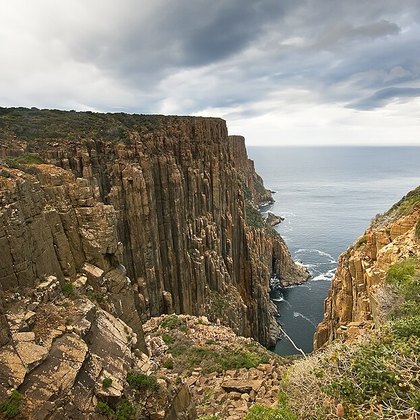
It fishes in warm sea around its breeding island, often closer inshore than the Brown Noddy, taking small fish from the surface without diving. It nests in trees: by preference in the closed Pisonia forest of coral cays (low sand islets on a coral reef), also in casuarinas and in the trees of Norfolk and Lord Howe, and where trees are lacking on sea-cliff ledges. The nest is a flat saucer of leaves cemented with droppings and reused for years on end.
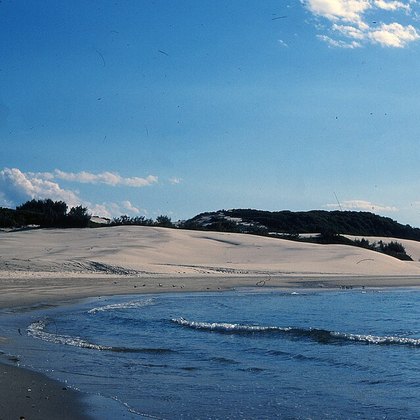
Where the bird is most often found, arranged by main group and formation.
Range and movements
In this region it is above all a bird of the eastern side: it breeds in numbers on the cays of the Great Barrier Reef — Heron Island and the Capricorn and Bunker groups hold the best-known colonies — and further in the Coral Sea, on Lord Howe and on Norfolk, where it is abundant. It does not breed in Western Australia. Its New Zealand breeding range is confined to the Kermadec Islands; around the main islands it is a rare vagrant, usually washed up after storms.
- Resident
- dark = core range, pale = thinly spread
Where and when to look
On Heron Island walk the Pisonia forest track at first light: the birds sit at eye level and the sharp edge of the white cap needs no binoculars. On a noddy passing a cliff, watch the bill — thread-fine and long points to this species — and the tail, shorter and more squarely cut than the Brown Noddy's. In the forest look down as well: the sticky seeds of the Pisonia cling to plumage, and entangled young birds on the forest floor are part of the picture.
Conservation
Least Concern (LC), with a world population in the hundreds of thousands and stable to very large colonies on the Barrier Reef, Norfolk and Lord Howe. The threats are those of any island: rats and cats, disturbance of nesting trees, and the clearing or loss of Pisonia forest, which on a low cay can go down in one blow to a cyclone and salt spray. Sea temperature counts too, since a warm summer with little fish on offer can wipe out a whole breeding season.
Scientific name
Anous minutus | Boie, 1844
Friedrich Boie described the species in 1844 as Anous minutus; because he placed it straight into that genus and it has stayed there, author and year carry no parentheses. The genus Anous, introduced by Stephens in 1826, is Ancient Greek for 'mindless', a name sailors gave these tame birds; minutus is Latin for 'small' and sets it apart from the larger Brown Noddy. Boie gave the origin as 'New Holland', the old name for Australia; that was later narrowed to Raine Island off the north-east Queensland coast, so the species has an Australian type locality.