All species › Waders, gulls and terns › Skimmers, noddies, terns and gulls › Antarctic Tern
Antarctic Tern | Sterna vittata
Antarctische stern | Charrán antártico
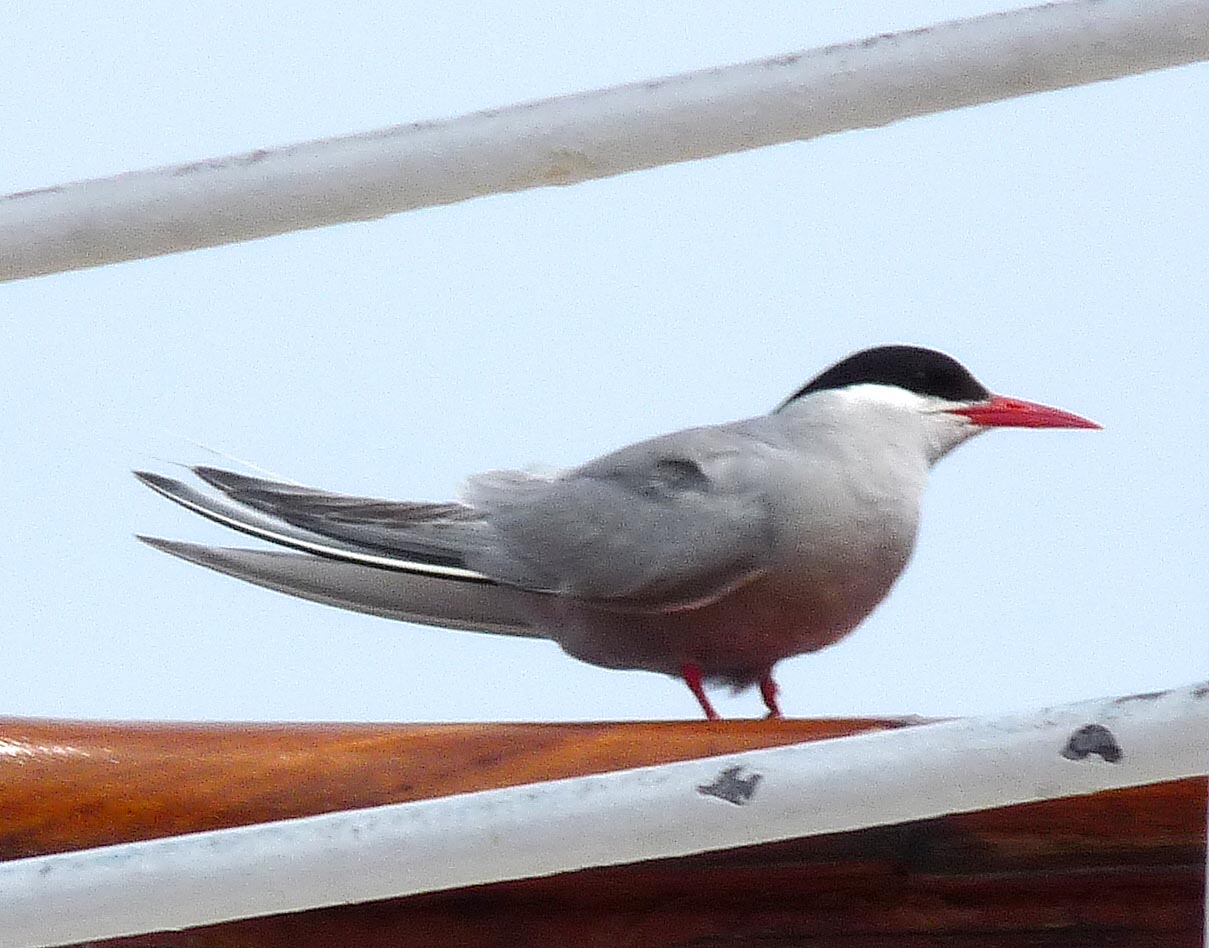
The Antarctic Tern is the tern of the cold southern seas: a solidly built, greyish bird with a blood-red bill and blood-red legs, a black cap and a sharp white cheek stripe beneath it. It breeds on the New Zealand subantarctic islands and on Antarctica itself, and is one of the few terns that stays in the south all year. A bird found on an Australian beach in winter is a storm refugee.
Voice
In flight and over the fishing grounds a high, rattling trr-trr-kriah, sharper and drier than a Common Tern's call. In nest defence this becomes a sustained, whirring chrrrr, delivered just above an intruder's head while the bird stoops at it. Over a loose colony on a tussock slope (grassland of loose, tall clump-forming grasses, especially in New Zealand) the two sounds merge into a sharp, unbroken screaming.
Recording: Sander Lagerveld — CC BY-NC-SA 4.0 · Campbell Island, New Zealand · xeno-canto
Identification
A medium-sized but heavily built tern of thirty-five to forty centimetres, with a wingspan around three quarters of a metre and a weight of a hundred and fifty to a hundred and eighty grams — noticeably heavier and broader-winged than an Arctic Tern. In breeding plumage, which it wears in the middle of the austral summer, body and upperwings are pale grey, rump and deeply forked tail white, and the cap jet black to below the eye, with a broad, sharply drawn white cheek stripe between. Bill and legs are bright blood-red without a black tip; the bill is shorter and thicker than an Arctic Tern's while the legs are longer. In flight the upperwing shows a dark wedge in the outer primaries. Out of the breeding season the forehead turns white, the bill fades to dark red and the bird looks much paler.
Confusion species
Arctic Tern (Sterna paradisaea) is the species at issue, and the difference lies not only in appearance but in the calendar: Antarctic Tern carries its full breeding plumage and red bill precisely in the austral summer, while the Arctic Terns wintering in these waters are then in non-breeding plumage, with a white forehead and a dark bill. A tern in full breeding plumage on southern water in December is therefore almost always this species. Beyond that, Antarctic Tern is bulkier, broader-winged, shorter and thicker in the bill and longer in the leg, with a shorter tail. White-fronted Tern (Sterna striata), the everyday tern of the New Zealand coast, has a black bill, a white forehead and white rather than greyish underparts. Common Tern (Sterna hirundo) is rare in this region and has an orange-red bill with a black tip. Roseate Tern (Sterna dougallii) is far paler, longer-tailed and belongs in the tropics, not the south.
Habitat
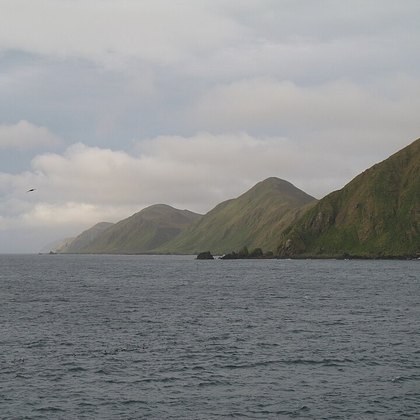
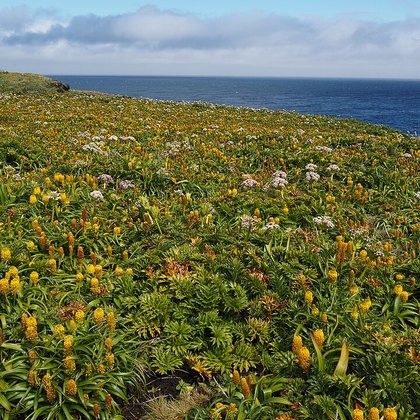
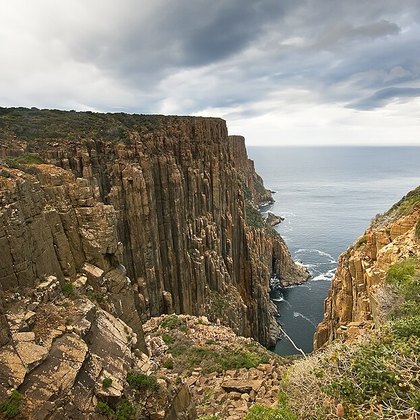
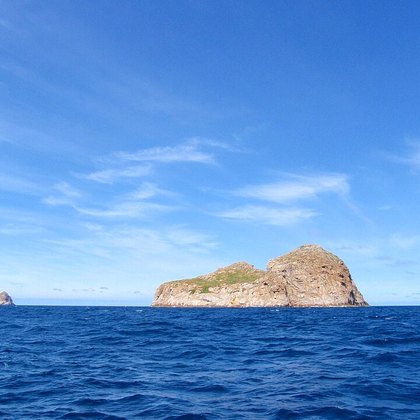
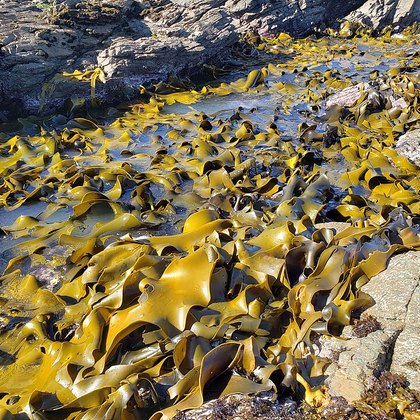
The cold subantarctic sea and the coastal water around it, where it fishes just above the kelp beds and in the surf. It breeds on rocky shores, cliff ledges and tussock slopes of subantarctic islands, in loose colonies of a few to a few dozen pairs, the nest a scrape among stones or grass. In the Australian winter it turns up on ordinary rocky shores and sandy beaches of the mainland, usually after persistent southerly winds.
Where the bird is most often found, arranged by main group and formation.
Range and movements
In New Zealand the local subspecies breeds on Stewart Island and its outlying islets, on the Snares, and on the Auckland, Campbell, Antipodes and Bounty Islands — entirely in the south and on the subantarctic islands, not on the North or South Island mainland. It does not breed in Australia: there it is a winter visitor to the southern coast, chiefly in Tasmania and along Victoria and South Australia, and usually in small numbers or as a beach-cast bird after a storm. Worldwide its range continues across the islands of the southern oceans to the Antarctic Peninsula.
- Resident
- Winter
- dark = core range, pale = thinly spread
Where and when to look
In the austral summer take a subantarctic boat trip along the kelp edge and watch the terns hunting just above the brown weed: a bird with a wholly blood-red bill and a sharp white cheek stripe is one of these in that season. On the mainland the tip is the reverse: in winter check beach-cast birds and resting terns after a southerly blow, because that is how most Australian records are found.
Conservation
Least Concern (LC), with a world population of some hundred and thirty to hundred and forty-five thousand birds and a stable trend. That picture hides how small the individual island colonies are: on islands where rats or feral cats have landed, breeding fails completely for years, and one such island may hold a substantial share of a regional population. The rat and cat eradications on the New Zealand subantarctic islands therefore matter directly to this species. It is also sensitive to disturbance at the nest, which counts quickly in a bird that breeds beside walking tracks.
Scientific name
Sterna vittata | Gmelin, 1789
Gmelin described the species in 1789 as Sterna vittata; it still stands in the same genus, so author and year carry no parentheses. Sterna comes from Old English stearn, an old name for terns. The epithet vittata is Latin for 'banded' or 'wearing a headband', after the black cap and the white stripe below it. The type locality is Christmas Harbour on Kerguelen, in the heart of the subantarctic ocean where the species belongs; the Dutch, English and Spanish names all point at those same cold southern waters.