All species › Caryophyllales › Sundew family › Drosera graomogolensis
Drosera graomogolensis
A sundew named after Grão Mogol, an old diamond town in northern Minas Gerais set in a landscape of quartzite mountains famous for its wealth of endemic plants. Drosera graomogolensis was described in 1997 by the Brazilian botanist Tânia Regina dos Santos Silva, who also co-authored Drosera peruensis. It is a species of the campos rupestres of the northern Espinhaço range.
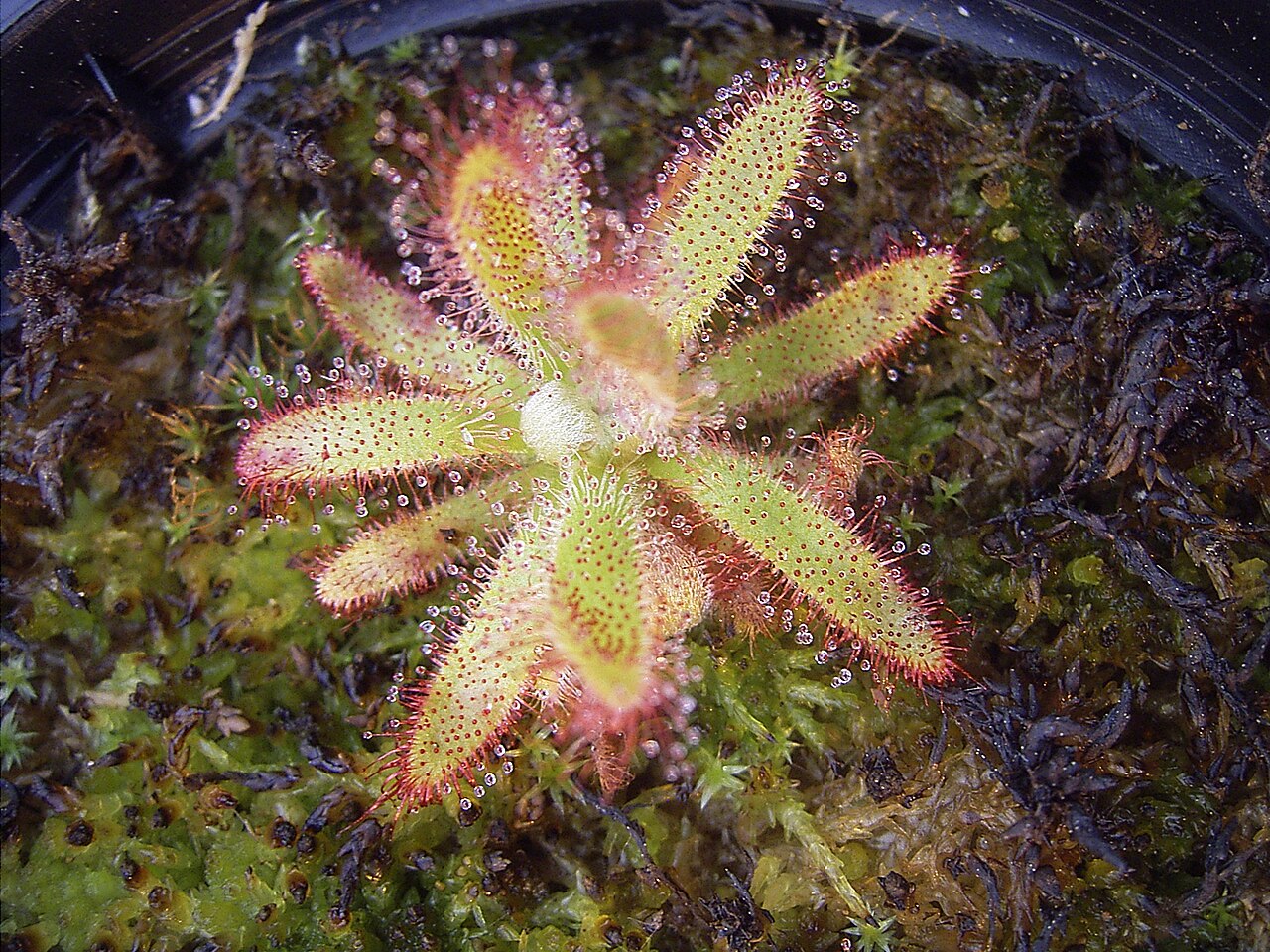
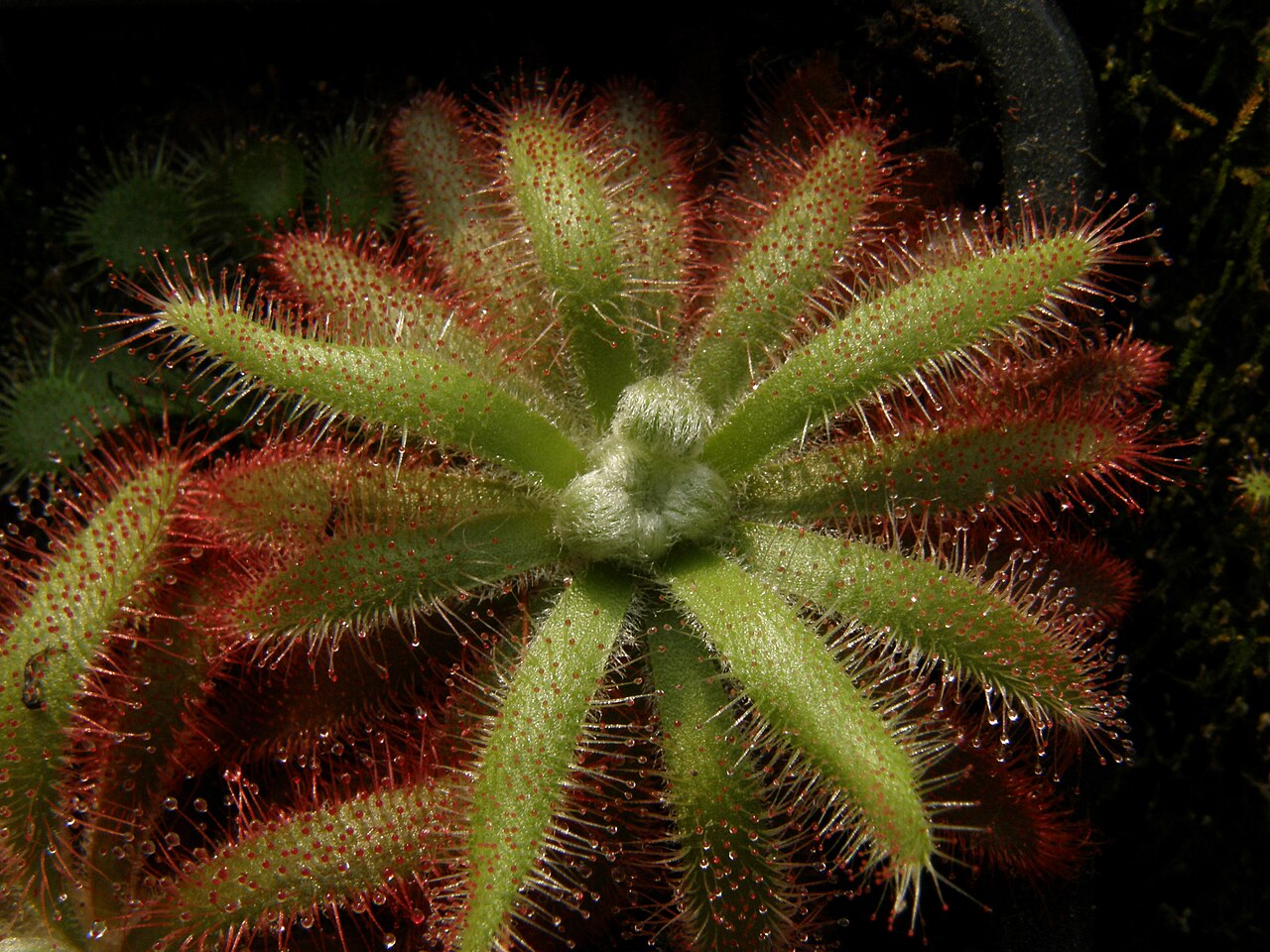
Identification
A perennial rosette plant with narrow leaves densely set with tentacles, which with age may form a short stem of old leaves; in the Brazilian synopsis it is shown on the same distribution map as Drosera camporupestris, another stem-forming species. The scape carries several flowers. Exact measurements and a confirmed flower colour could not be checked in the available sources; the size fields are left empty.
Similar species
The same mountains hold Drosera camporupestris, which also forms columns of old leaves, Drosera chimaera of the D. villosa complex, with broader, long-petioled leaves, and the widespread Drosera latifolia. Drosera tomentosa stands out for its dense woolly hairs. Identification needs a recent key and attention to stipules, hairs and leaf shape.
The trap and how it works
An active flypaper trap. The tentacles catch small insects in their mucilage droplets, after which the surrounding tentacles bend towards the prey. The narrow leaves catch both crawling and flying prey.
Habitat and ecology
Campos rupestres on quartzite: seepages along rock slabs, wet sandy ground in open grassy vegetation and stream edges, in a landscape with a long, pronounced dry season (R1, D2, W4). The plant needs full sun and soil that stays permanently moist in the growing season.
Distribution and elevation
Endemic to northern Minas Gerais in south-eastern Brazil, in the northern Espinhaço range around Grão Mogol, according to the distribution maps in the 2022 Brazilian synopsis. A published altitudinal range has not been adopted.
- Recorded (one-degree cells)
Forms and variation
No varieties are recognised. The northern Espinhaço range around Grão Mogol and Cristália is a hotspot of endemism in the genus; several sundews found nowhere else grow here within a short distance of each other, including this species and D. chimaera.
Where and when to see it
Grão Mogol State Park lies in the middle of the range. In the wet season, November to March, search seepages and stream edges on the quartzite slopes. Keep to the paths: the campos rupestres are fragile and many plants here occur only in this area.
Conservation status
Not assessed for the global IUCN Red List and not listed in CITES. The range is small. Threats are fire, invasive grasses, eucalyptus plantations that lower the water table, mining and tourism; part of the range does lie in a protected area.
Scientific name
Drosera graomogolensis | Silva, 1997
Described by Tânia Regina dos Santos Silva in 1997, in "Drosera graomogolensis (Droseraceae), a new species from the Campos Rupestres of Minas Gerais, Brazil", Novon, volume 7, p. 85. Brazil, Minas Gerais, Grão Mogol, "Córrego da Bonita", on the way up to Morro Jambeiro, at 800 m elevation, collected on 7 September 1990 (collection CFCR 13506); holotype at SPF, isotype at RB. The species is now also known from a wider area of the northern Espinhaço range (Botumirim, Itacambira), 700-1420 m elevation — the same micro-region around Grão Mogol/Morro Jambeiro as the type locality of D. grantsaui, above. Named directly after its type locality, the town/region of Grão Mogol.
World Checklist of Vascular Plants (WCVP), via Plants of the World Online (POWO), Royal Botanic Gardens, Kew.