All species › Caryophyllales › Sundew family › Drosera alba
Drosera alba
A white-flowered rosetted sundew of the Cape, described in 1913 by the South African botanist E.P. Phillips. Drosera alba is one of the less familiar Cape species; it is rarely photographed, little discussed in the literature and overshadowed by better-known relatives such as D. cistiflora.
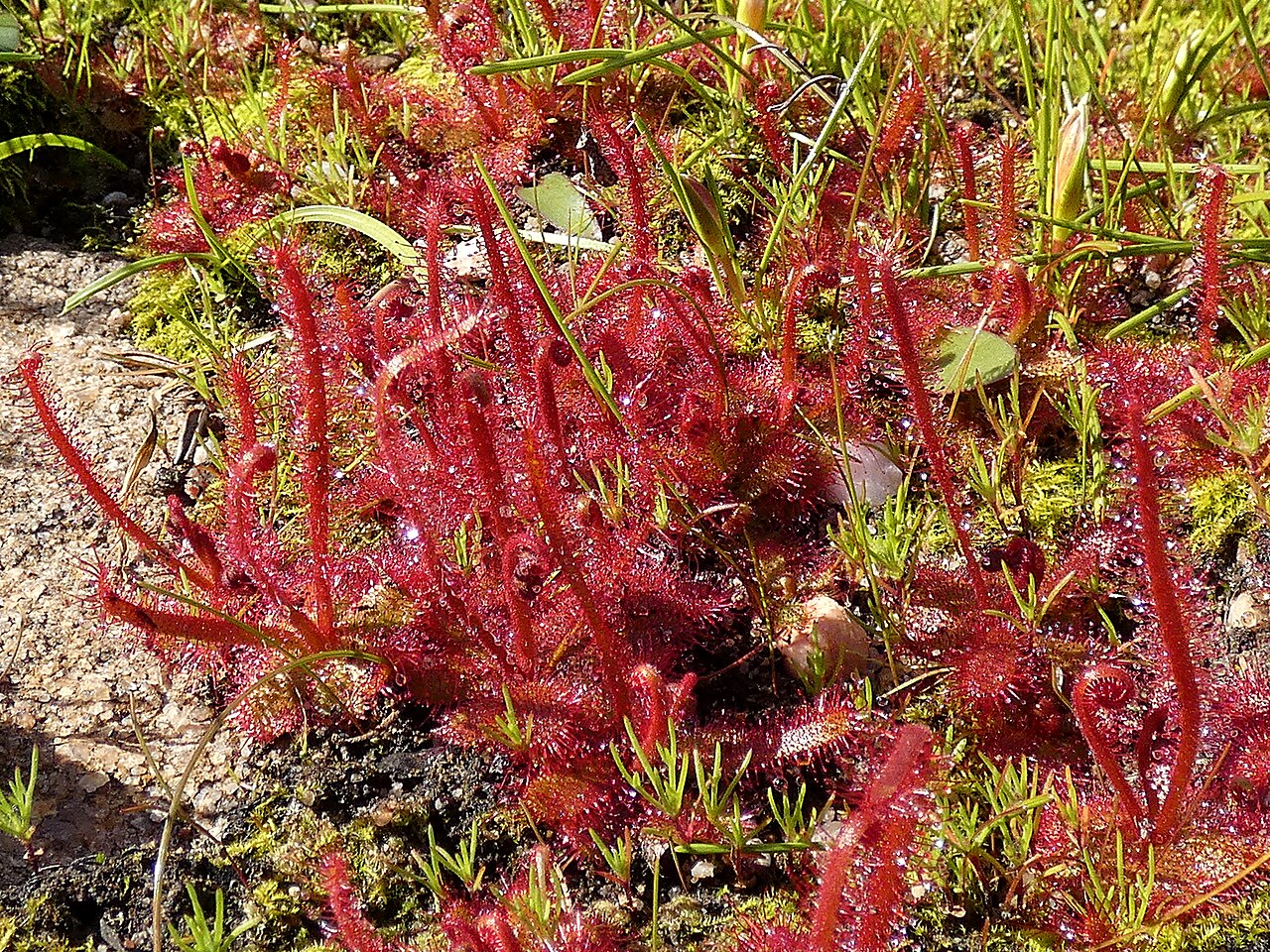
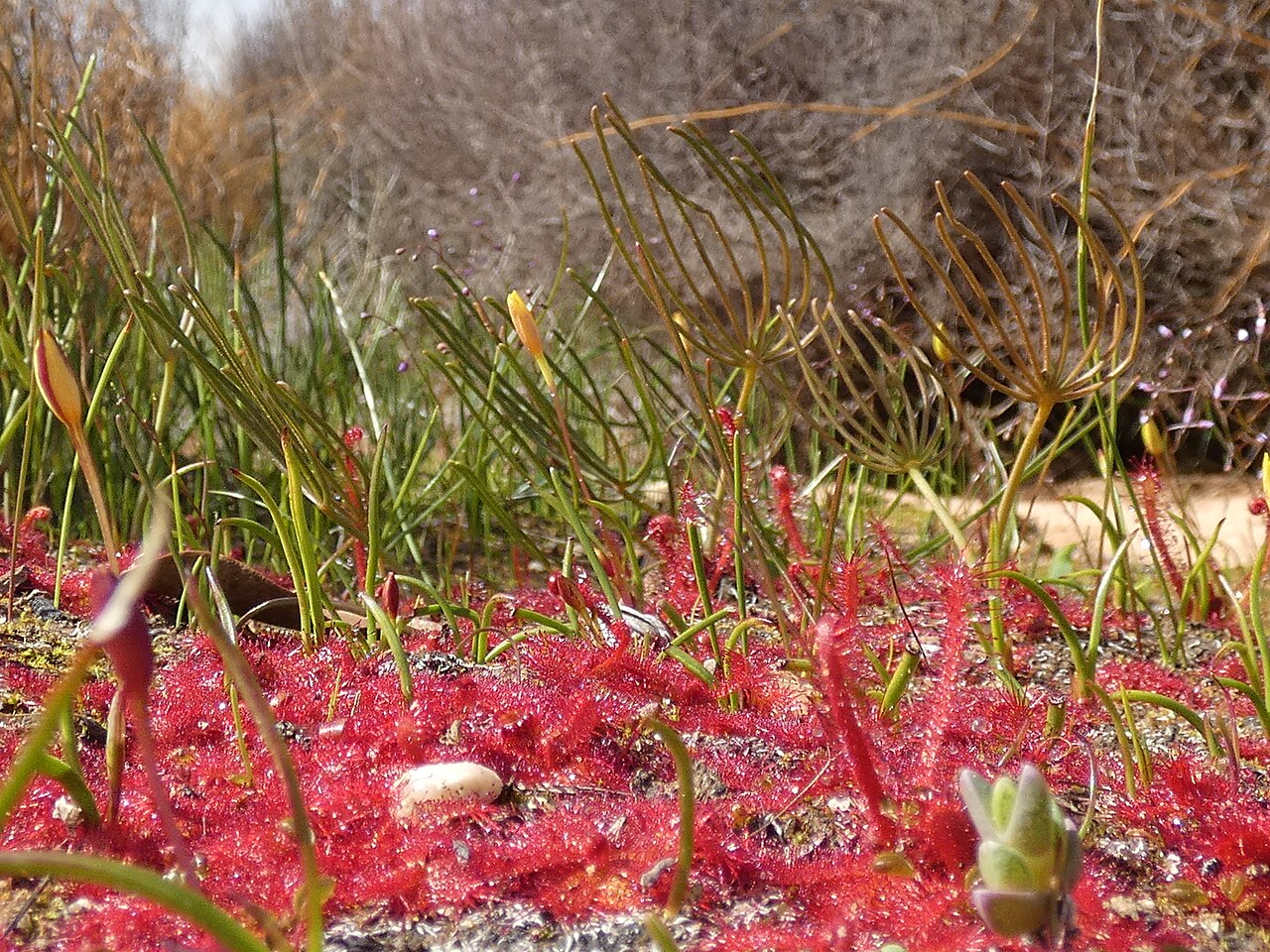
Identification
A small basal rosette of glandular trapping leaves, with a scape carrying white flowers; the colour gives the name. Detailed, reliable measurements were not available for this text; the measurement fields are therefore left empty, except for flower colour.
Similar species
Drosera trinervia also often has white flowers and is the main confusion species; it differs in leaf shape and in its three longitudinal veins. White forms of D. cistiflora have much larger flowers and a leafy stem. For a certain identification comparison with herbarium material is advisable.
The trap and how it works
An active flypaper trap: stalked glands with sticky droplets hold small insects, after which the tentacles bend towards the prey and the glands secrete digestive enzymes.
Habitat and ecology
Like most Cape rosetted sundews a winter grower of open, winter-wet places on sand in fynbos and renosterveld (W7, D1, B5). Specific habitat data are scarce.
Distribution and elevation
Endemic to the Cape Provinces of South Africa. A more precise range could not be established from the sources consulted. Altitudinal limits were not found.
- Recorded (one-degree cells)
Forms and variation
No varieties are recognised. The Cape rosetted sundews have been thoroughly revised since the 1990s (Debbert; Fleischmann and colleagues), and the delimitation of rarely collected species such as this one may still change in future revisions.
Where and when to see it
Search in late winter and spring in wet sandy places in the fynbos. White flowers on a small red rosette may also belong to D. trinervia; photograph rosette and flower close up.
Conservation status
Not assessed for the global IUCN Red List and not listed in CITES. For lack of data the state of the populations is unclear; loss of lowland fynbos and renosterveld to agriculture is a general threat to Cape lowland species.
Scientific name
Drosera alba | Phillipps, 1913
Described by Edwin Percy Phillips, in Annals of the South African Museum, volume 9, p. 105 (1913). The precise type locality could not be established with certainty. The species occurs in the south-western Cape region, South Africa. From the Latin alba ("white") — refers to the plant's white flowers, contrasting with its reddish leaves. English common name: "white sundew".
World Checklist of Vascular Plants (WCVP), via Plants of the World Online (POWO), Royal Botanic Gardens, Kew.