All species › Even-toed ungulates › Bovids › Wild Goat
Wild Goat | Capra aegagrus
Bezoargeit | Cabra salvaje
The wild goat (Capra aegagrus) is the wild ancestor of the domestic goat and lives in the mountains of Turkey and the Caucasus to Iran, Afghanistan and Pakistan. In the guide area it inhabits Anatolia and the Caucasus. Goats of the same type live on some Greek islands, but the animals on Crete, the kri-kri, are now regarded as feral goats domesticated at an early date.
Tracks
The slot is cloven, blunt and rounded at the tip, with a hard rim and softer sole, and resembles that of the domestic goat. Droppings lie in heaps at resting places under rocks and in caves. Males rub their horns and heads against shrubs and young trees.
Identification
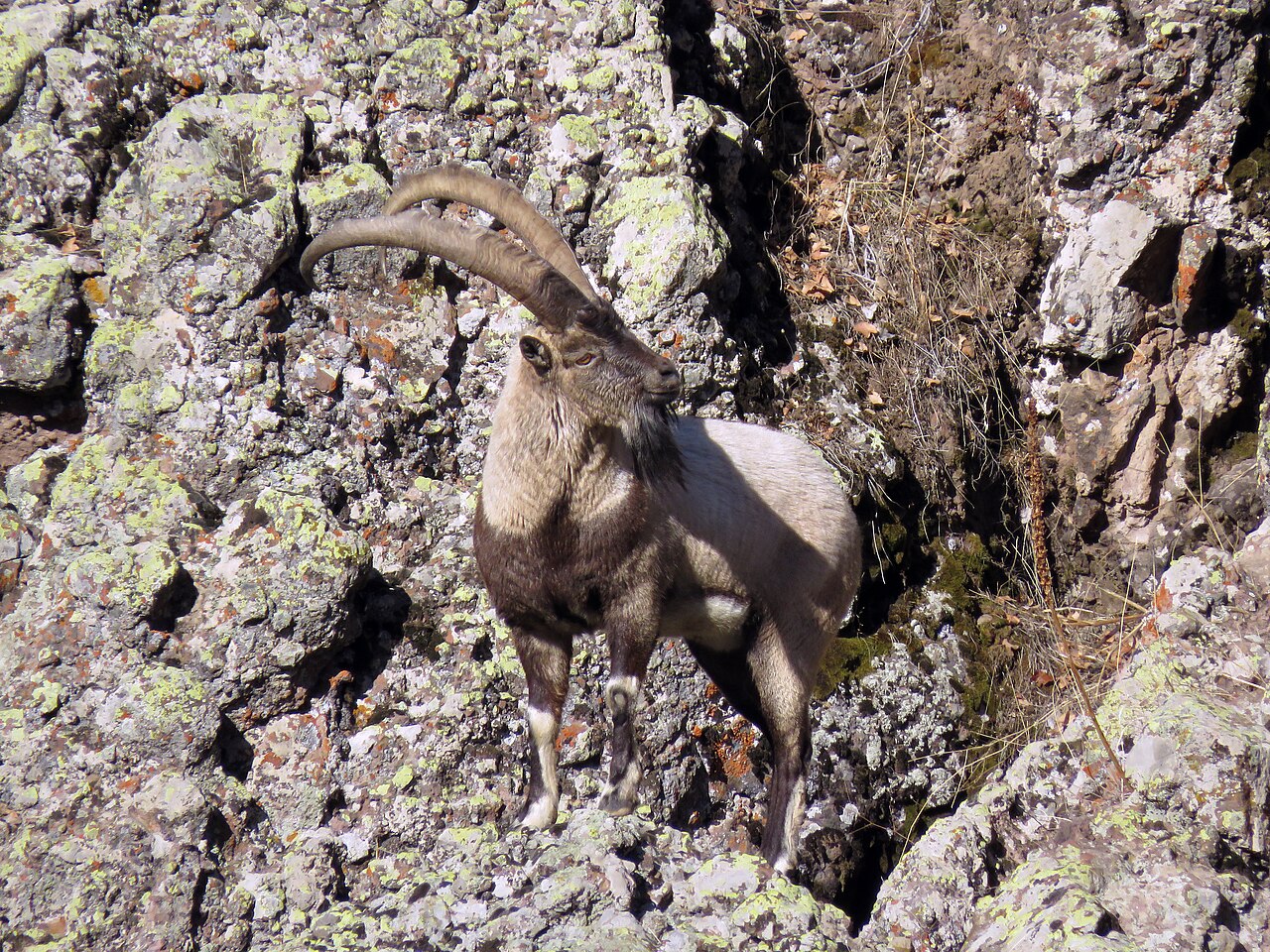
A slender wild goat of 120 to 160 cm head-body length, 70 to 100 cm shoulder height and 25 to 95 kg, with a tail of 15 to 20 cm. The male carries long horns curved backwards like a scimitar, up to 130 cm, with a sharp keel on the front edge bearing spaced knobs; the female has slightly curved horns of 20 to 30 cm. Males have a dark chin beard. In winter the male's coat is silvery grey to almost white with blackish-brown underparts, a black stripe along the back and dark markings on neck, shoulders and legs; in summer the coat is shorter and reddish brown. Females are yellowish brown to greyish brown all year with a dark dorsal stripe.
Similar species
The domestic goat descends from the wild goat; feral domestic goats usually have more irregular colouring and differently shaped, often twisted horns, but animals of the original type cannot always be separated with certainty. The Alpine ibex and the Spanish ibex occur outside the range of the wild goat; the Alpine ibex has horns with a broad, flat front and coarse transverse knobs. The Nubian ibex (Capra nubiana) of Sinai and the Levant has thinner horns curved in a semicircle without a sharp keel. In the Caucasus and northern Turkey the wild goat shares the mountains with the chamois, which is much smaller and has short, hooked horns.
Habitat
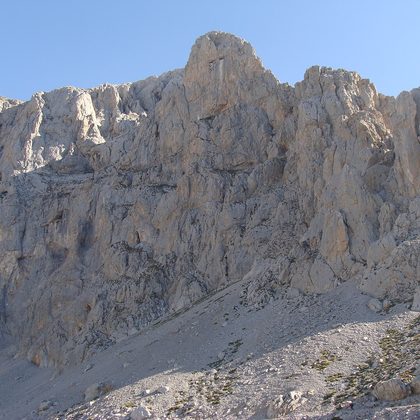
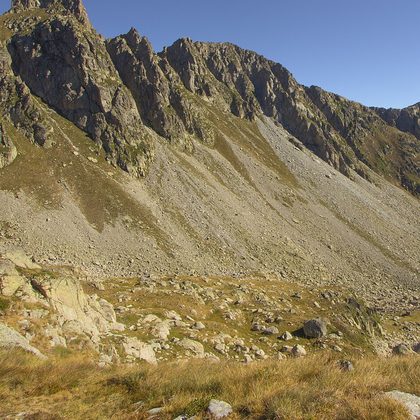
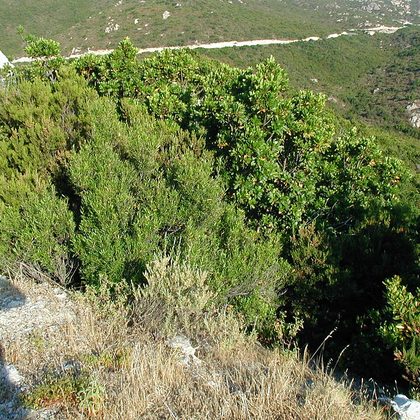
Rocky slopes, cliffs and gorges in mountain forest and scrub, up to 3250 m in Turkey and 2700 m in the Caucasus; also limestone mountains with Mediterranean scrub and open pine and juniper woodland. Steep, rocky terrain near food is a requirement.
Where the animal is most at home, classified with EUNIS — the European standard for habitats.
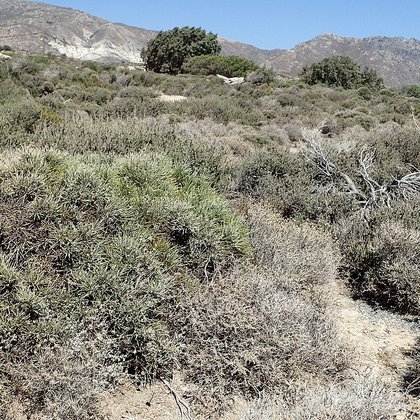
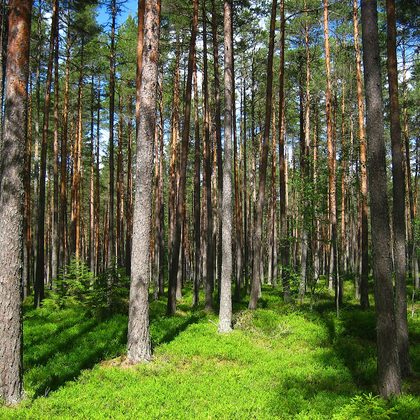
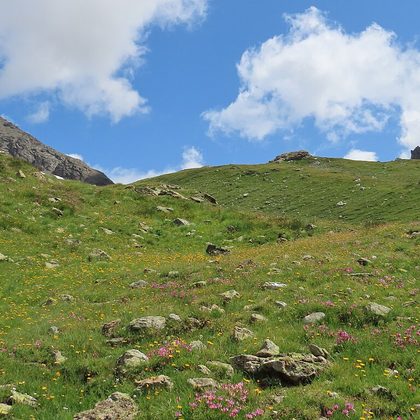
Distribution
From Turkey and the Caucasus in the west to Iran, Turkmenistan, Afghanistan and Pakistan in the east, in four recognised subspecies. In Turkey the species lives in the Aegean, Mediterranean, Black Sea and South-eastern Anatolia regions, especially in the Taurus Mountains. In the Caucasus it inhabits mountain forest in the basin of the Andi Koysu in Dagestan, Chechnya and Georgia. Older sources include the goats on Crete and on some smaller Greek islands, among them Gioura and Antimilos, in the species, but the kri-kri of Crete is now considered a feral domestic goat.
- Native
- dark = core range, pale = thinly spread
Way of life
The wild goat is active by day, mainly in the morning and afternoon. Outside the rut the sexes live largely apart; groups number from a few to more than a hundred animals. The rut lasts from mid-December into January. After a gestation of 170 days on average, one to three kids are born; the young are weaned after about six months. The animals eat grasses, herbs and the leaves and twigs of shrubs and trees.
Where and when to look
In Turkey, search the limestone ranges of the Taurus Mountains early in the morning, on cliffs and steep slopes above gorges. The animals often stand still on ledges and can be found with a telescope by systematically scanning rock faces. In winter the males are visible at greater distances because of their pale coat.
Conservation status
Near Threatened (NT, 2020). Threats are poaching, habitat loss through logging and competition with livestock. Many populations are small and isolated from one another. As the wild ancestor of the domestic goat, the species is important for the conservation of genetic variation.
Scientific name
Capra aegagrus | Erxleben, 1777 (GBIF: Capra hircus)
Erxleben described the species in 1777 and placed it straight away in the genus where it still stands. Capra is the Latin word for 'she-goat'. aegagrus is Greek aigagros, 'wild goat', from aix (stem aig-), 'goat', and agrios, 'wild'. The specimen the first description was based on came from Russia.