All species › Rodents › Mice and rats › Mound-building Mouse
Mound-building Mouse | Mus spicilegus
Steppemuis | Ratón De Las Estepas
The mound-building mouse builds storage mounds. Every autumn a few young animals together raise a mound of earth one to two metres across, with a store chamber full of seed beneath it, in which they spend the winter. These mounds are visible from a long distance. The animal itself is barely separable from a house mouse; the mound is an unambiguous character.

Tracks
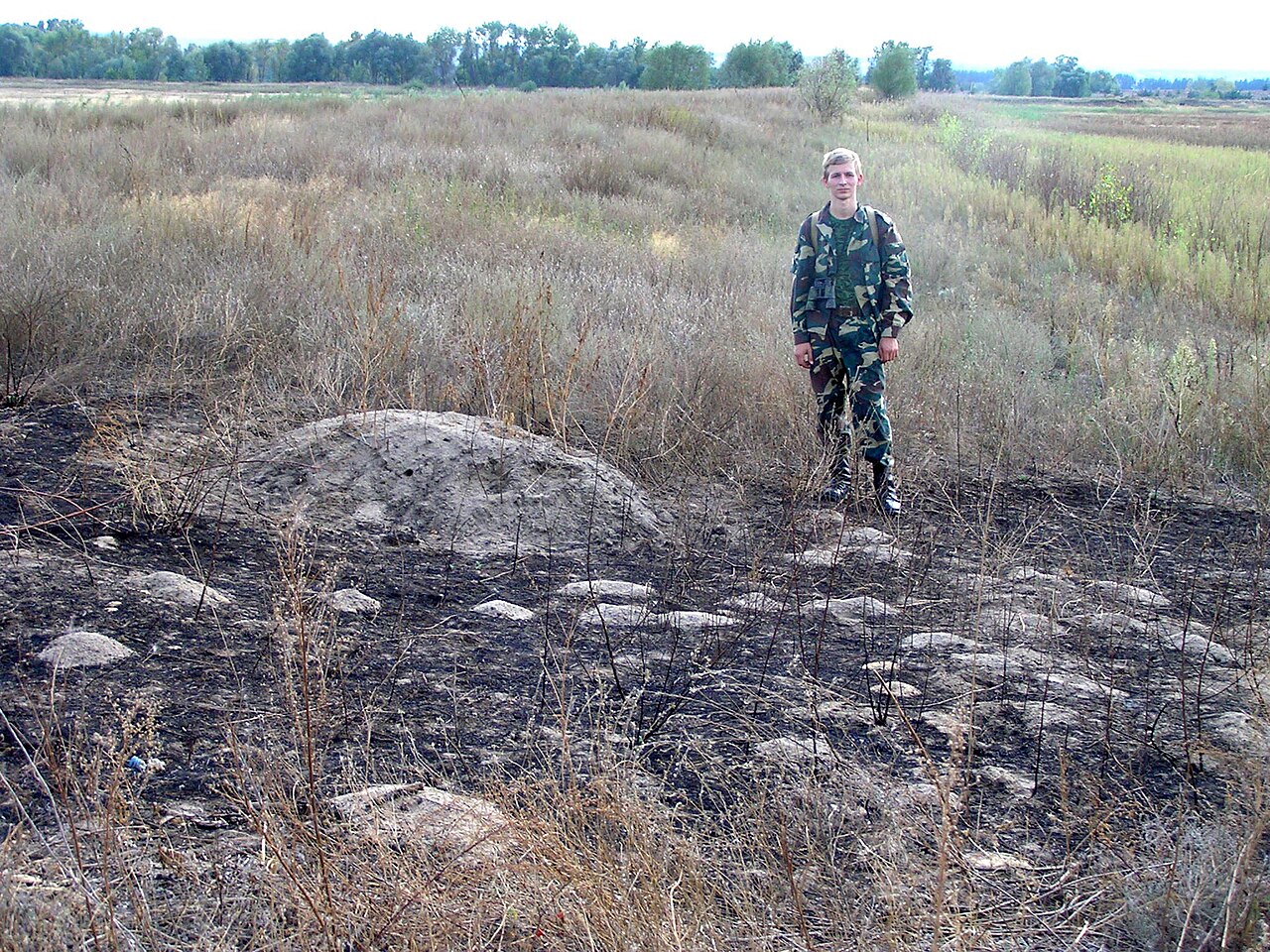
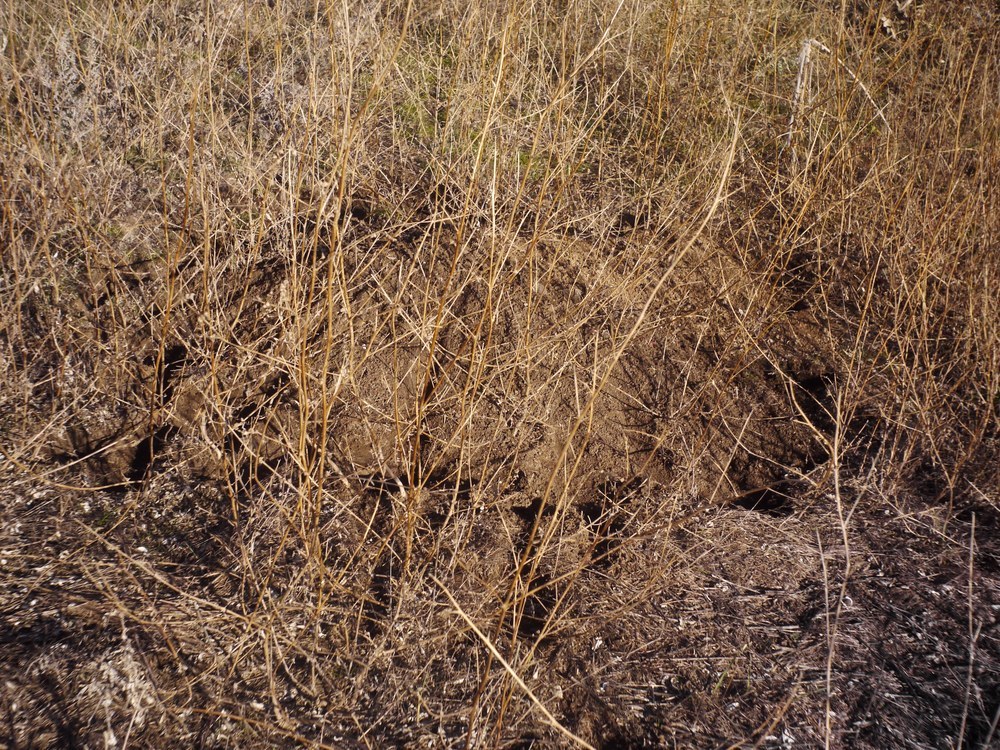
The mound, called kurgancsik by the Hungarians, is an unambiguous sign. In September and October four to fourteen related young animals, mainly males, build in two to three weeks an oval heap of soil and plant material one to two metres across, exceptionally up to four metres, and about half a metre high. In and under the mound lie store chambers with seed and grain, up to ten kilograms per mound and in some cases considerably more, collected from dozens of plant species; the nest lies sixty to eighty centimetres below the surface and is connected to the store by tunnels. The mound protects against weather, frost and predators and is the reason the late-born young survive the winter. In a well-occupied field there may be up to twenty per hectare, as low swellings in otherwise flat arable land or steppe; in winter and early spring, when the crop is gone, they are visible at hundreds of metres, and on burnt or bare fields they are clearly visible. No other European mammal builds a comparable structure. A molehill is loose, black, conical and free of plant debris; the work of a blind mole-rat consists of a line of separate heaps; the mound of this species is broad, firm, interwoven with straw and grain remains, and in spring recognisable by the different vegetation growing on it. Droppings and tracks cannot be distinguished from those of the house mouse.
Identification
A mouse of the size and shape of a house mouse: five and a half to just over nine centimetres head and body, with a tail equal to head and body or slightly shorter, never clearly longer. The back is pale grey-brown, sandier and lighter than in the house mouse, and the belly is whitish grey and fairly sharply demarcated, without the gradual transition that characterises the house mouse. The tail is thin and not clearly bicoloured. Ears nine to fourteen millimetres, hind foot fourteen to seventeen and a half millimetres. The upper incisor has the notch at the back shared by all Mus species. In the hand and on photographs the differences from the house mouse are so slight that in practice they are not conclusive; identification rests on locality, season and mound.
Similar species
The house mouse (Mus musculus) is the main confusion species, and on external characters the two cannot be reliably separated in the field. The usable criterion is ecological: the mound-building mouse does not enter buildings, whereas in eastern Europe the house mouse moves indoors in winter. A mouse on steppe or stubble with a mound nearby is therefore this species, a mouse in a barn is not. Where both species occur together, the pale grey back, the more sharply demarcated whitish grey belly and the slightly shorter, thinner tail are indications but not proof. The closest relative, the Balkan short-tailed mouse (Mus macedonicus), is its sister species and very similar; the ranges meet in the Balkans, but that species builds no mounds and occurs further south and east. The wood mouse is larger, russet, with much larger eyes and ears, a pure white belly and a bounding gait. The Algerian mouse does not occur in this part of Europe.
Habitat
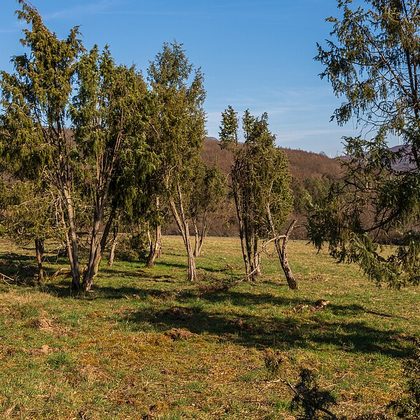
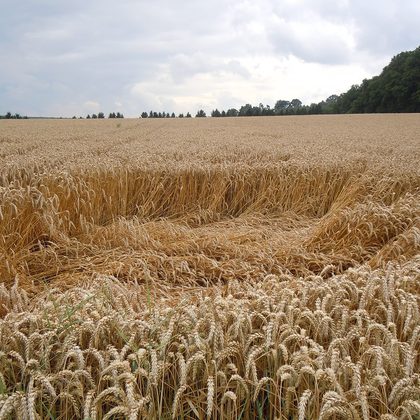
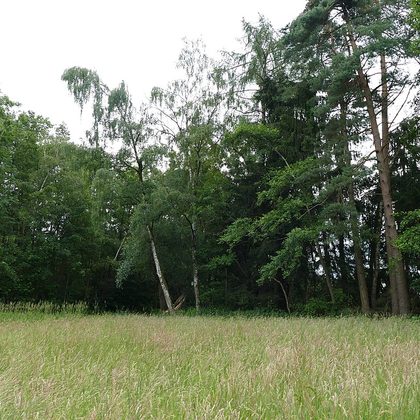
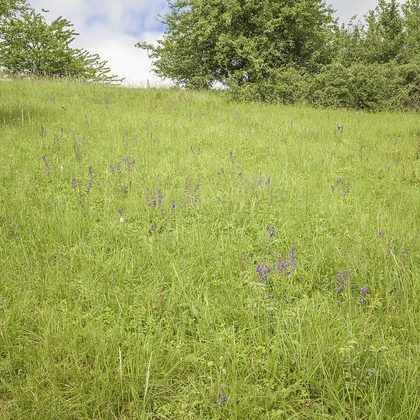
Open, dry, cultivated land: steppe and steppe-like grassland, fallow fields, stubble after the cereal harvest, rough field margins, road and railway embankments and the dykes along the Danube and the Tisza. The species depends on soil in which it can dig and on crops that produce seed, and therefore benefits from arable farming. It does not occur above about two hundred metres and, unlike its closest relatives, does not enter buildings.
Where the animal is most at home, classified with EUNIS — the European standard for habitats.

Distribution
Endemic to south-eastern Europe: from Austria and Slovakia through Hungary, Croatia, Bosnia and Herzegovina, Serbia, Montenegro, Albania and North Macedonia to Greece, and eastwards through Romania, Bulgaria, Moldova and Ukraine into southern Russia. The western limit lies in the Vienna Basin and the Slovak lowland; further west the species does not occur in Europe. A separate, isolated form lives on the Adriatic coast.
- Native
- dark = core range, pale = thinly spread
Way of life
Nocturnal and entirely ground-dwelling. The species eats seeds and plant material: cereals and the seeds of arable weeds make up the bulk, and the species eaten are not the same as those stored in the mound. Breeding is strictly seasonal, at the end of spring and in summer; in captivity a female produces a litter of six or seven young about every four weeks. Young born late in the year do not breed that season, but in autumn build a mound together with their siblings and become sexually mature only the following spring. The species is the only Mus species that is socially monogamous: a male and a female form a stable pair, defend their own territory in the breeding season, are both aggressive towards unfamiliar conspecifics and rear the young together. There is no hibernation; the winter is spent in the mound, where the animals live off their own store.
Where and when to look
Search in November, December or March, when the fields are bare. Drive past stubble, fallow land and dykes in the Hungarian Alföld, the Vojvodina, the Dobruja or the Ukrainian steppe and look for low, broad swellings in an otherwise flat field; the mounds usually lie in groups. Visit the same site in spring and note the different vegetation on the mound. Do not dig: the occupants of an opened mound do not survive the winter. The animal itself can only be seen with a torch on a windless evening and then usually cannot be distinguished from a house mouse; in this species the mound is the most useful record.
Conservation status
Least Concern (2023). The species is widespread throughout its range and locally numerous, and benefits from cereal farming. Its building behaviour is, however, under pressure: deep ploughing in late summer, early incorporation of stubble and the clearing of fallow and field margins destroy the mounds in exactly the weeks in which they are built, and without a mound the autumn generation does not survive the winter. In Austria and Slovakia, at the western edge of the range, the species has become locally rare for this reason. The dykes and embankments along the major rivers, by contrast, form a permanent and undisturbed habitat. As an agricultural pest the species is of minor importance. It is one of the best-studied wild relatives of the laboratory mouse and a much-studied example of monogamy and cooperation in rodents.
Scientific name
Mus spicilegus | Petényi, 1882
Petényi described the species in 1882 and placed it straight away in the genus where it still stands. Mus is the Latin word for 'mouse', cognate with Greek mys. spicilegus is Latin for 'ear-gleaner', from spica, 'ear of grain', and legere, 'to gather', after the seed heads the mouse piles up in its store-mounds. The specimen the first description was based on came from Hungary, Budapest.