All species › Hedgehogs, shrews and moles › Hedgehogs › Long-eared hedgehog
Long-eared hedgehog | Hemiechinus auritus
Langooregel | Erizo Orejudo
The Long-eared Hedgehog (Hemiechinus auritus) is a hedgehog of steppe and semi-desert, with long ears and long legs. Its range lies largely in North Africa, the Middle East and Central Asia; in Europe the species survives only in southern Russia and on Cyprus, and it has disappeared from Ukraine. On the European regional Red List it is listed as Vulnerable, the highest threat category among the European hedgehogs.
Tracks
The most useful sign is the burrow: a self-dug tunnel twenty centimetres to a metre and a half long with a single opening, usually under a bush, in a ditch bank or in the loose soil of a dry riverbed, with a small spoil fan in front of the entrance. The Western European Hedgehog digs no burrow but uses a leaf nest under a brash pile. The dropping resembles that of other hedgehogs but is smaller, two to four centimetres, cylindrical, black and glossy, and contains many beetle remains; in dry areas also remains of scorpions, which are regularly eaten. Droppings lie in the open on paths, at the burrow entrance or on threshing floors. The print is small; in the trail the long legs place the prints far apart and regularly, more like a small carnivore than the Western European Hedgehog. In drift sand the five-toed print with far-projecting claws is easily recognised. Conical snout pits can be found in the sand of oases and garden edges. At night the animal snuffles and huffs audibly. Because it covers seven to nine kilometres a night, more than the Western European Hedgehog, the morning trail can be a long, straight line across the sand.
In its habitat
Head close-up
Identification
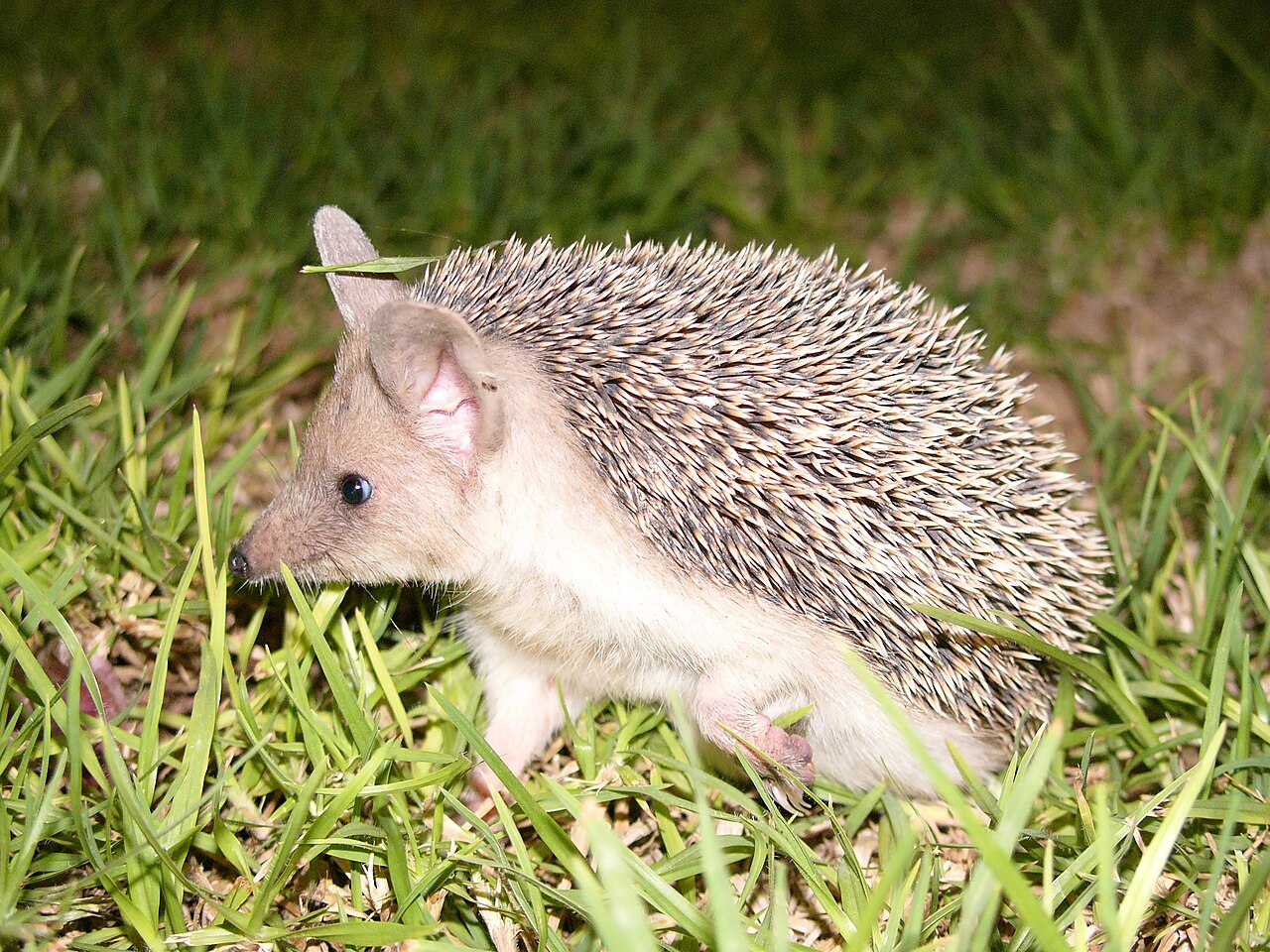
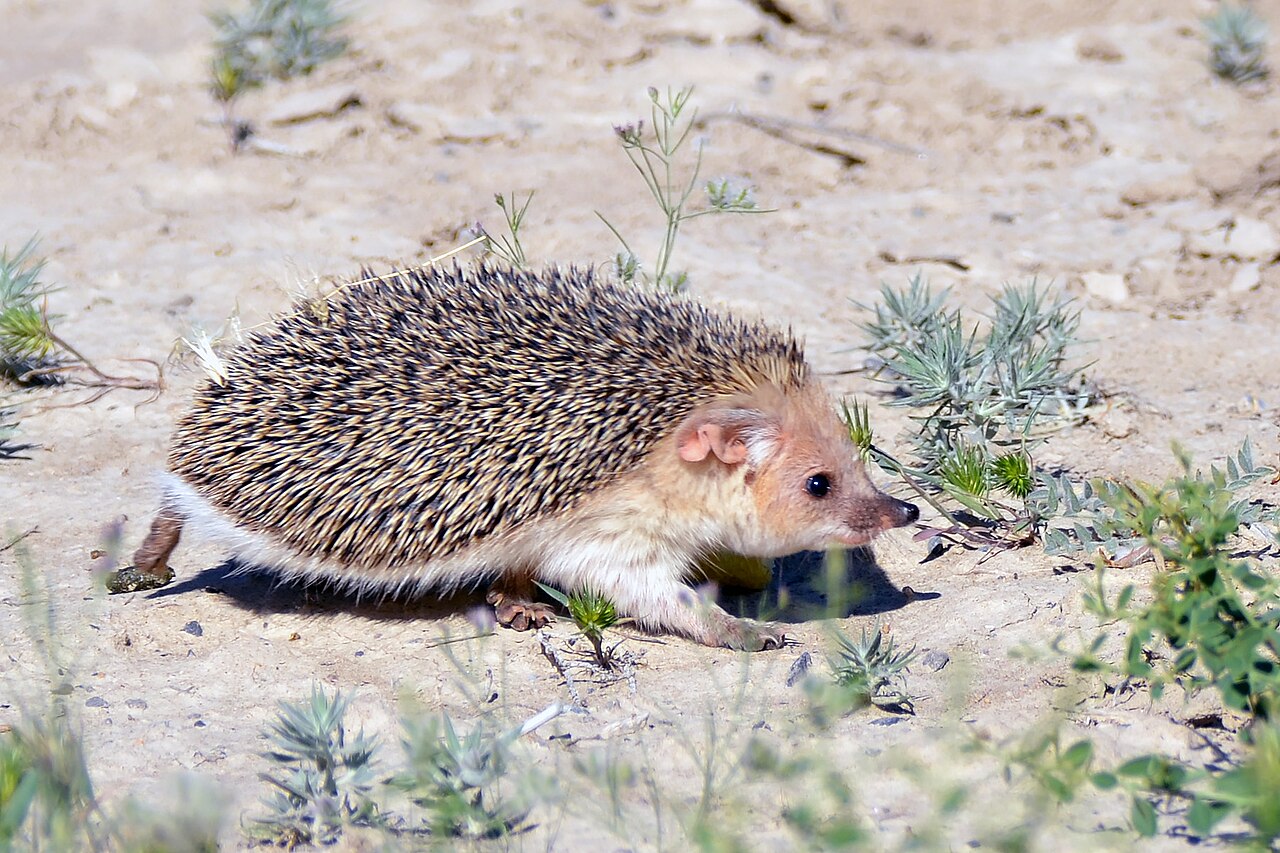
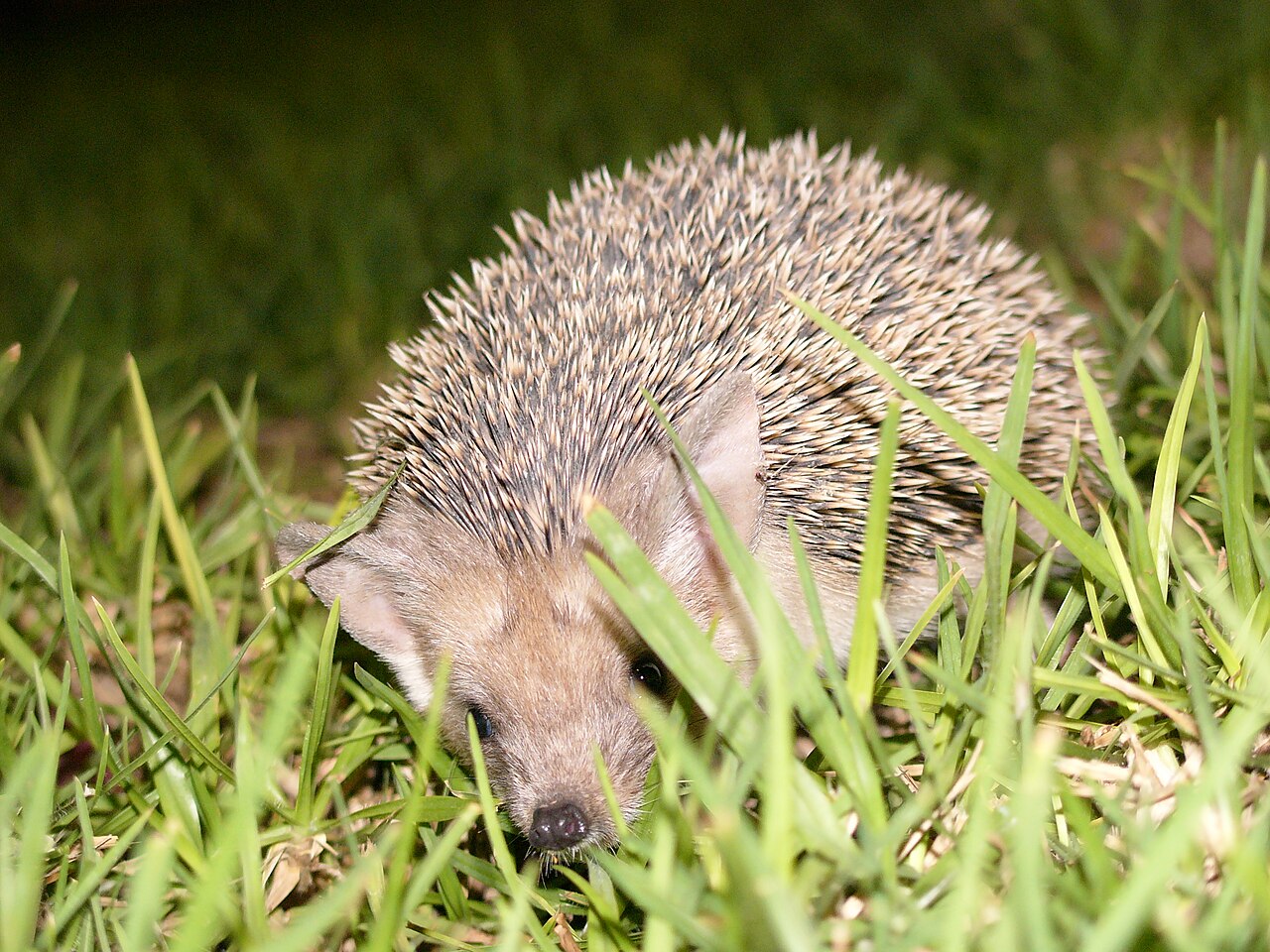
A small, lightly built hedgehog of sixteen to twenty-eight centimetres and usually two hundred and thirty to four hundred grams, about a third of the weight of a Western European Hedgehog, with outliers up to a kilo. The ears are four to six centimetres long, slightly pointed and mobile, and project clearly above the spiny coat; they play a part in heat loss. The legs are long; the tail is a stub of one to five centimetres that is not visible in the field. The spines are about twenty-five millimetres long, up to thirty-four on the lower back and flanks, and have two broad black bands separated by a pale band and a light brown tip, so that the spiny coat looks finely streaked and pale. The belly fur is white and sharply bounded, and the face is uniformly greyish brown to sandy, without a mask and without a bare parting on the crown. When threatened the animal does not always roll up: more often it runs away or leaps at the aggressor with a hiss.
Similar species
The Desert Hedgehog (Paraechinus aethiopicus) also has large ears and occurs alongside the Long-eared Hedgehog in Israel, Jordan and North Africa, but has a dark mask around muzzle and eyes, with a broad white forehead band above it, and dark legs; the Long-eared Hedgehog has a plain face. The ears of Paraechinus are also broader and rounder, those of the Long-eared Hedgehog longer and more pointed. Erinaceus concolor, which lives in farmland in Turkey and the Levant, is much bulkier and darker, with small ears barely projecting above the spines and a dark belly with a white chest patch; it keeps to fields and gardens, whereas the Long-eared Hedgehog also occurs on drier ground. On Cyprus the Long-eared Hedgehog is the only hedgehog. In southern Russia its range borders that of the Northern White-breasted Hedgehog; ears, white belly and long legs distinguish the Long-eared Hedgehog. An ear longer than the surrounding spines points to this species.
Habitat
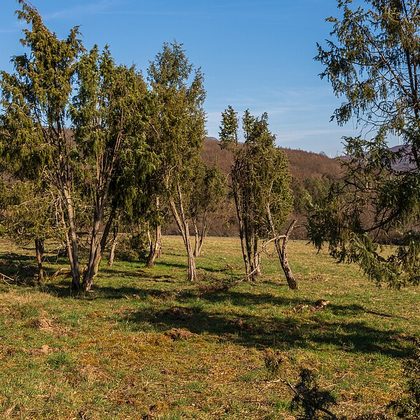
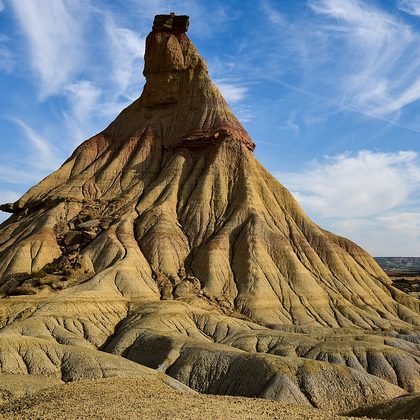
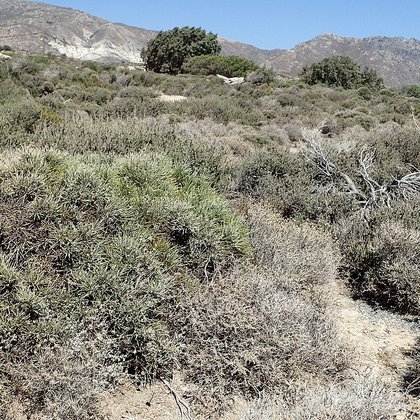
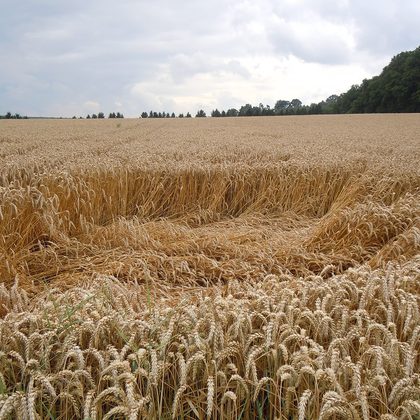
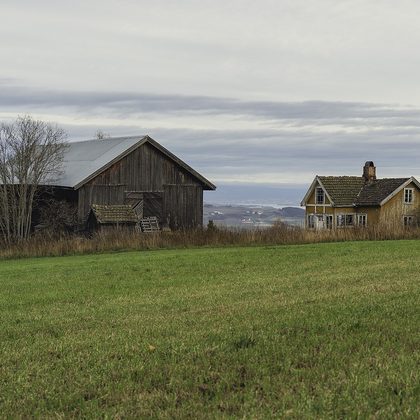
Dry, open and half-open country, but not bare desert: the species tolerates heat and drought only moderately and needs water and cover. Habitats are dry riverbeds, dune margins, oases, valleys with shrubs, semi-desert and steppe, and to a large extent also cultivated land: fields, orchards, gardens, parks and village edges, where water and insects occur together. In Pakistan the species has been found between nine hundred and two thousand five hundred metres. Annual rainfall in the core range is roughly one hundred to four hundred millimetres, the transition zone between steppe and desert; in Europe this restricts its occurrence to the south-east.
Where the animal is most at home, classified with EUNIS — the European standard for habitats.

Distribution
From northern Libya and Egypt through the Middle East and Central Asia to Mongolia, western China and western Pakistan. The nominate subspecies reaches furthest into Europe: Ukraine, south-western Russia and the eastern Caucasus. On Cyprus the species was introduced by people according to the Handbook of the Mammals of the World. Around the eastern Mediterranean most records come from Cyprus and Israel, with a few from Egypt and Jordan. No records have been reported from Ukraine in the last twenty years, and specialists regard the species as extinct there. In Europe this leaves southern Russia and Cyprus. One record is known from the Netherlands, of an escaped animal.
- Native
- dark = core range, pale = thinly spread
Way of life
Nocturnal and solitary, but not aggressive towards conspecifics; male home ranges cover about five hectares, those of females one to three and a half, and they overlap. An animal covers seven to nine kilometres a night. Omnivorous: mainly insects, also other invertebrates, small vertebrates, eggs, carrion, fruit and seeds. The species also eats scorpions and snakes; facing a snake it protects itself with its spines and rolls up when the snake strikes. Breeding runs from spring into late summer; after a gestation of twenty-eight to forty-two days three to five young are born, sometimes one to seven, weighing seven to thirteen grams and weaned at a month to forty days. Young can be sexually mature at six weeks. Lifespan is six to seven years. Wintering differs by region: the species enters torpor, but the duration varies. In North Africa it lasts five to forty days at a stretch, in the mountains of Pakistan five to six months, and on the Russian steppe, with its hard winters, the species hibernates for months. On Cyprus it is probably active almost all year in mild winters.
Where and when to look
The species is easiest to find on Cyprus. Search in the last light and the first hours of darkness along field edges, irrigation channels, village edges and hotel gardens; the animals also come onto lawns. March to May and September are the best months. In Israel the semi-desert margins and oases of the Negev and the Jordan Valley are suitable; the Desert Hedgehog also occurs there, and the face separates the two. Use a torch with a red filter. Because the animal tends to run rather than roll up when disturbed, a slow, low approach is needed. At a burrow one can wait in the evening; the burrow has one entrance, where the animal will emerge. In southern Russia the species is scarce and local; documented records there add to knowledge of its distribution.
Conservation status
Least Concern globally (LC, 2021); in the Asian part of the range the species is common and stable. On the European regional Red List it is listed as Vulnerable, the highest category among the European hedgehogs. It has disappeared from Ukraine and in Europe survives only in southern Russia and on Cyprus; several Russian regional Red Data Books list it as rare. The European total is estimated at fewer than a few thousand animals, an estimate based on little data. The causes are the same as for other hedgehogs: conversion of steppe to arable land, loss and fragmentation of scrub along dry beds, and traffic. No monitoring series exists with which the decline in southern Russia could be followed, and the situation on Cyprus has never been systematically mapped.
Scientific name
Hemiechinus auritus | (S. G. Gmelin, 1770)
S. G. Gmelin described the species in 1770 as Erinaceus auritus; because it was later moved to another genus, the author and year stand in brackets. Hemiechinus is Greek, from hēmi-, 'half', and echinos, 'hedgehog': the half hedgehog, the spines covering only part of the back. auritus is Latin for 'long-eared', from auris, 'ear', after the ears that stand well clear of the spines. The specimen the first description was based on came from Russia, Astrakhan.