All species › Hedgehogs, shrews and moles › Moles and desmans › Iberian Mole
Iberian Mole | Talpa occidentalis
Iberische blinde mol | Topo Ibérico
The Iberian Mole lives in the west and north-west of the Iberian Peninsula. Unlike in the Common Mole, breeding falls not in spring but in autumn and winter: in the dry summer breeding stops, and the young are born in the wet season. The species is endemic to the Iberian Peninsula, sister species of the Aquitanian Mole to the north, and its distribution follows above all the moisture of the soil.
No photograph of a living wild animal of this species with a suitable Creative Commons licence exists. Do you have one that meets the rules? Send it in.
Tracks
The molehill is the only regular sign. Hills of 8 to almost 25 cm across have been measured, with 2 to 18 hills per 20 square metres; the tunnels lie 5 to 12.5 cm deep, just below the surface. The hills cannot be told from those of the Aquitanian Mole; locality decides. One particular point is that the Lusitanian Pine Vole shares the burrow systems of this mole, so that one and the same system may show both molehills and vole holes.
Identification
A small mole of the familiar build, but smaller than the Common Mole, with a relatively shorter snout and broader forefeet. Head-body length runs from 9.6 to 13 cm, the tail from 1.9 to 3.5 cm and the weight from 34 to 66 grams. The fur is black; one animal is known with a white patch on the belly. The eyes lie beneath the skin. Males average over 20 per cent heavier than females. The skull is small but sturdy, with a broad rostrum and stronger molars than in the Common Mole; the pelvis is of the europaeoid type, with the fourth sacral foramen closed by a bony bridge. As in the other Talpa species studied, females have ovaries containing testicular tissue (ovotestes).
Similar species
Externally the species can barely be told from other moles; locality decides. Northern Spain and France hold the Aquitanian Mole (Talpa aquitania), its sister species, which also has covered eyes but averages larger and heavier; the two meet in the north of the peninsula, with the Aquitanian Mole in the eastern Cantabrian Mountains, the Pyrenees, the Ebro basin and Catalonia. A difference in the molars — the mesostyle of the first upper molar is often two-cusped in this species and single in the Aquitanian Mole — can only be seen on a skull. The Common Mole (Talpa europaea) does not occur on the peninsula. The heaps of the Lusitanian Pine Vole (Microtus lusitanicus) and the Mediterranean Pine Vole (Microtus duodecimcostatus) are smaller and come with open holes; the Lusitanian Pine Vole also uses the mole's tunnels.
Habitat
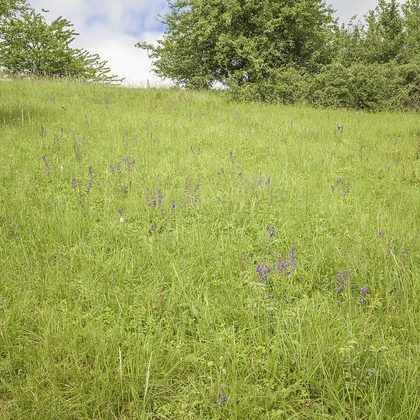
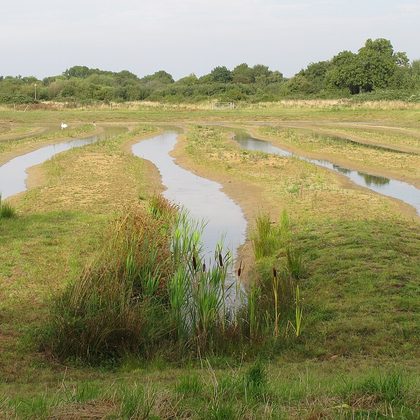
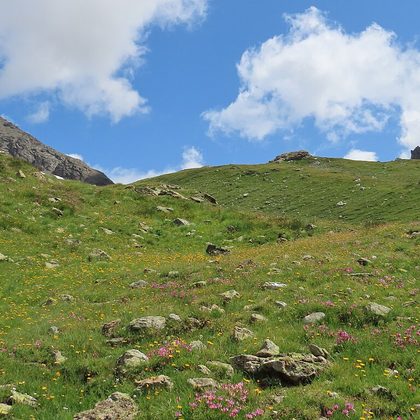
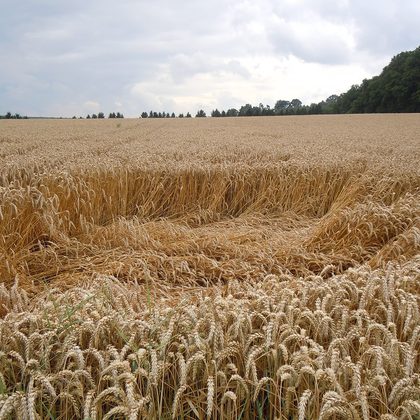
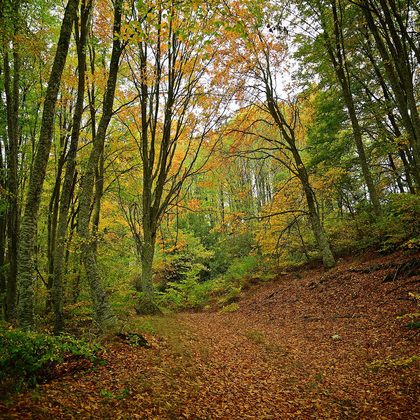
Any habitat with deep soil that stays moist all year: hay meadows, pastures, orchards and poplar plantations, from sea level to about 2300 m. In dry lowlands the species is scarce, in the mountains more common; where land is irrigated, density can rise. Mole numbers track earthworm numbers, and so a soil that does not dry out in summer.
Where the animal is most at home, classified with EUNIS — the European standard for habitats.
Distribution
Endemic to the Iberian Peninsula, where it is widespread in the north-west and west, from Galicia to the Sistema Central — the type locality lies at La Granja in the Sierra de Guadarrama — and into Portugal. It is absent from most of the east, the Pyrenees and the Ebro basin; in the north that ground is held by the Aquitanian Mole. The species also occurs on Cortegada, a tidal island off the Galician coast. In dry regions populations are small and fragmented.
- Native
- dark = core range, pale = thinly spread
Way of life
Breeding follows the rainy season. During the summer drought, from May to August, both sexes are sexually inactive. The breeding season begins in September to November and runs to May: females are pregnant from October to May and lactate from November to May. Gestation lasts 28 days, with 2 to 3 young per litter. Newborns weigh 3 to 5 grams and are naked with reddish skin; after 12 to 17 days they have a short grey-black coat, for the first 27 days they take only milk and stay in the nest, and at about a month they are weaned, at around 45 grams. Young become sexually mature in October or November. The diet resembles the Common Mole's: earthworms, slugs, millipedes, centipedes, crickets, caterpillars and the larvae of cockchafers and stag beetles. No specific data exist on daily rhythm or use of space; they are presumed to resemble the Common Mole's.
Where and when to look
In the Iberian Peninsula, locality is the identification character: molehills in the west and north-west of the peninsula and in the Sistema Central belong to this species; in the Pyrenees, Catalonia, the Ebro basin and the eastern Cantabrian Mountains to the Aquitanian Mole. The best chance of activity is the wet season from autumn to spring, when the species breeds and the hills are fresh; in the dry summer little shows at the surface. Search damp mountain meadows, stream valleys and irrigated pastures and orchards.
Conservation status
Least Concern (LC, 2024). The species is common in the north-west of the peninsula. Vulnerable are the marginal populations in dry regions, which are sensitive to changes in habitat. Locally the species is controlled as a pest of farming and horticulture.
Scientific name
Talpa occidentalis | Cabrera, 1907
Cabrera described the species in 1907 and placed it straight away in the genus where it still stands. Talpa is the Latin word for 'mole'. occidentalis is Latin for 'western', from occidens, 'setting sun, west'; Cabrera described the westernmost of the European moles from Spain. The specimen the first description was based on came from Spain.