All species › Rodents › Voles and hamsters › Günther's Vole
Günther's Vole | Microtus guentheri
Mediterrane woelmuis | Topillo de Günther
Günther's Vole (Microtus guentheri) is a vole of the Mediterranean zone of the Levant. In years of high numbers the species causes heavy damage in the wheat fields of Israel, Lebanon and Syria; in years of low numbers it is hard to find. It is the reason for a cross-border programme in which rodenticide is replaced by nest boxes for Barn Owls.
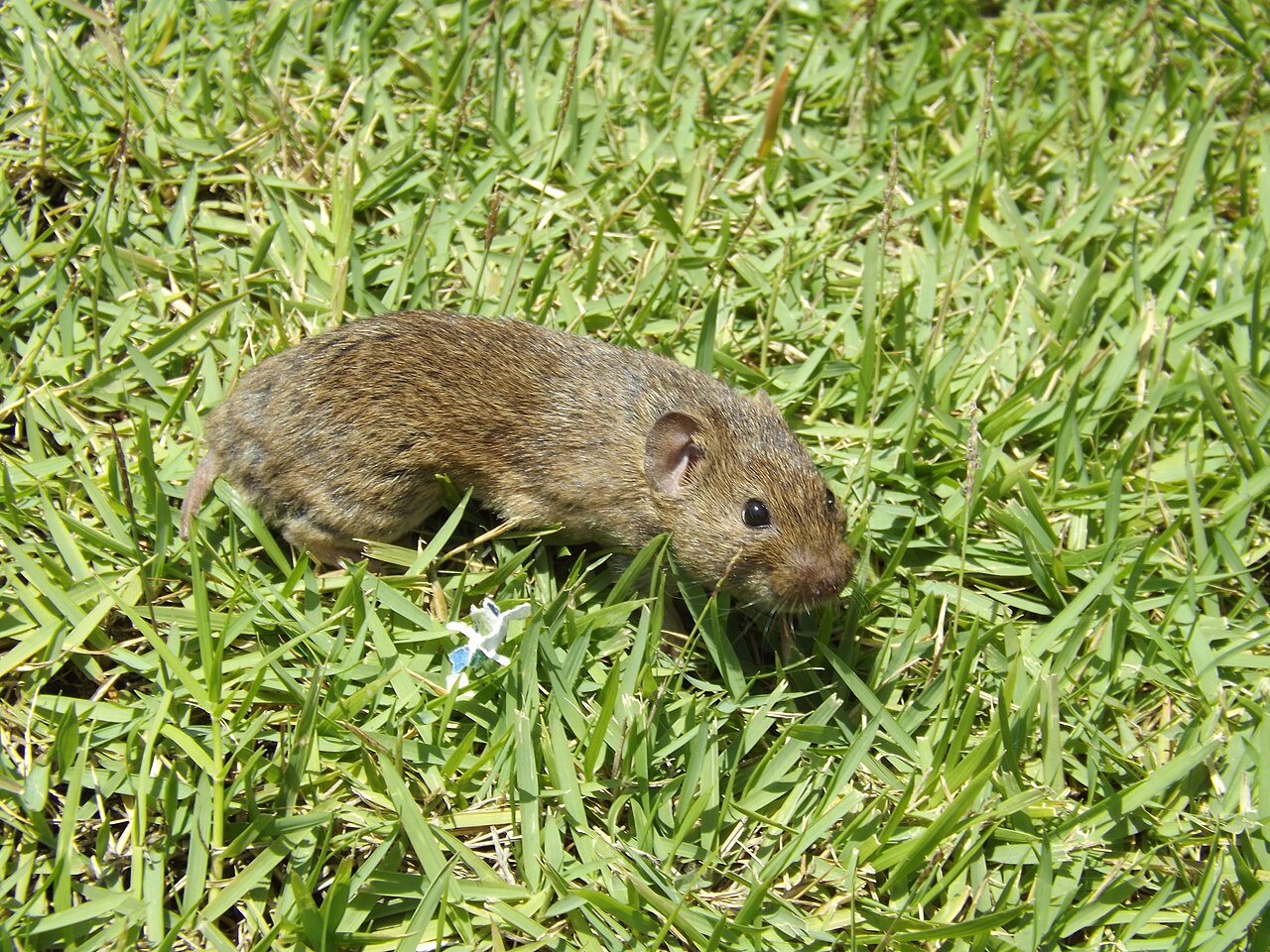
Tracks
A family digs a burrow system with three to fifty entrances, shallow in winter (ten to twenty centimetres) and up to sixty centimetres deep in summer, where the temperature stays below twenty to twenty-four degrees even on the hottest days. The system contains a nest chamber with a spherical nest of dry plants and one or two storage chambers holding 250 to 1500 grams of stored seed, grain and tubers; such storage chambers are characteristic of voles of the subgenus Sumeriomys. In northern Jordan more than forty burrow systems per thousand square metres have been counted, so that an affected lucerne field is full of holes. Above ground there are runways through the vegetation between the entrances, small heaps of clipped grass along the runways and droppings of four to seven millimetres in small latrines. In winter and at high densities the bark of young fruit trees is gnawed off all round. The tunnels are also used by other species: in Jordan Grey Dwarf Hamster and Tristram's Jird have been found in them. Analysis of Barn Owl pellets is the most reliable survey method.
Head close-up
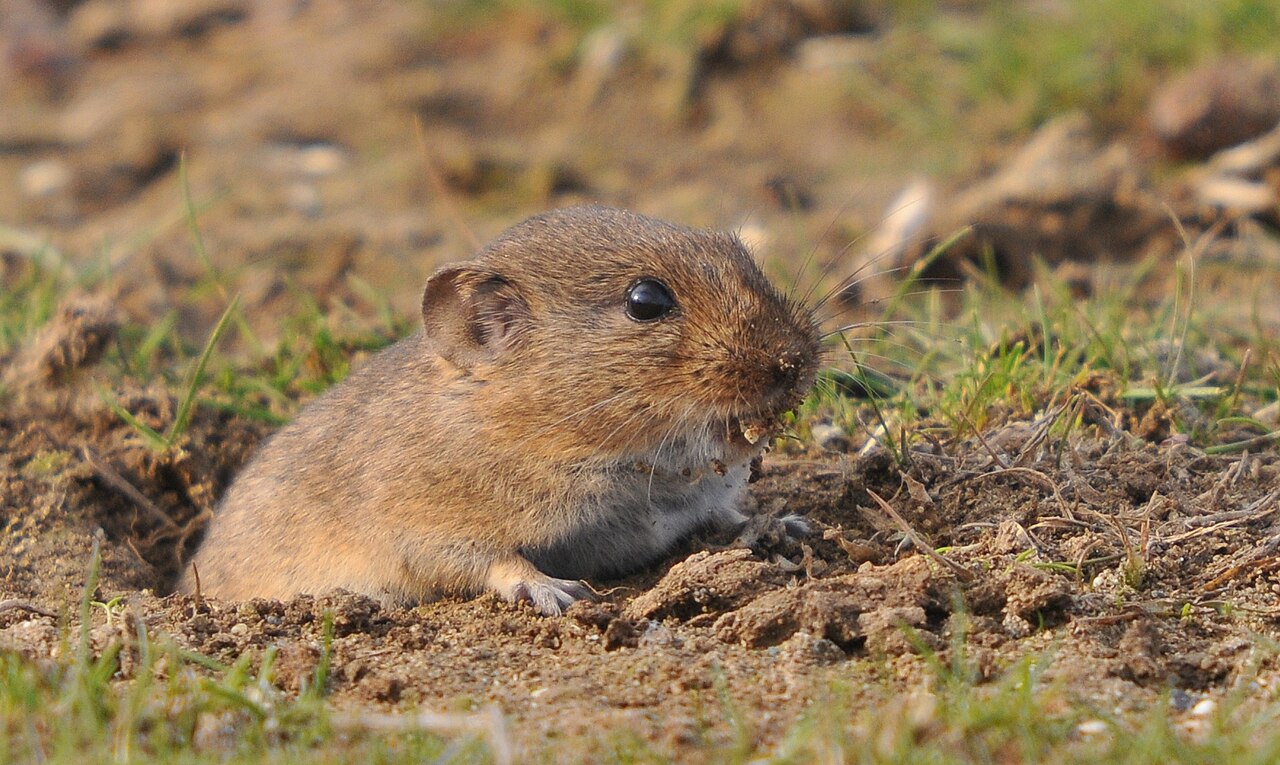
Identification
Large and thickset for a vole: head-body 10.9 to 13 cm and 26 to 47 grams, with a very short tail of 2.3 to 3.2 cm, about a fifth of head-body length. Unlike most related species it has long, clearly projecting ears and large eyes. The fur is soft, grey-buff to pale fawn above and finely grizzled by black hair tips, buff on the flanks and greyish white below, with a diffuse transition; the tail is indistinctly bicoloured. The skull is robust and moderately deep, with inflated bullae and a wide interorbital constriction; the incisors are orthodont. Females have eight nipples; the sole has five plantar pads.
Similar species
From voles outside the genus Microtus the species is easily distinguished: no other vole of the Levant combines this size, such a short tail and such large eyes and ears. Within the genus identification is difficult. Microtus hartingi was treated as the same species until 2016; it lives in the Balkans, Greece and western and central Anatolia, Günther's Vole in south-eastern Turkey, Syria, Lebanon, Israel and north-western Jordan. Both have 2n = 54 chromosomes and can be separated only by chromosome banding and DNA; in the field and in the hand identification rests solely on locality. The Social Vole (M. socialis) closely resembles Günther's Vole but is smaller and paler and has 2n = 62; older literature often confused the two species, and only skull measurements brought clarity. In south-eastern Turkey and northern Jordan Microtus irani and M. dogramacii must also be considered; animals from Jordan formerly referred to guentheri are now assigned to dogramacii. From the House Mouse and the Wood Mouse, which occur on the same farmland, the species differs in its blunt head, short tail and compact build with barely visible neck.
Habitat
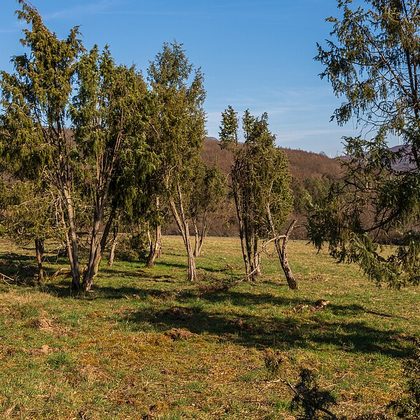
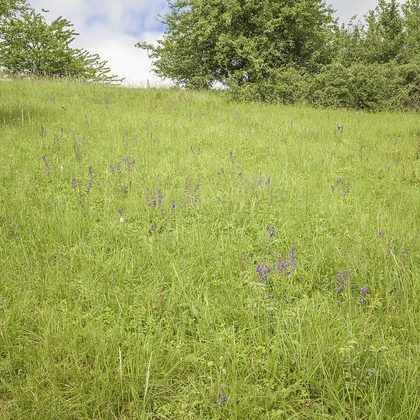
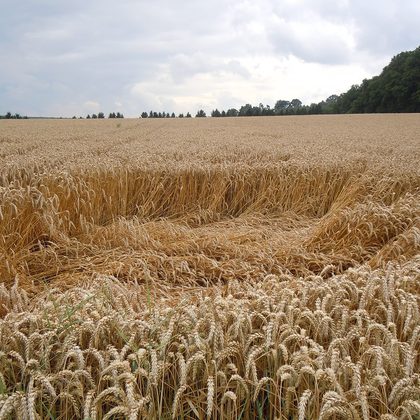
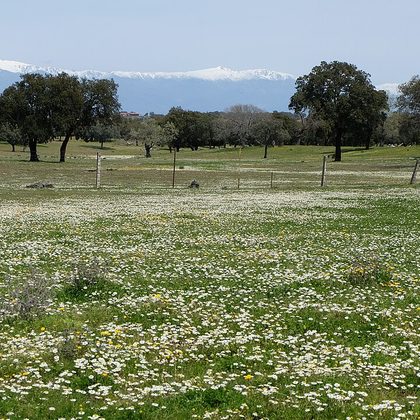
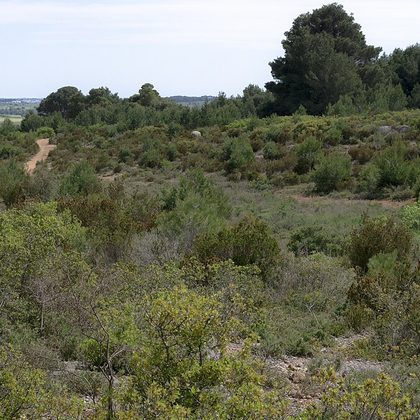
Open, short-grazed ground on well-drained slopes, preferably with scattered trees and shrubs, from sea level to at least 1700 metres. The species prefers heavy alluvial soil with good water-holding capacity and a low soil temperature, not the loose sandy soil of the pine voles. Also Mediterranean farmland: terraces with lucerne and maize, cereal fields, orchards, olive groves, field margins and fallow. It is absent from the dry, semi-desert interior; the species is tied to the Mediterranean zone.
Where the animal is most at home, classified with EUNIS — the European standard for habitats.
Distribution
South-eastern Turkey, Syria, Lebanon, Israel, Palestine and north-western Jordan, the Mediterranean belt of the Levant; the type locality lies near Kahramanmaraş in Turkey. In Syria the species is common from western Mesopotamia and Aleppo to the coastal region, the Orontes basin and the far south-west, and absent from the arid and semi-arid areas. The species does not occur in Europe: what older literature says about 'Microtus guentheri' in Greece, Bulgaria, North Macedonia, Serbia and western Turkey refers to Microtus hartingi.
- Native
- dark = core range, pale = thinly spread
Way of life
Active all year and at any time of day, but activity stops above twenty-five degrees; in summer the species is therefore crepuscular and nocturnal, in winter also diurnal. In the laboratory there are three activity peaks: morning, midday and evening. Herbivorous: green herbs, cereals, seeds and tubers, with vetch, lucerne, dandelion and thyme as important foods. The species lives in family groups of a breeding pair with five to twelve young, in a system of three to twenty square metres, up to ninety in large groups; the animals move little, and in Israel seventy-three per cent were recaptured within ten metres of the previous capture site. Breeding, unlike in voles of northern Europe, takes place from November to April, in the rainy season with green vegetation; from June to October no pregnant females have been caught in Israel. Pair formation precedes breeding. Gestation is twenty-one days, the mean number of embryos nearly nine, and postpartum mating allows litters to follow at intervals of twenty-one days; reproductive capacity is estimated at about sixty young per female per season. Females are fertile at thirty-six days. This combination explains the sudden population outbreaks.
Where and when to look
Search in winter or early spring, the growing season in the Levant, along the edge of a lucerne or cereal field in Galilee, the Golan, the Beqaa Valley or the Turkish province of Hatay. The entrances often lie in groups of dozens, and at high density the animals can be seen by day. During outbreaks they also stand upright on their hind legs to look around, giving a whistling call. Pellets under a Barn Owl box on an Israeli kibbutz or a Jordanian farm give an overview of the small mammals of an area.
Conservation status
Least Concern (LC, 2023). At the time of that assessment the species still included Microtus hartingi and the Cyrenaica Vole, now regarded as separate species. The species is common, faces no significant threats and thrives in human-made habitats. It is the most important rodent agricultural pest of the Levant: in 1992 an outbreak in northern Jordan destroyed wheat, summer crops and the stems of young fruit trees, and in Israel it causes damage in lowland fields in peak years. Control was originally by poison, mainly anticoagulants, with effects on owls, birds of prey and carnivorous mammals. Since the 1980s thousands of Barn Owl boxes and kestrel perches have been installed along the fields in Israel, and later also in Jordan and the Palestinian territories, greatly reducing poison use in the participating areas. The programme is extensively documented and carried out across national borders.
Scientific name
Microtus guentheri | (Danford & Alston, 1880)
Danford & Alston described the species in 1880 as Arvicola guentheri; because it was later moved to another genus, the author and year stand in brackets. Microtus is Greek, from mikros, 'small', and ous, genitive ōtos, 'ear', after the small ears hidden in the fur. guentheri honours Albert Günther (1830–1914), the German-born zoologist who headed the zoological department of the British Museum. The specimen the first description was based on came from Türkiye, Kahramanmaraş.