All species › Hedgehogs, shrews and moles › Hedgehogs › Four-toed Hedgehog
Four-toed Hedgehog | Atelerix albiventris
Witbuikegel | Erizo de cuatro dedos
The Four-toed Hedgehog is a small hedgehog of the African savanna, from Senegal to Somalia and the Zambezi, and in the pet trade one of the most commonly kept hedgehogs. It does not live naturally in Europe. What is known from the wild there are individual escaped or released animals, mainly in north-eastern and eastern Iberia, where the animals examined turned out genetically to be hybrids with the Algerian Hedgehog. No established, self-sustaining population is known in Europe; the species is treated as an alien because it is found in the wild and because those finds have consequences for the hedgehogs already living there.
Tracks
For the animals found in Europe no signs are known that would give them away; they are seen or caught. In the native range the hind-foot print shows four toes instead of five, because the big toe is absent or very small. The droppings have a strong smell, which may serve to advertise the animal's presence to other hedgehogs. A hedgehog that self-anoints with foaming saliva on its spines after contact with a strong-smelling substance shows a behaviour well known from this species and also found in other hedgehogs. The daytime resting place changes daily: under stones, logs or dense grass, in leaf litter, a termite mound, a rock crevice or a hole in the ground; only a nest with young or a site where it goes into torpor is used for longer.
Identification
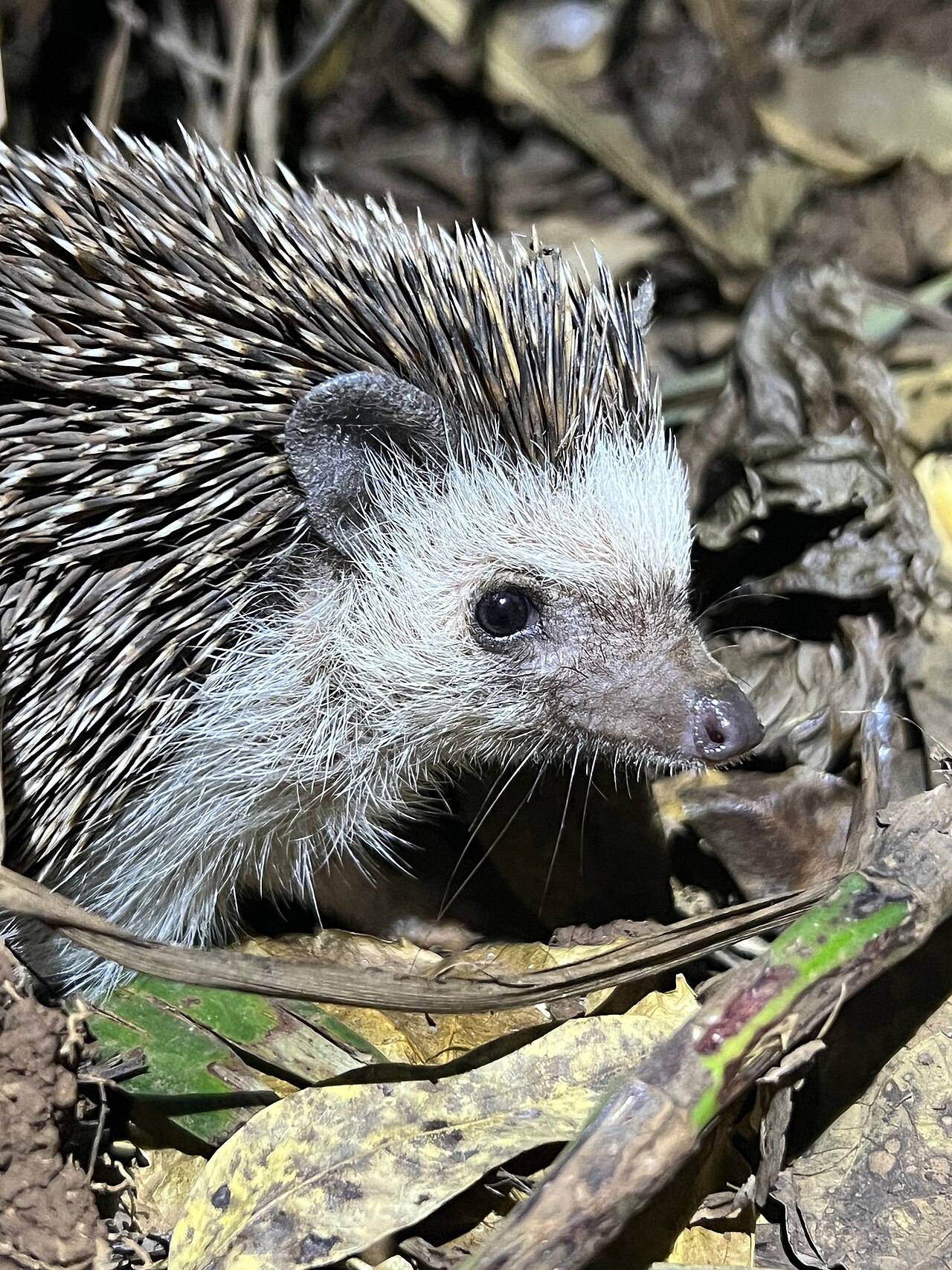
The Four-toed Hedgehog is small: head-body length 14 to 25.8 cm, tail 0.9 to 2.5 cm, ear 15 to 28 mm, hind foot 26 to 34 mm, weight 250 to 680 grams, up to 900 grams in captivity. The feature that explains its English and Spanish name is on the hind leg: the big toe is absent or a small stump, so the hind foot has four toes. The spines on the back are 15 to 17 mm long, and along the middle of the crown runs a narrow parting in the spine coat. The back is speckled grey-brown, black and white; face, legs and belly have white hair, the muzzle is brownish to black, and some animals have a black mask. The ears are small, dark and rounded, and shorter than the surrounding spines. The legs are short and hairy, the tail short and thinly haired. Animals from the trade can differ strongly in colour, because colour forms are bred.
Similar species
In Europe the point is the distinction from the hedgehogs that live there in the wild. The Algerian Hedgehog (Atelerix algirus) is the most difficult, because it belongs to the same genus, also has a crown parting and lives in eastern Iberia in the same areas where Four-toed Hedgehogs have been found. The Algerian Hedgehog is larger, with a head-body length of twenty to twenty-seven centimetres, has large ears standing clearly above the spines, and five toes on the hind foot. The Four-toed Hedgehog has small, rounded ears that disappear into the spines and four hind toes. Hybrids between the two have been confirmed genetically in eastern Iberia, and such animals cannot be recognised reliably by eye; there DNA analysis decides. The Western European Hedgehog (Erinaceus europaeus) is bulkier and heavier, has a grey-brown face and a coarse grey-brown haired belly, no bare crown parting and five hind toes. The Northern White-breasted Hedgehog (Erinaceus roumanicus) is also larger, with a sharply defined white chest patch. A small hedgehog with a white face, a white belly and small ears, in a garden or city park, is therefore in Europe more likely an escaped pet than a wild-born hedgehog.
Habitat
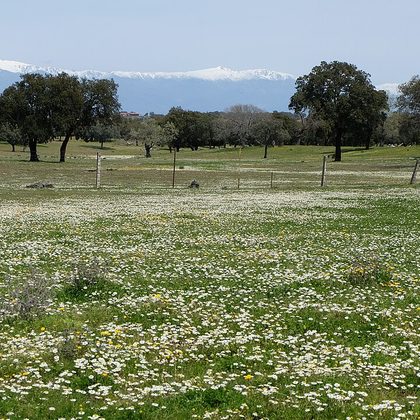
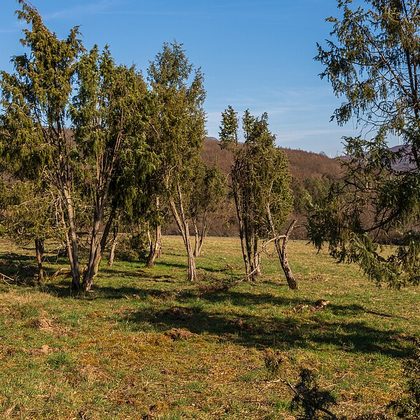
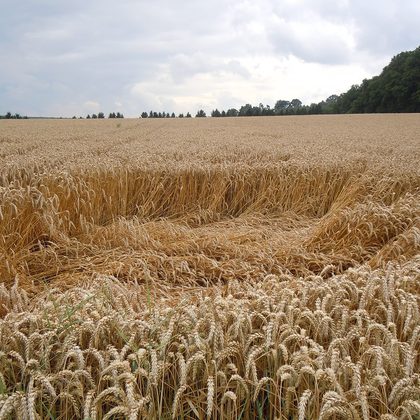
In Africa it inhabits grassland, thicket, open woodland, farmland and hills, and often also the edges of towns, with gardens and buildings. It needs dry soils and is absent from deserts, marshes and dense forest. It favours open, dry or seasonal terrain with a patchy grass cover, especially heavily grazed areas where many hoofed animals walk and trampled vegetation and dung feed termites and other insects. The finds in Europe come from inhabited settings and their surroundings: a large city, a coastal wetland and a rural district on the Mediterranean.
Where the animal is most at home, classified with EUNIS — the European standard for habitats.


Distribution
The natural range is Africa south of the Sahara: from Senegal east to Eritrea, Djibouti and Somalia, and south through East Africa to the Zambezi. No subspecies are recognised. Europe lies wholly outside this range. In Europe, animals have been found that arrived through the pet trade and escaped or were released. The first documented case dates from July 2012, from Bétera near Valencia. Genetic analysis subsequently confirmed four animals, all four hybrids with the Algerian Hedgehog: two in the Alt Empordà in Catalonia, one in the city of Barcelona and one near the Albufera of Valencia. These are individual animals; no established population in the wild is known.
- Established introduction
- dark = core range, pale = thinly spread
Way of life
In Africa the Four-toed Hedgehog is active mainly at night and at dusk, avoiding daytime heat and desiccation; in captivity activity peaks between nine in the evening and midnight and around three in the morning. It is an omnivore but lives mainly on termites, beetles, earthworms, millipedes, ants, grasshoppers, slugs and snails, and in addition on small vertebrates such as snakes, lizards and frogs, and on eggs and young of ground-nesting birds; fungi, fallen fruit, roots, groundnuts and carrion are also eaten. In the cool, dry season it enters torpor: in southern Africa between June and September, for up to six weeks at a stretch, with interruptions in warm spells; in parts of the range this probably does not happen. Breeding is possible year-round in central and northern Africa, and seasonal further south. After a gestation of 35 to 37 days usually three to five young are born, sometimes one to ten, weighing about ten grams. The home range usually lies within 200 to 300 metres of a burrow or resting place. The species is solitary; when two meet they growl, hiss and snort and butt heads, and five types of sound have been described, including a bird-like 'serenade' given by males during courtship.
Where and when to look
The species is not searched for in Europe but at most encountered by chance. For a small hedgehog with a white face, a white belly and small ears in Catalonia, the Valencia region or elsewhere in Europe, photographs are needed of the face from the front, the ears and above all a hind foot, on which the toes can be counted. Such a find should be reported to the body that records invasive alien species in the region, or to a citizen-science project on hedgehogs; only in this way can it be established where such animals turn up and whether they breed. A found animal must not be released elsewhere, and pet Four-toed Hedgehogs must never be released into the wild: that is the route by which the hybrids with the Algerian Hedgehog arose.
Conservation status
Least Concern globally (LC, 2016). In its African range it is common in suitable habitat, and the species as a whole is not under heavy pressure. Locally it is eaten, its skin and spines are used as fertility charms, and it is killed on roads. In Europe the situation is reversed: there it is not a species to protect but an alien that can cause problems. Where it has been found in the wild, it is legally designated an invasive alien species, and keeping, transporting and trading it are prohibited. The documented problem is hybridisation with the Algerian Hedgehog, which complicates identification of hedgehogs in surveys; competition with the other hedgehogs for the same niche is also mentioned. There is no plan to control it; the work consists of collecting records, partly through citizen science.
Scientific name
Atelerix albiventris | (J. A. Wagner, 1841)
J. A. Wagner described the species in 1841 as Erinaceus albiventris; because it was later moved to another genus, the author and year stand in brackets. Atelerix is usually read as Greek atelēs, 'incomplete', with a second element going back to the old word for 'hedgehog'; Pomel gave no explanation, so the reading remains uncertain. albiventris is Latin for 'white-bellied', from albus, 'white', and venter, 'belly'. The specimen the first description was based on came from Senegal.