All species › Carnivores › Mustelids › European polecat
European polecat | Mustela putorius
Bunzing | Turón
The polecat is a medium-sized mustelid of wet, semi-open country in most of Europe west of the Urals and in Morocco. In much of its range it feeds mainly on frogs and toads. It is regarded as the wild ancestor of the ferret, and hybrids with feral ferrets occur.
Tracks
The print is 25 to 35 mm wide and 25 to 32 mm long; the forefoot is slightly smaller than the hind foot. Prints lie in groups of two, three or four, the pattern of the bounding gait of mustelids. The forefoot claws are about twice as long as a mink's; this, together with the shape of the main pad, separates the print from those of the minks. The scat is 5 to 10 cm long and 5 to 9 mm thick, cylindrical and twisted, black or dark brown when fresh and duller later. Scats lie along woodland paths, near dens and at latrines. Trails can be followed in snow: in wet woodland polecats kept close to watercourses searching for frogs, in drier woodland they dug for rodents. Rest sites are in brush piles, barns and stables, garden sheds and rat burrows, and in burrows of other animals.
Identification
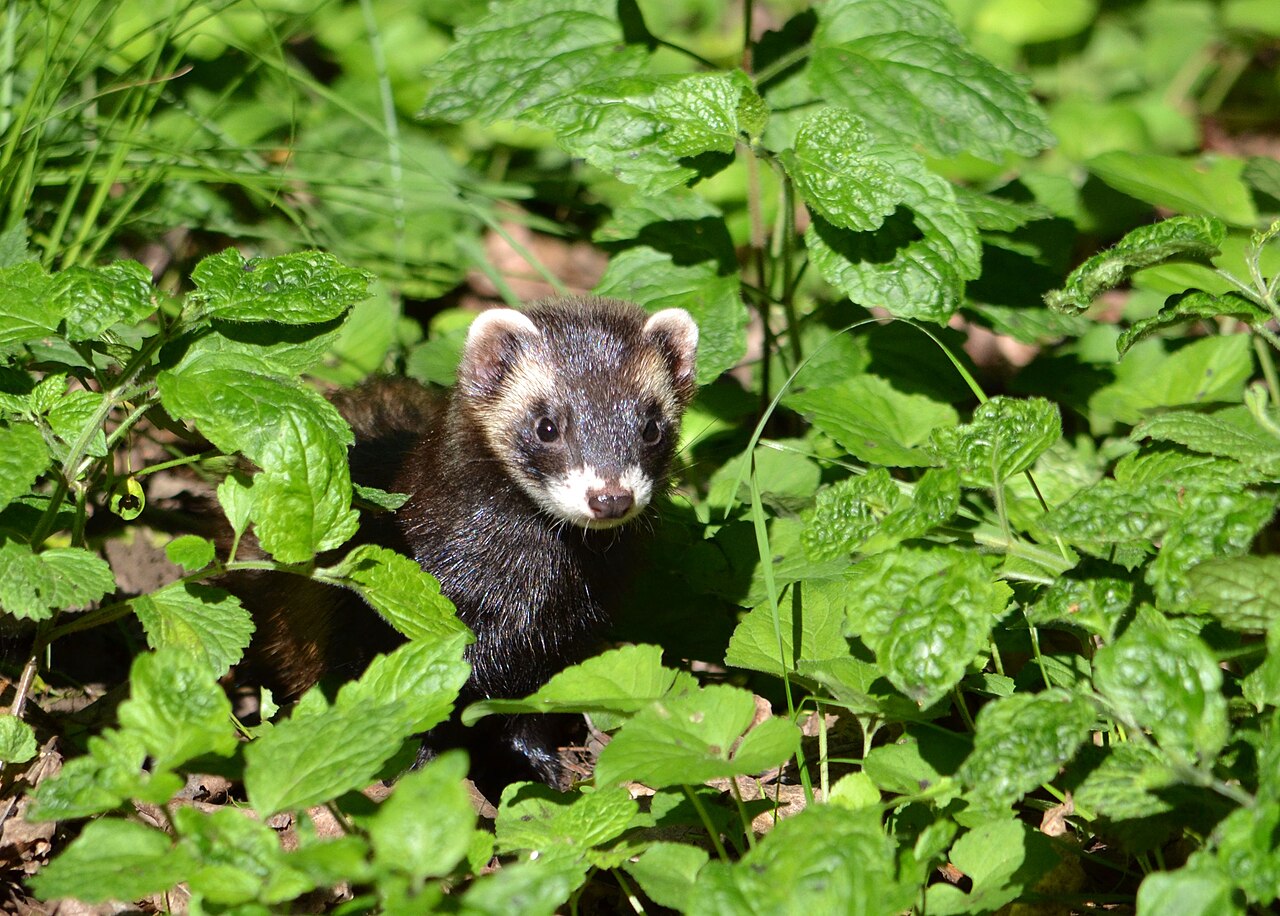
A slender, low-slung mustelid with short legs and a medium-length tail. The guard hairs are dark brown to black over a yellow to pale brown underfur that shows through on the flanks. The head has a mask: the area between eye and ear and around the mouth is silvery white, and the ears are edged white. Males are clearly larger than females and can weigh twice as much: in the Netherlands males weigh 500 to 1800 g and females 300 to 900 g.
Similar species
American mink and European mink are more uniform in colour and lack the pale underfur showing through and the mask; young polecats are the hardest. The ferret, the domestic form, and ferret-polecat hybrids cannot always be separated from a polecat in the field. The steppe polecat of central and eastern Europe is paler, yellow-brown to grey on the back with dark legs and chest. Stone marten and pine marten have a long, bushy tail and a pale throat patch.
Habitat
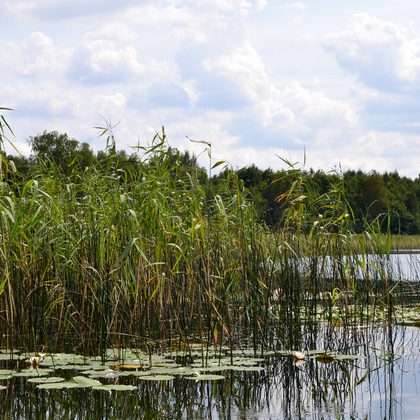
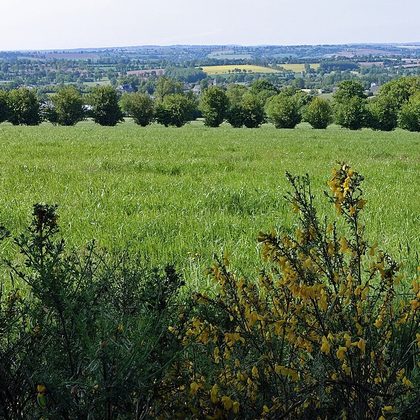
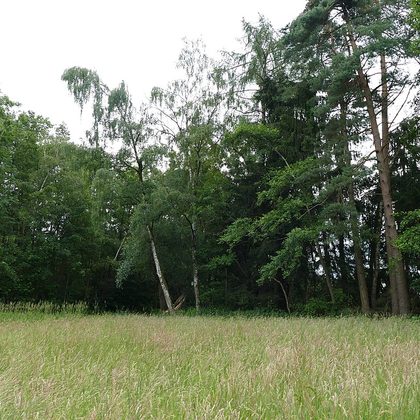
Wet, semi-open country with enough cover: hedgerows, woodland edges, ditches with overhanging vegetation, and scrub. It is less frequent in closed woodland and also lives in villages and suburbs, but avoids dense urban areas. Buildings are important as rest sites, especially in severe winter weather.
Where the animal is most at home, classified with EUNIS — the European standard for habitats.
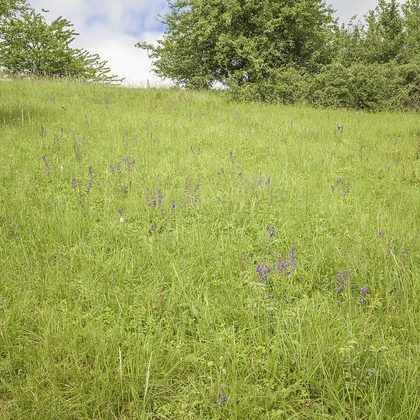
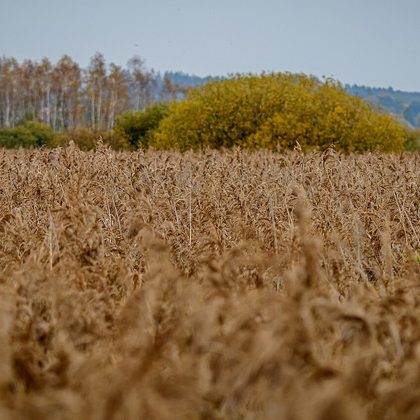
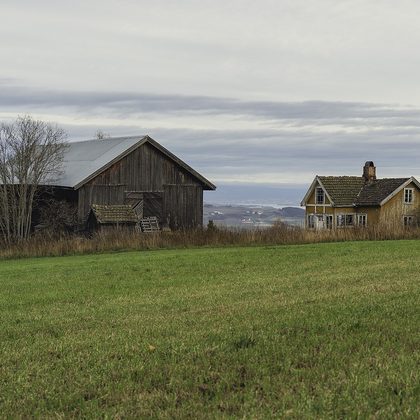
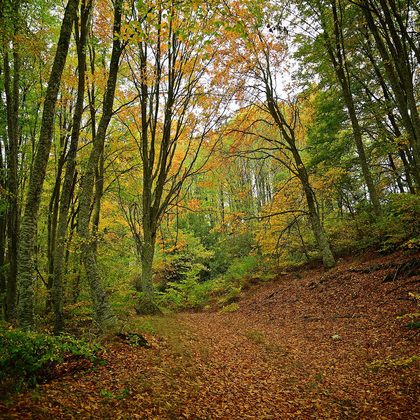
Distribution
Most of Europe west of the Urals, and Morocco. It is absent from most of Norway and Sweden, northern Finland, Greece and the Mediterranean islands. It occurs in Great Britain. In the Netherlands it is found throughout the country except on the Wadden Islands.
- Native
- dark = core range, pale = thinly spread
Way of life
Mainly nocturnal; in Luxembourg radio-tracked polecats were active for 62% of the night. Males are more active than females. In central Italy males were regularly nocturnal, mainly between 20:00 and 06:00, while females were more often active by day and at dusk. In the Netherlands polecats are seen by day mostly from June to September, when females have young. Food consists of amphibians, small mammals, birds, fish, eggs and carrion. In Switzerland frogs and toads (mainly common frog and common toad) were the staple; in Poland they made up 70 to 98% of the biomass in 222 scats; in Denmark 87% of 47 stomachs contained amphibians. Home ranges in Luxembourg measured 42 to 428 ha, on average 246 ha for males and 84 ha for females. Mating is from March to May; after about six weeks usually 3 to 7, sometimes up to 12, young are born, weaned at a month and independent at three months.
Where and when to look
Polecats are seen most often as road casualties or at night in headlights on a country lane. Between June and September the chance of a daytime sighting is highest. Search wet meadows and ditches, where it hunts frogs and toads. A camera trap at a brush pile or barn gives good chances.
Conservation status
Least Concern (LC, 2016). In western Europe it was long hunted for fur and persecuted as vermin; that pressure has decreased and it is protected in a number of countries. In Russia and Morocco it is still commonly hunted. Important causes of death and threats are traffic, secondary poisoning with rodenticides, drowning in muskrat traps, habitat loss and illegal persecution. Hybridisation with the ferret is regarded as a possible threat in Britain, and competition with American mink possibly as well.
Scientific name
Mustela putorius | Linnaeus, 1758
Linnaeus described the species in 1758 and placed it straight away in the genus where it still stands. Mustela is the Latin word for 'weasel'. Its further origin is uncertain: it is usually read as a diminutive of mus, 'mouse', after the animal's small size or its mousing. putorius is medieval Latin for 'stinking', from putor, 'stench', and putere, 'to stink', after the pungent secretion of the anal glands. The specimen the first description was based on came from Sweden.