All species › Rodents › Blind mole-rats › Bukovina Blind Mole-rat
Bukovina Blind Mole-rat | Spalax graecus
Spalax graecus | Rata-topo de Bukovina
Spalax graecus, the Bukovina Blind Mole-rat, is a large blind mole-rat of Bukovina, in the border region of Romania, Ukraine and Moldova. The scientific name rests on an error: Nehring described the species in 1898 from a specimen he believed came from near Athens, and named it graecus accordingly. In 1969 Topachevskii established that the provenance had been recorded wrongly and moved the type locality to the neighbourhood of Chernivtsi in Ukraine, some fourteen hundred kilometres from Greece. Under the rules of nomenclature the name was retained. In 2013 Németh and colleagues showed that the two forms until then treated as subspecies, antiquus of Transylvania and istricus of the Wallachian Plain, are separate species; as a result the range of S. graecus shrank to a fraction of its former size.
No photograph of a living wild animal of this species with a suitable Creative Commons licence exists. Do you have one that meets the rules? Send it in.
Tracks
The mounds are the main sign. They are broad and low rather than conical, made of coarse clods rather than fine crumbs, have no visible tunnel mouth, because the tunnel is plugged from inside, and in Spalax lie close together, so that an occupied system forms a churned patch of meadow. A molehill is smaller, higher, finer-grained and comes from a vertical shaft. Below ground lies a shallow network of feeding tunnels at twenty to twenty-five centimetres in spring and summer and thirty to thirty-five centimetres in winter, when the animal moves deeper as the ground freezes, with the deep chambers beneath; the system usually reaches a metre deep and exceptionally three and a half metres. There are one or two nest chambers and several store and latrine chambers. The store chambers hold four hundred grams to twelve kilos of gathered root material. There are also gnawed roots and rhizomes in the tunnel, and patches at the surface where a plant has been pulled down from below. Another sign is road casualties. A 2013 analysis placed the species second among European mammals most vulnerable to road mortality, and in Bukovina the verge is therefore one of the places where the species is most often recorded.
Identification
A large blind mole-rat of 21.7 to 28 centimetres and 415 to 700 grams, neckless and cylindrical, with a broad, flat, wedge-shaped head and a heavy forequarter. The fur is soft and moderately long, buff over most of the back, with greyer belly and head. Ear pinnae are absent, the eyes are lenses about a millimetre across beneath a closed fold of skin, and there is no external tail; none of the sources consulted gives a measurement for it. From the bare nose pad a fringe of pale, stiff hairs runs back towards the ear region; the incisors protrude in front of the lips. The chromosome number is 2n = 62. The characters by which Németh and colleagues separated the species from its relatives in 2013 all lie in the skull: nasals extending backwards beyond the premaxilla and a flat lower border of the incisura corono-alveolaris in the mandible. These characters can only be established on museum material.
Similar species
The species cannot be recognised on a living animal, and the chromosome number is not decisive, because all Spalax species have 2n = 60 or 62. Separation from S. antiquus and S. istricus rests on skull measurements and mitochondrial DNA. In the field only range is usable, and it is small but clearly defined: the hill country of Bukovina between the Carpathians in the west and the Prut in the east. West of the Carpathians, on the Transylvanian Plain, lives S. antiquus; to the south, on the Wallachian Plain, lived S. istricus; to the east and south-east begin the ranges of S. zemni and the lesser blind mole-rats of Dobruja. The distinction between Spalax and Nannospalax can be made by eye, and it is the only field character in this group. A Spalax is twenty to over thirty centimetres long and weighs four to seven hundred grams; a Nannospalax weighs about as much as a large rat and seldom reaches half a kilo. This difference has also been confirmed by DNA (Németh and colleagues, 2013). The mounds show the difference more clearly: a Spalax makes a dense field of mounds one to two metres apart, while the mounds of a Nannospalax lie in a thin line twenty to thirty metres apart. Also to be excluded are the mole, smaller, with shovel-shaped forefeet and a short tail, and the Water Vole, with normal ears, eyes and a long tail.
Habitat
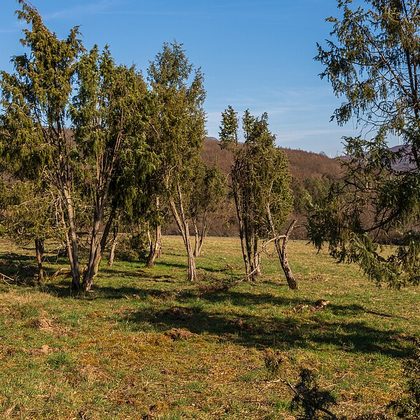
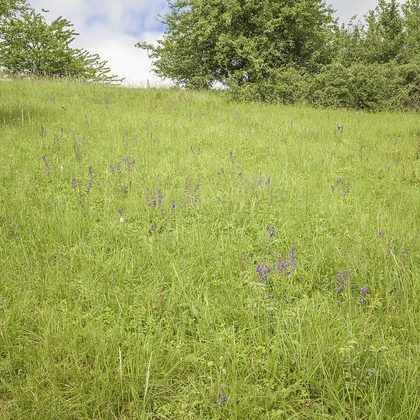
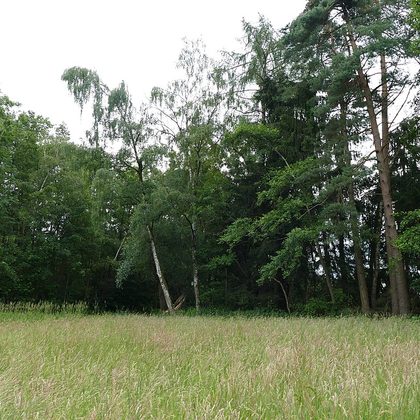
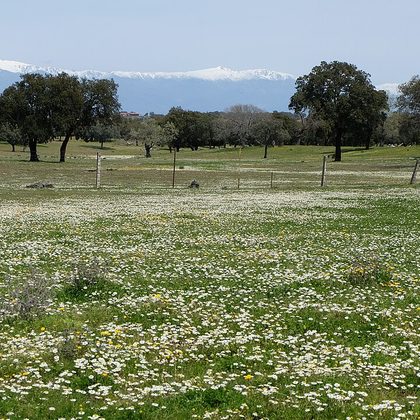
Perennial grassland, steppe and arable land in the hill country of Bukovina. The species lives in road verges, pastures, beet and potato fields, kitchen gardens and orchards and along woodland edges, but not in closed woodland. Modelling places suitable habitat between thirty-nine and eight hundred and forty-eight metres. Like all related species it requires deep, loose, free-draining soil with an underground supply of roots, tubers and bulbs. Small, extensively worked parcels are tolerated, deep ploughing is not.
Where the animal is most at home, classified with EUNIS — the European standard for habitats.


Distribution
A small area where north-eastern Romania, south-western Ukraine and north-western Moldova meet, largely coinciding with the historical region of Bukovina. The range is bounded to the east by the Prut and to the west by the Carpathians; thirteen localities are known. The type locality is the neighbourhood of Chernivtsi; Nehring's original 'vicinity of Athens' rested on a wrong label and was corrected in 1969. No blind mole-rats occur in the British Isles, the Low Countries or the Iberian Peninsula.
- Native
- dark = core range, pale = thinly spread
Way of life
Entirely subterranean, active round the clock, with most digging at the beginning and end of the day. The species neither hibernates nor keeps a winter rest: in winter the feeding tunnels lie ten centimetres deeper and the animal lives on its stores. The diet has been studied locally: dropwort, yarrow, hoary plantain, couch grass, comfrey and chicory. The animals are solitary. Densities have fallen sharply: formerly one to ten animals per hectare in arable land and up to twenty-three under more natural conditions, today 0.2 to 2 animals per hectare in arable land. Breeding starts in January, peaks in February and continues into March; in March or April two to four young of eighteen to twenty grams are born, which are weaned after about three weeks and disperse above ground in late April and May. Females first breed in their second year. Predators are Red Fox and mustelids, and for the dispersing young also birds of prey.
Where and when to look
Go in April or May to the hill country of Bukovina, between Chernivtsi, Suceava and Botoșani, and search verges, field margins and unploughed pastures, where the mounds lie. Scan across the terrain rather than just ahead of you; an occupied system is a group of broad, low, coarsely clodded mounds close together, and fresh, dark, damp soil means that the animal is living there now. In late April and May the young disperse above ground; in that period a blind mole-rat is most easily seen, but it is also when most road casualties occur. Drive slowly and report finds: knowledge of this species' distribution rests largely on isolated reports.
Conservation status
Vulnerable (2024). Since the 2013 revision the assessment has concerned only the animals of Bukovina; earlier assessments also covered S. antiquus and S. istricus and therefore gave a more favourable picture. The range is small, the thirteen known localities are separated from one another, and densities in arable land have fallen to a fraction of former values. The main threat is agricultural intensification: the ploughing and deep tillage of perennial grassland and the merging of small parcels into large ones. Romania's accession to the European Union in 2007 is explicitly named as an accelerating factor. In addition, unlike most related species, traffic is a threat: a European analysis in 2013 identified the species as the second most vulnerable mammal to road mortality, so that every new road in the small range has a considerable effect. Where farming is still small-scale and without deep tillage, the species persists.
Scientific name
Spalax graecus | Nehring, 1898
Nehring described the species in 1898 and placed it straight away in the genus where it still stands. Spalax is Greek spalax, also aspalax, 'mole'. graecus is Latin for 'Greek', yet the species does not occur in Greece: it lives in the Carpathians and in Bukovina. What Nehring based the name on is not clear. The specimen the first description was based on came from Ukraine, Bukovina.