All species › Odd-toed ungulates › Horses and asses › Asiatic wild ass
Asiatic wild ass | Equus hemionus
Onager | Asno Salvaje Asiático
The Asiatic wild ass or onager (Equus hemionus) is a wild ass of the steppes and deserts of Asia and belongs to the odd-toed ungulates. In the guide area the Syrian subspecies was native until the last wild animal was killed in 1927. Since 1982 a free-living population has again lived in the Negev in Israel, and since 2020 one in the Tarutino steppe in south-western Ukraine.
Tracks
The track is a single oval hoofprint, smaller and narrower than a horse's. Dominant stallions deposit their dung at fixed spots, producing dung piles that mark their territory. In dry riverbeds onagers dig holes to reach groundwater; such holes are also used by other animals.
Identification
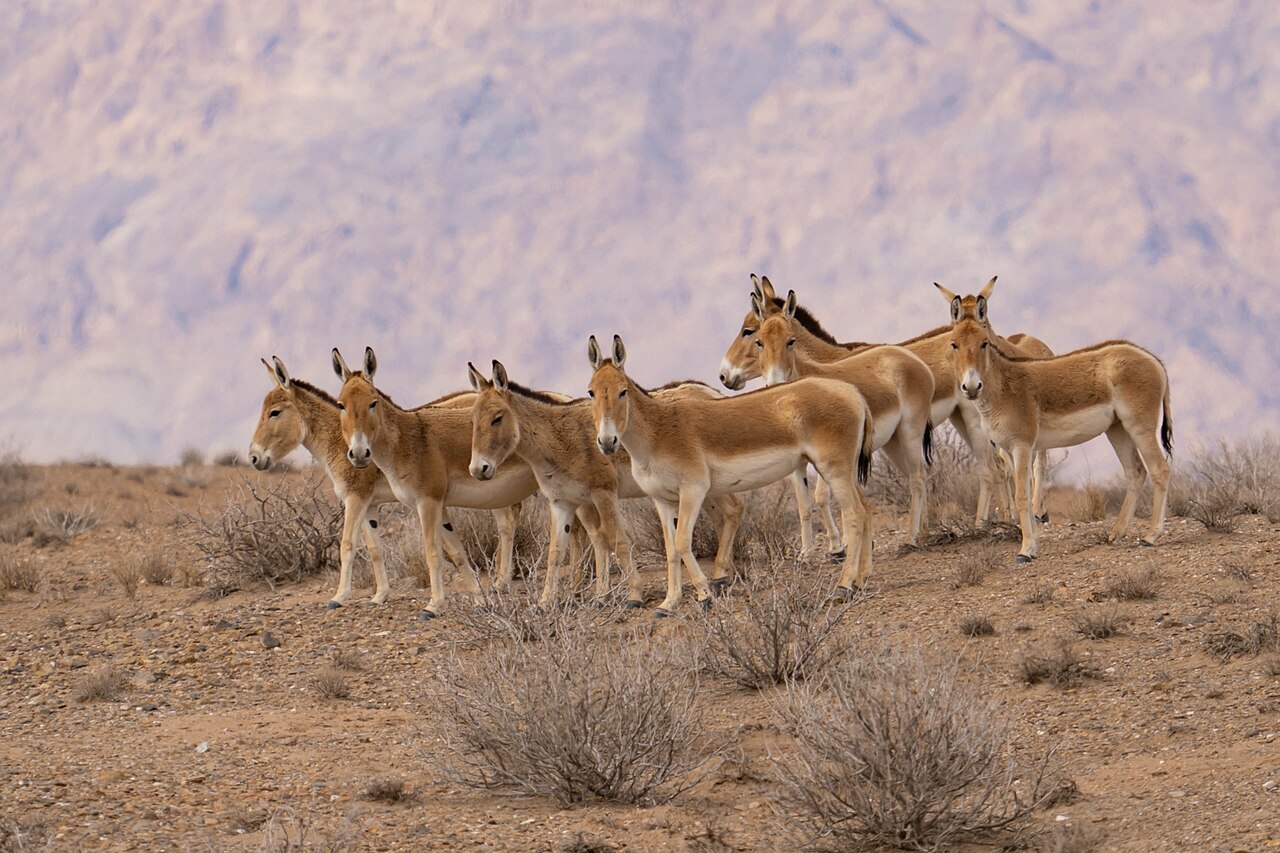
A slender equid with a head-body length of 210 to 250 cm, a tail of about 40 cm, a shoulder height of 97 to 138 cm and a weight of 200 to 260 kg. The coat is reddish-brown to sandy in summer, yellowish-brown to greyish-brown in winter. A black dorsal stripe bordered with white runs along the middle of the back from the mane to the tail. The belly, the back of the rump, the inner legs and the muzzle are white. The mane is short and upright; the tail has a dark tuft. The ears are longer than a horse's and shorter than a domestic donkey's. The hoof is single.
Similar species
In the guide area the domestic donkey is the only possible confusion; loose donkeys belonging to herders also roam the Negev. The donkey is usually grey or brown, has longer ears, often a dark shoulder cross and sometimes stripes on the legs, and lacks the sharp boundary between the coloured back and the white belly. Horses are larger and have a long, hanging mane and a tail haired from the base.
Habitat
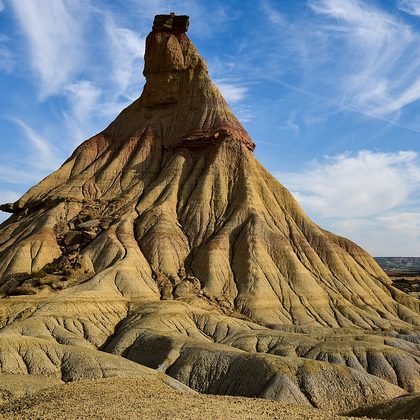
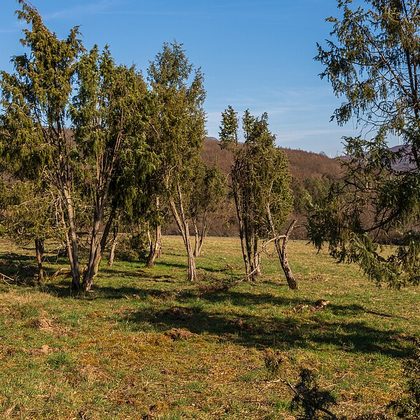
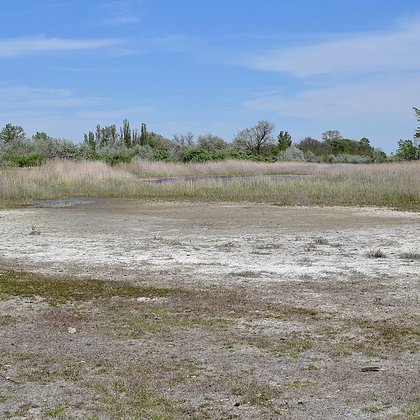
Semi-desert, desert steppe and dry grass steppe, with plains, rolling plateaus and broad wadis, within reach of water. In the Negev the onager lives on the plateau and in the erosion craters, with acacias and low shrubs in the beds.
Where the animal is most at home, classified with EUNIS — the European standard for habitats.
Distribution
The present range lies in Mongolia and China, Kazakhstan, Turkmenistan, Iran and India, divided over four living subspecies. The Syrian wild ass (E. h. hemippus) lived in Syria and surrounding areas; the last wild animal was killed in 1927. The extinct European wild ass (Equus hydruntinus) is treated by some authors as a subspecies of the onager. In Israel 28 animals were released in the Negev between 1982 and 1987 and a further 10 in 1992–1993, derived from zoo stock of the Persian onager and the Turkmenian kulan; the population therefore consists of hybrids of two subspecies and numbered about 250 animals in 2005. Onagers have also been released in Jordan and Saudi Arabia. In Ukraine kulans have lived in the Askania-Nova reserve since 1950; in 2020 twenty animals from there were released in the Tarutino steppe near the Danube delta, followed by a second group in 2022, and young were born there in 2023.
- Native
- dark = core range, pale = thinly spread
Way of life
In the Negev dominant stallions live alone in a territory for most of the year; mares and subordinate stallions form loose groups of changing composition. In Central Asia, by contrast, onagers live in harems. The food consists of grasses, herbs, leaves, fruit and salt-tolerant plants. Lactating mares need to drink daily in summer, so permanent water sources determine breeding. The mating season runs from April to September, peaking in June and July; gestation lasts about eleven months and a single foal is born. Onagers are sexually mature at two years and live up to fourteen years in the wild.
Where and when to look
Search the Makhtesh Ramon and the surrounding Negev plateau at first light, with binoculars from a high point. The animals are shy; look especially at water sources and in broad, vegetated wadis, and watch for dung piles and fresh tracks in the sand. In the afternoon they retreat into the shade of rocks and are hard to find.
Conservation status
Near Threatened (NT, 2015), with about 28,000 mature animals in the wild. The main threats are poaching for meat and hides and for use in traditional medicine; in addition, fragmentation of habitat by mining, roads and fences, overgrazing by livestock, drought and disease. The populations in Israel and Ukraine are small and rest on a limited number of founders.
Scientific name
Equus hemionus | Pallas, 1775
Pallas described the species in 1775 and placed it straight away in the genus where it still stands. Equus is the Latin word for 'horse'. hemionus is Greek hēmionos, 'half-ass', from hēmi-, 'half', and onos, 'ass'; the Greeks used the word both for the mule and for the wild ass of Asia. The specimen the first description was based on came from Russia, Transbaikalia.