All species › Hedgehogs, shrews and moles › Hedgehogs › Algerian Hedgehog
Algerian Hedgehog | Atelerix algirus
Trekegel | Erizo moruno
The Algerian Hedgehog is a hedgehog of the southern Mediterranean. Its native range lies in the Maghreb; on the Balearics, along the Spanish coast, on Malta and in the Canary Islands it was introduced by people. It can be distinguished from the other hedgehogs in Europe by the bare parting on the crown.
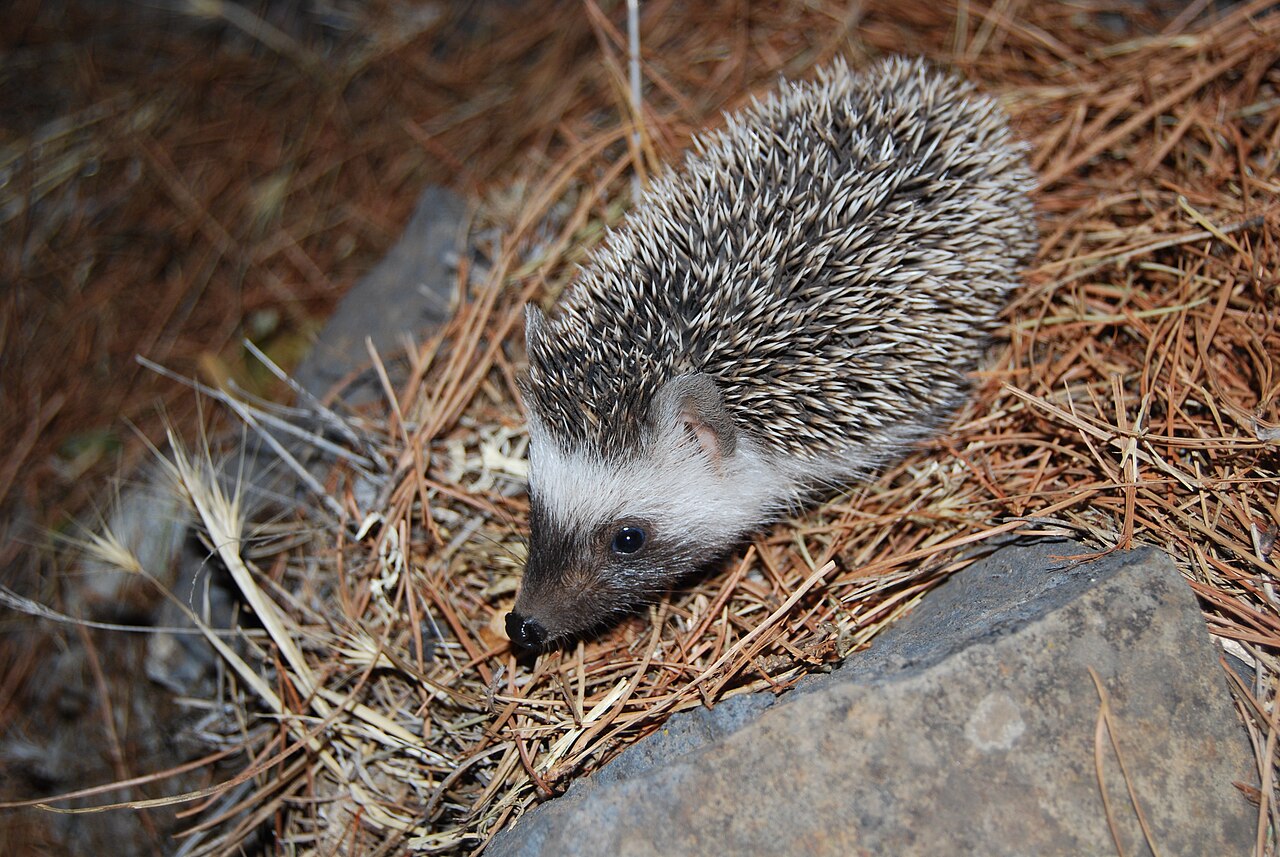
Tracks
The sign most often found is the dropping: three to five centimetres long, about a centimetre thick, cylindrical and blunt at both ends, black and glossy when fresh, and full of beetle remains. In Algeria about eighty-five per cent of the diet consisted of insects, mainly ants and beetles; held against the light, the dropping contains glittering wing cases, fine ant legs and centipede segments. Droppings lie uncovered on paths, threshing floors, paving or mown ground and are never buried, which distinguishes them from those of a cat; they are not twisted and do not end in a hairy point, which distinguishes them from those of a mustelid. In loose sand and on dusty paths prints can be found: small relative to the animal, about two and a half to three centimetres, with five toes and sharp, far-projecting claw marks; because of the long legs the prints are widely spaced and the trail looks irregular. Further signs are snout holes in soft ground under bushes and the day nest: a loose heap of dry leaves, grass and plant debris under a dwarf fan palm, bramble, stone pile or heap of prunings, and on the islands also under the rubble of old field walls. While foraging at night, snuffling, huffing and rustling in dry leaves are audible at ten metres. In Spain and on Malta the species is most often recorded as a road casualty.
In its habitat
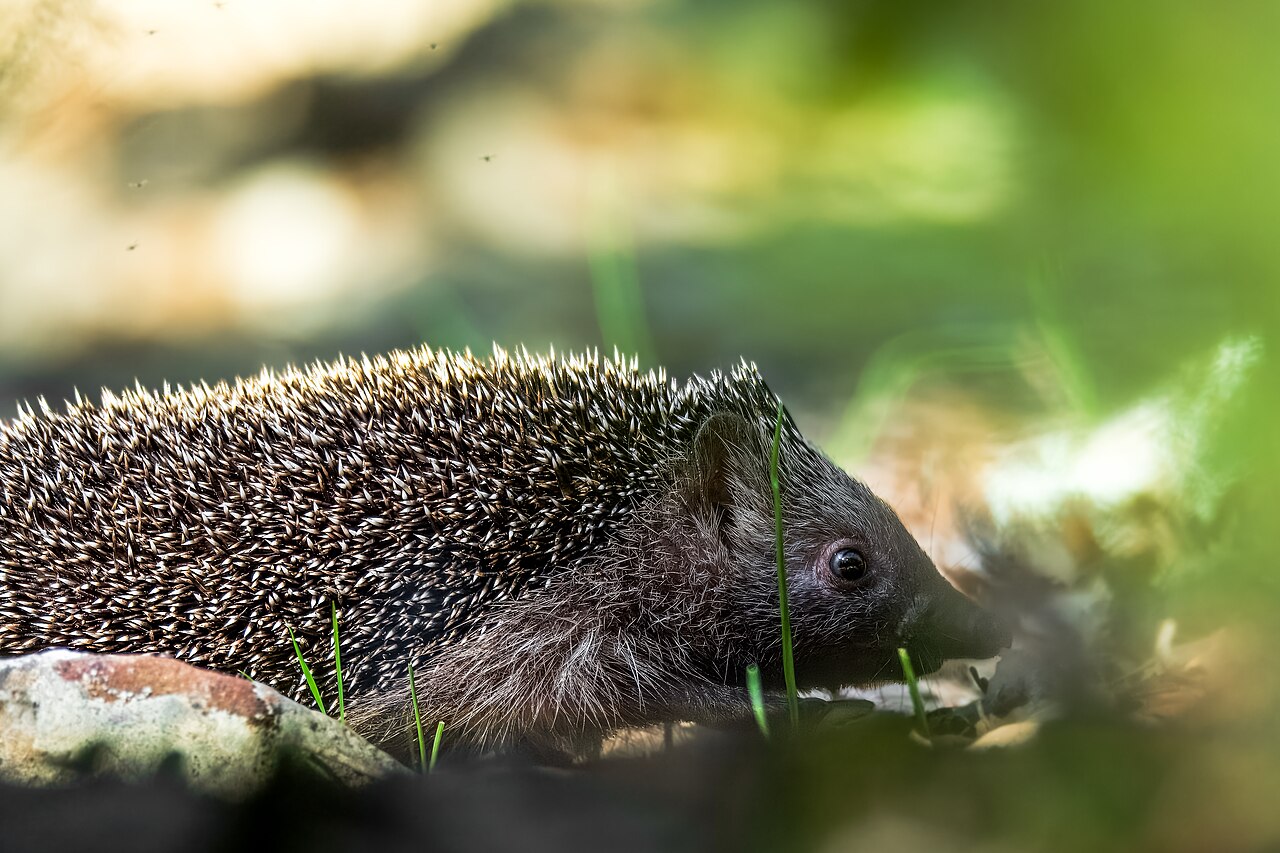
Head close-up
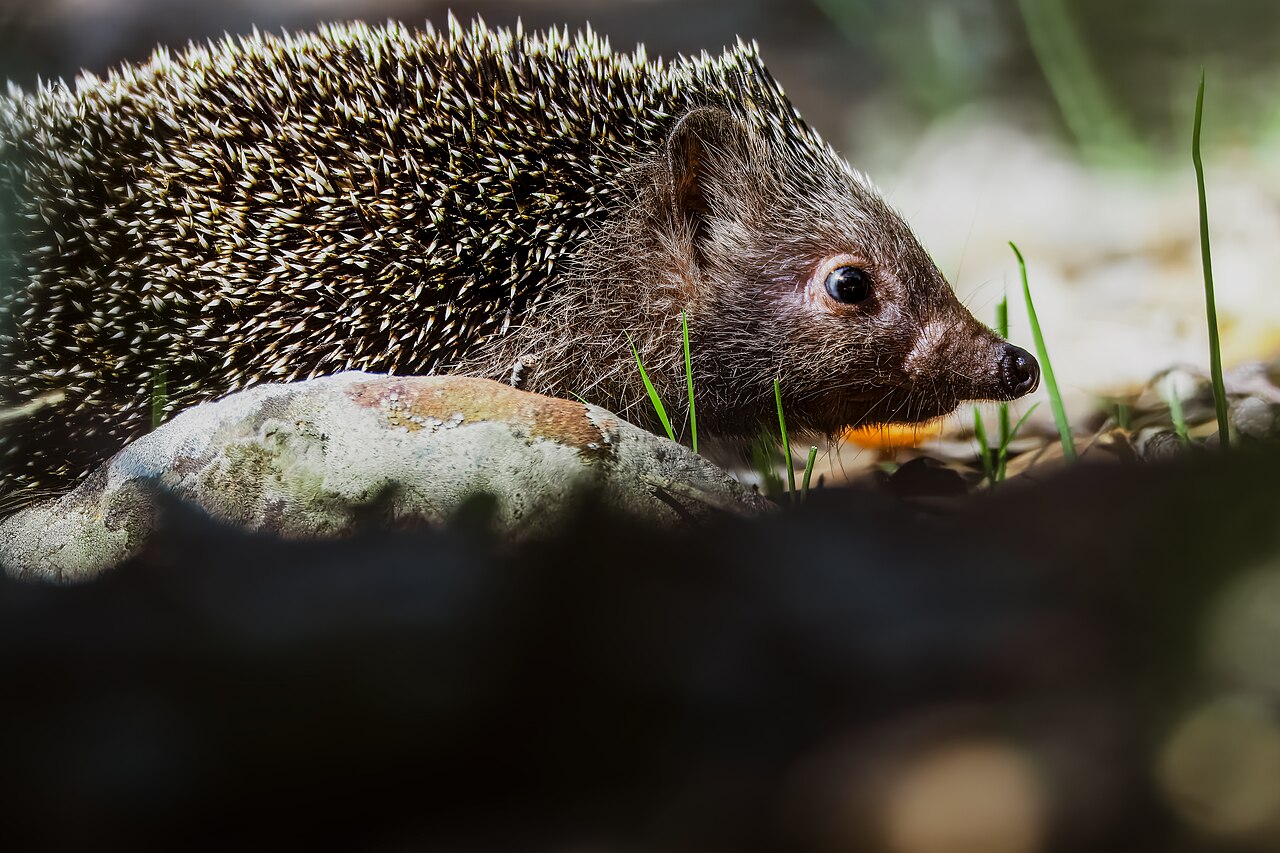
Identification
Smaller and more lightly built than the West European Hedgehog, with a head-body length of twenty to twenty-seven centimetres and a weight that seldom exceeds eight hundred grams. The decisive character is on the head: down the middle of the crown runs a bare parting where the spines divide to left and right, narrower than in the other species of the genus, but clearly visible on a photograph taken from above. The face is much paler than in the West European Hedgehog: forehead and sides of the muzzle are white to dirty white, against which the dark nose and black eyes contrast strongly. The ears are large and project clearly above the spines. The legs are long and pale; a walking animal carries its body high above the ground. The spines are smooth, without the fine papillae of Erinaceus, and vary from pale buff with a dark band to mainly dark; animals on the Canaries and the Balearics are on average pale. The belly fur is coarse and yellowish white, the tail a stub of no more than three centimetres.
Similar species
In north-eastern Spain the range borders that of the West European Hedgehog (Erinaceus europaeus); the distinction is simple: the West European Hedgehog is heavier, uniformly greyish brown in the face, has small ears that barely project above the spines, shorter legs and no bare parting on the crown. A hedgehog walking high-legged through garrigue, with white cheeks and conspicuous ears, is an Algerian Hedgehog. In the Maghreb the Desert Hedgehog (Paraechinus aethiopicus) also occurs; it lives in desert and steppe rather than Mediterranean scrub, and has even larger ears, a dark mask around muzzle and eyes with a broad white forehead band above, and dark legs, the reverse colour pattern of the pale head of the Algerian Hedgehog. In eastern Libya and Egypt the Long-eared Hedgehog (Hemiechinus auritus) also occurs, with even longer, more pointed ears and a plain white belly. In all cases the bare crown parting is the quickest character. The Four-toed Hedgehog of the pet trade is an African species from south of the Sahara; a large-eared hedgehog in a Spanish garden is almost always an Algerian Hedgehog and not an escaped pet.
Habitat
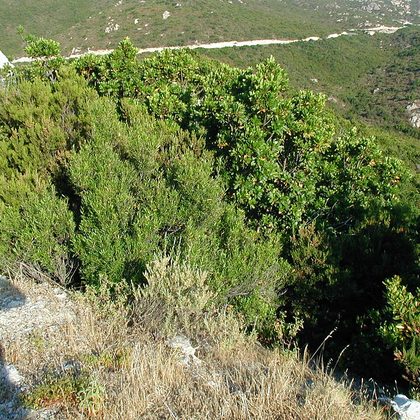
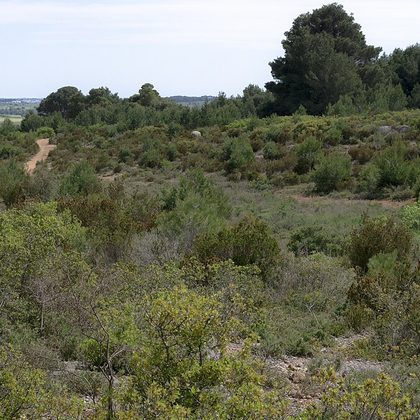
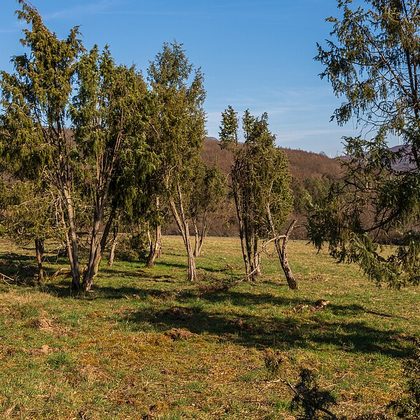
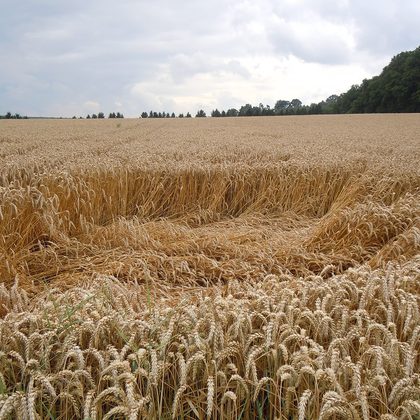
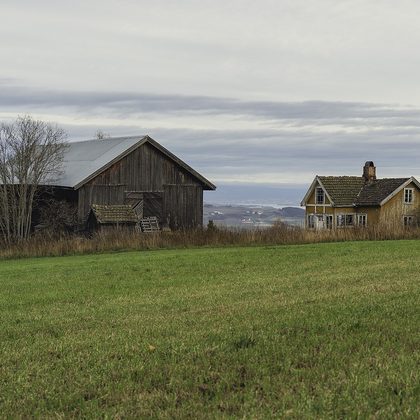
Warm, dry, low-lying and open terrain with sufficient cover: coastal garrigue and maquis, dwarf-palm scrub, dry grassland, dune scrub, olive and almond groves, field margins, gardens and farmyards. Closed woodland and entirely bare ground are avoided; the species seeks transitions with open patches between herbs and bushes. In Spain the centre of distribution lies below six hundred metres, close to the coast; in the Middle Atlas of Morocco the species occurs up to about two thousand metres, and in Algeria it has been found in Saharan oases five hundred kilometres south of the coast. On the Balearics it is common in farmland and villages.
Where the animal is most at home, classified with EUNIS — the European standard for habitats.


Distribution
Native to north-western Africa, from Morocco to north-eastern Libya. All European populations were introduced by people: genetic studies show that the populations of Spain, the Balearics and the Canary Islands are young and almost certainly arrived by ship. In Spain the species is scattered along the Mediterranean coastal strip from Catalonia to Andalusia, and occurs in Ceuta and Melilla; on the Balearics on Mallorca, Menorca, Ibiza, Formentera and Cabrera; in the Canaries on Fuerteventura, Lanzarote, Gran Canaria and Tenerife, where it was introduced only in the 1890s. On Malta it is likewise introduced and common. An introduced population existed in southern France but has disappeared. Most records come from Spain and Morocco, followed by Algeria, Malta and Tunisia.
- Native
- dark = core range, pale = thinly spread
Way of life
Strictly nocturnal, with a polyphasic rhythm: the animals emerge about an hour after sunset, forage with interruptions through the night and are back under cover half an hour to an hour before sunrise. The diet consists almost entirely of invertebrates: mainly ants, beetles and beetle larvae, also centipedes, woodlice, spiders and snails, and occasionally a gecko, an egg or carrion. Home ranges are large, much larger in males than in females; they overlap strongly, and although the species is solitary, conspecifics are tolerated. Breeding falls in the warm half of the year: in North Africa in spring and summer, on the Balearics from June to October with a peak between late July and early September. After a gestation of thirty to forty-eight days one to seven young are born, with soft white spines that break through within a day; on the Balearics litters of one to three are usual. There is no true, months-long hibernation but a winter rest: in Spain the animals enter torpor occasionally between January and March, for days to weeks at a time, depending on temperature. In mild winters on the coast and in the Canaries they are active almost all year.
Where and when to look
Search in the first hours after sunset along lanes between dry-stone walls and dwarf palms, in May or September, when most animals are active. On Mallorca and Menorca the species is numerous enough that an evening walk through farmland near Alcúdia, Artà or Ciutadella often produces a sighting within an hour; on Fuerteventura and Lanzarote the animals come to the edges of villages. On the Spanish mainland the species is much scarcer; there, first search for droppings by day to judge whether a night visit is advisable. Use a torch with a red filter and keep your distance: a disturbed animal rolls up and stays still for minutes. Watch the verges when driving; the species is mainly recorded as a road casualty.
Conservation status
Least Concern globally (2022) and also not threatened on the European Red List; the assessment, however, rests on few data. The European populations are fragmented and hardly monitored: there is no series of counts from which a trend could be derived, and in Spain a local decline is suspected but not supported by data. The causes of death are known: traffic is by far the most important, with a peak in the breeding season when males travel long distances, followed by the loss and fragmentation of dry, herb-rich farmland. A limited and solvable problem is cattle grids, into which hedgehogs fall and from which they cannot escape; a sloping exit ramp in the pit prevents this. On the islands the species is itself introduced, so that its protection there is not self-evident. Taxonomically, DNA studies show that the subspecies formerly recognised in North Africa do not hold, and that the European animals descend from transported North African animals.
Scientific name
Atelerix algirus | (Lereboullet in Duvernoy & Lereboullet, 1842)
Lereboullet in Duvernoy & Lereboullet described the species in 1842 as Erinaceus algirus; because it was later moved to another genus, the author and year stand in brackets. Atelerix is usually read as Greek atelēs, 'incomplete', with a second element going back to the old word for 'hedgehog'; Pomel gave no explanation, so the reading remains uncertain. algirus means 'of Algiers', after the type locality in Algeria. The specimen the first description was based on came from Algeria.