All species › Passerines › Cisticolas › Zitting Cisticola
Zitting Cisticola | Cisticola juncidis
Graszanger | Buitrón
Zitting Cisticola is the most widespread cisticola in the world, known from southern Europe to Australia, and in southern Africa a common inhabitant of tall, moist grass. It is best recognised by its undulating song flight, in which it gives a sharp zit on each bound.
Voice
The song is a series of sharp, measured clicks, zit…zit…zit, one on each bound of the song flight at 10–30 m, often kept up for minutes. When alarmed a fast, dry chip-chip-chip or a ticking tik-tik.
Recording: Manuel Grosselet — CC BY-NC-SA 4.0 · converted to mono · xeno-canto
Identification
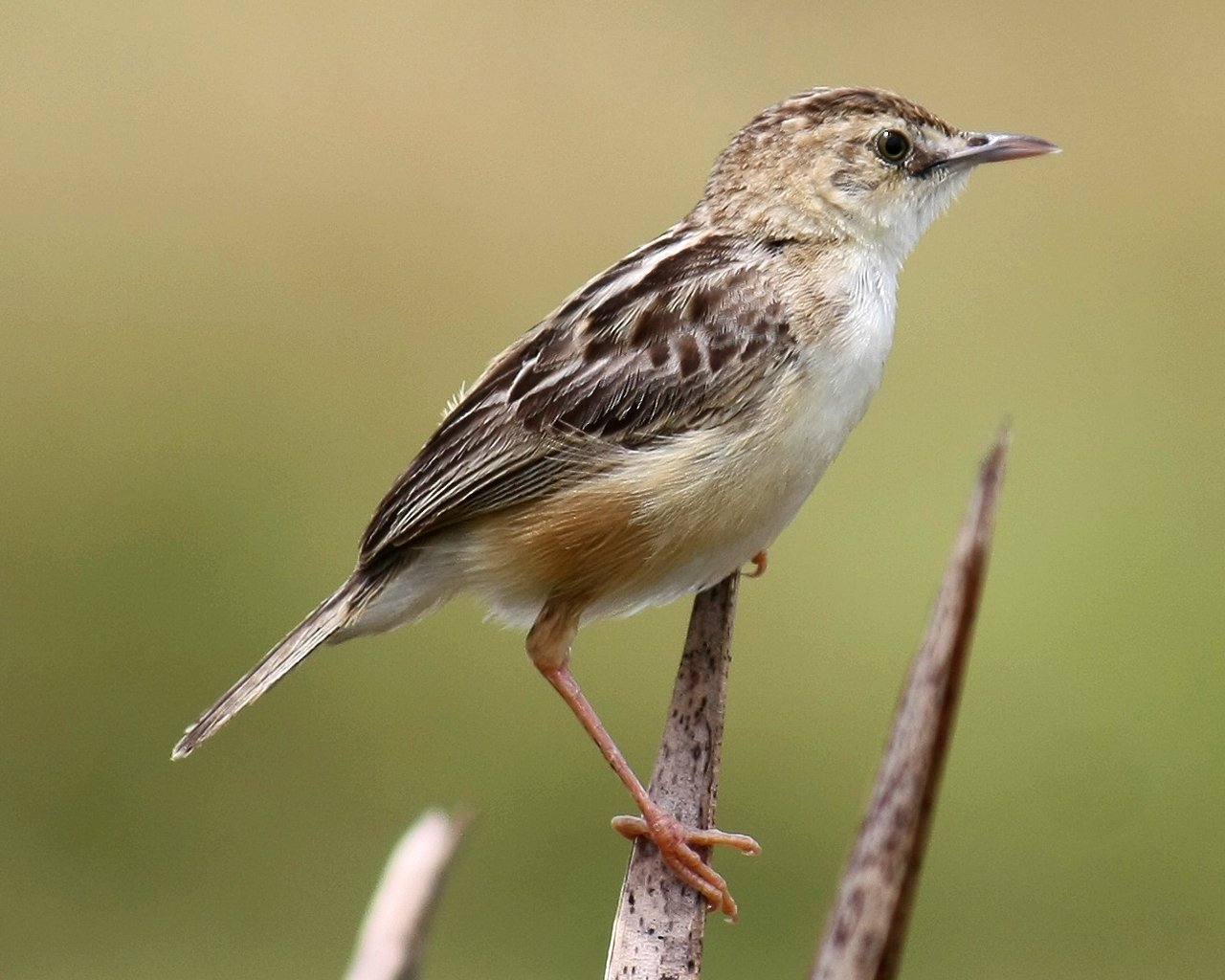
About 10–11 cm, small, with a short, rounded tail. The crown and back are buffy brown with heavy black streaks; the crown is streaked right to the forehead, with no plain rufous cap. The rump is plain warm buff. The tail is greyish-brown below with a striking pattern of black subterminal spots and broad white tips, best seen when the bird fans its tail. A pale supercilium and a pale eye stand out in the rather plain face. The underparts are white with buff flanks. In non-breeding plumage the bird is warmer and more heavily streaked, with a longer tail. The sexes are nearly alike; the breeding male has a darker bill.
Confusion species
Desert Cisticola Cisticola aridulus is paler, sandier and more finely streaked, has a longer, less contrastingly marked tail and lives in shorter, drier grass; its song is a higher zeep-zeep with wing-snapping, and it flies low and jerkily. Cloud Cisticola Cisticola textrix, Wing-Snapping Cisticola Cisticola ayresii and Pale-Crowned Cisticola Cisticola cinnamomeus are smaller and very short-tailed and sing high in the air, sometimes out of sight, with their own call series. Levaillant's Cisticola Cisticola tinniens has a rufous crown and tail. Distinctive for Zitting are the regular zit…zit…zit in an undulating song flight at moderate height, the streaked crown and the black-and-white tail tips.
Habitat
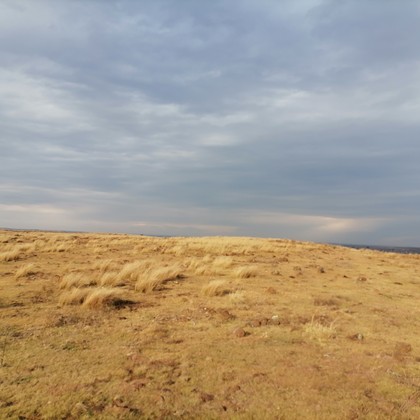
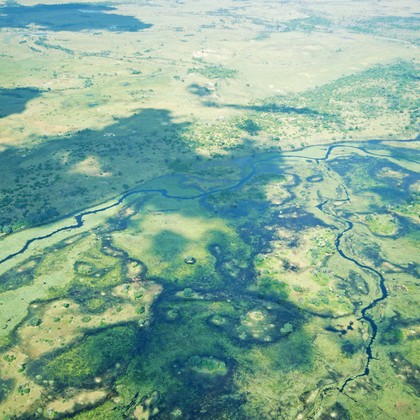
Tall, dense grass in damp hollows, along vleis, rivers and dams, in cropland and pasture, fallow land, road verges and around coastal lagoons; it avoids short, grazed grass and dry plains. It forages low in the grass for small insects and spiders. The nest is a deep, bottle-shaped purse of grass bound with cobweb, low in a grass tuft.
Where the bird is most at home, classified by the vegetation units of southern Africa.

Range and movements
Widespread in the eastern and northern half of the region: in South Africa from the south coast of the Western Cape and the Eastern Cape to KwaZulu-Natal, the Highveld, Mpumalanga and Limpopo, and in Lesotho (lowlands), Eswatini, Zimbabwe, Mozambique, Malawi, Zambia, Angola, northern and eastern Botswana and northern Namibia. Absent from the dry Karoo, the Kalahari and the Namib. In dry areas it wanders after good rains. Beyond the region throughout sub-Saharan Africa and in North Africa, southern Europe, South and East Asia and northern Australia.
- Resident
- Summer visitor (c. Oct–Mar)
- Winter visitor (c. Apr–Sep)
- Passage (Mar–Apr, Oct–Nov)
- dark = core range, pale = thinly spread
How and when to look
Year-round; in summer (October–March) mostly detected by its song flight over tall grass, especially on calm mornings. Follow the rhythmic zit and watch the bird make a bound on each click. Anyone who knows the species from southern Europe will recognise the song at once; the smaller grassland cisticolas (Cloud, Wing-snapping and Pale-crowned) sing higher in the air and with a different series.
Conservation status
Not threatened and one of the most numerous cisticolas worldwide. It benefits from field margins, fallow land and road verges but disappears where moist grassland is drained or kept short. Numbers fluctuate with rainfall.
Scientific name
Cisticola juncidis | (Rafinesque, 1810)
Rafinesque described the species in 1810 as Sylvia Juncidis; because it was later moved to another genus, the author and year stand in brackets. The genus Cisticola was introduced in 1829 by Kaup. Cisticola combines the Ancient Greek kisthos 'rock-rose' with the Latin colere 'to dwell'. juncidis is a Latin diminutive of iuncus 'reed'. The specimen the first description was based on came from Roccella, Sicily.