All species › Passerines › Waxbills › Yellow-Bellied Waxbill
Yellow-Bellied Waxbill | Coccopygia quartinia
Geelbuikastrild | Estrilda Ventrigualda Oriental
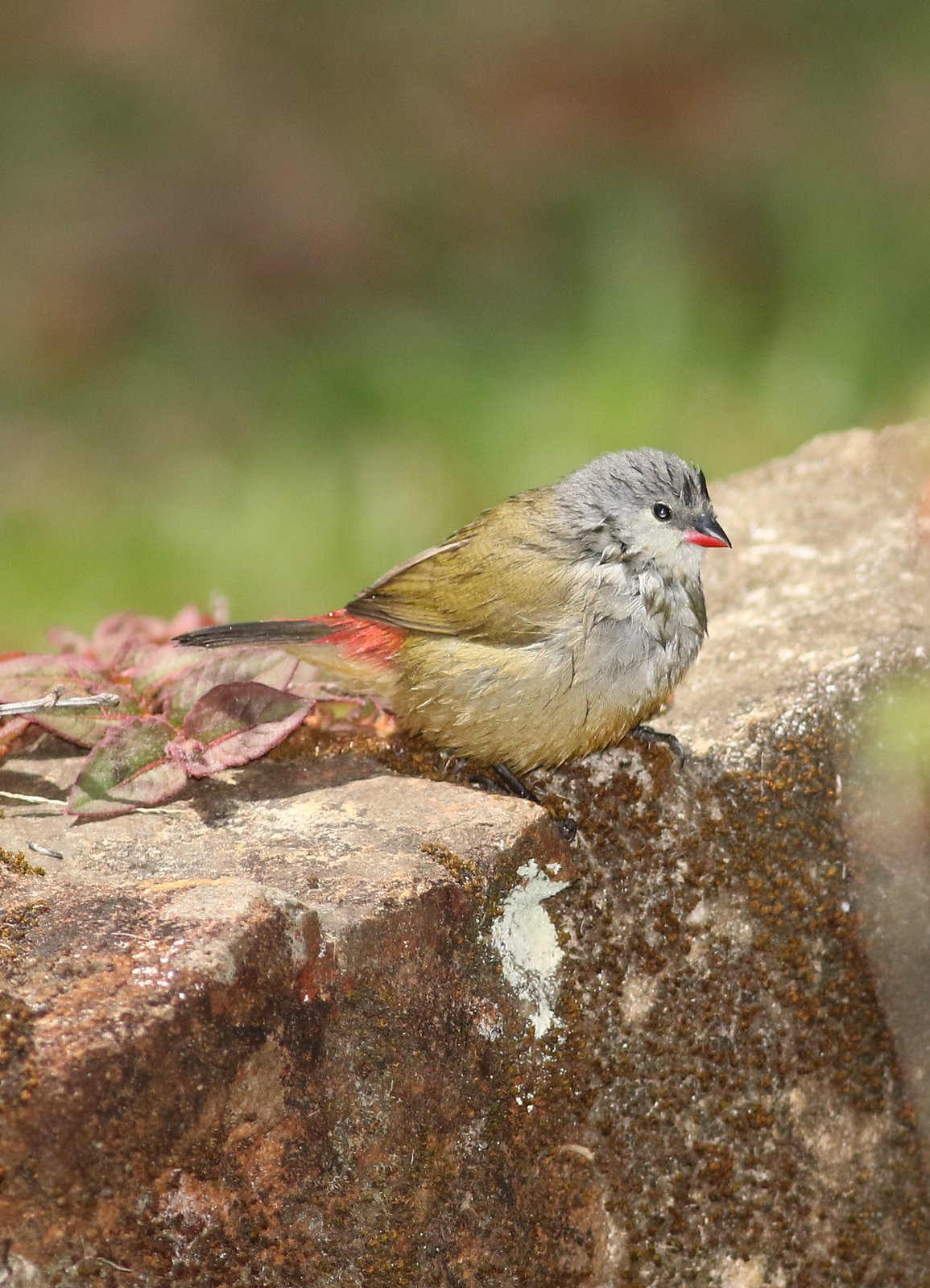
The Yellow-Bellied Waxbill is the northern counterpart of the Swee Waxbill: a tiny olive-green estrildid with a grey head, a scarlet rump and a yellow belly, which in the region lives only in the eastern highlands. Both sexes lack the black face of the southern species.
Voice
A soft, high, whistled swee-swee and a thin tseep as a contact call, very like that of Swee Waxbill. The song is a high, thin series of whistles with a short trill.
Recording: James Bradley — CC BY-NC-SA 4.0 · converted to mono · xeno-canto
Identification
9–10 cm. Head and nape are pale grey, back and wings olive-green, rump and uppertail-coverts bright scarlet and tail black. The upper mandible is black, the lower red. Throat and breast are pale grey, the belly and undertail-coverts bright lemon-yellow to yellowish-buff. The sexes are almost alike; neither has black on the face, although the male's lores are sometimes slightly darker. Juveniles are duller, with an all-black bill.
Confusion species
Swee Waxbill (Coccopygia melanotis) of South Africa and Eswatini has a black face in the male and a buffier belly; the species do not overlap. Angola Waxbill (Coccopygia bocagei) of the Angolan highlands has a black throat in the male. Green Twinspot (Mandingoa nitidula) is green with a red rump, but has black flanks with white spots and a red face in the male.
Habitat
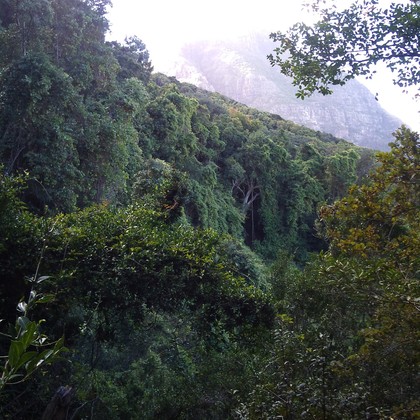
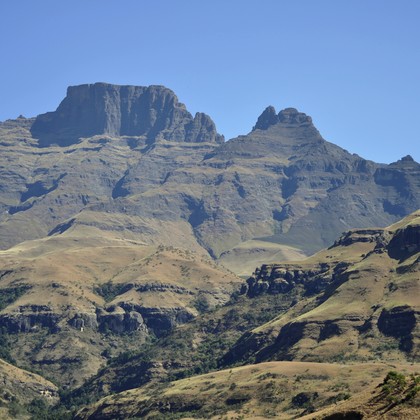
Edges of Afromontane forest, clearings and rank growth in montane forest, grassy margins and scrub in montane grassland, well-wooded gardens and plantations in the highlands, mostly above about 1000 m. It feeds in pairs or parties on grass heads and on the ground for small seeds.
Where the bird is most at home, classified by the vegetation units of southern Africa.
Range and movements
In the region in the eastern highlands: eastern Zimbabwe (Nyanga, Vumba, Chimanimani) and adjacent western Mozambique (form stuartirwini), and the highlands of Malawi, north-eastern Zambia and northern Mozambique. Beyond the region in the highlands of East Africa to Ethiopia and eastern Congo. Older literature, including Roberts, placed the Zimbabwean birds in Swee Waxbill.
- Resident
- Summer visitor (c. Oct–Mar)
- Passage (Mar–Apr, Oct–Nov)
- dark = core range, pale = thinly spread
How and when to look
Best found at forest edges and in gardens in Zimbabwe's Eastern Highlands, for example in the Vumba and around Nyanga, and on the Nyika Plateau in Malawi. Listen for the soft swee-swee and check that every bird in the party lacks black on the face.
Conservation status
Not threatened; fairly common in the highlands. Locally threatened by deforestation and the conversion of forest edges to farmland, but often also present in plantations and gardens.
Scientific name
Coccopygia quartinia | (Bonaparte, 1850)
Bonaparte described the species in 1850 as E[strelda] quartinia; because it was later moved to another genus, the author and year stand in brackets. The genus Coccopygia was introduced in 1862 by Reichenbach. Coccopygia comes from the Greek kokkos, 'scarlet', and -pugios, '-rumped' — for the red rump of these waxbills. quartinia honours the Portuguese explorer Dr Ricardo Leão Quartin Dillon (1811–1840), who collected in Abyssinia (Ethiopia) in 1839–1840. The specimen the first description was based on came from Ethiopia.