All species › Waders, gulls and terns › Gulls and terns › White-Cheeked Tern
White-Cheeked Tern | Sterna repressa
Arabische stern | Charrán Arábigo
The White-Cheeked Tern is a medium-sized, dark grey sea tern of the Red Sea, Persian Gulf and Arabian Sea. Southern Africa lies far outside its normal range: there are only a few accepted records from the coast of KwaZulu-Natal. Every claim needs good photographs.
Voice
A rasping kee-eerr, like the call of Common Tern but harsher, and a short kerrit.
Recording: David Darrell-Lambert — CC BY-NC-SA 4.0 · converted to mono · xeno-canto
Identification
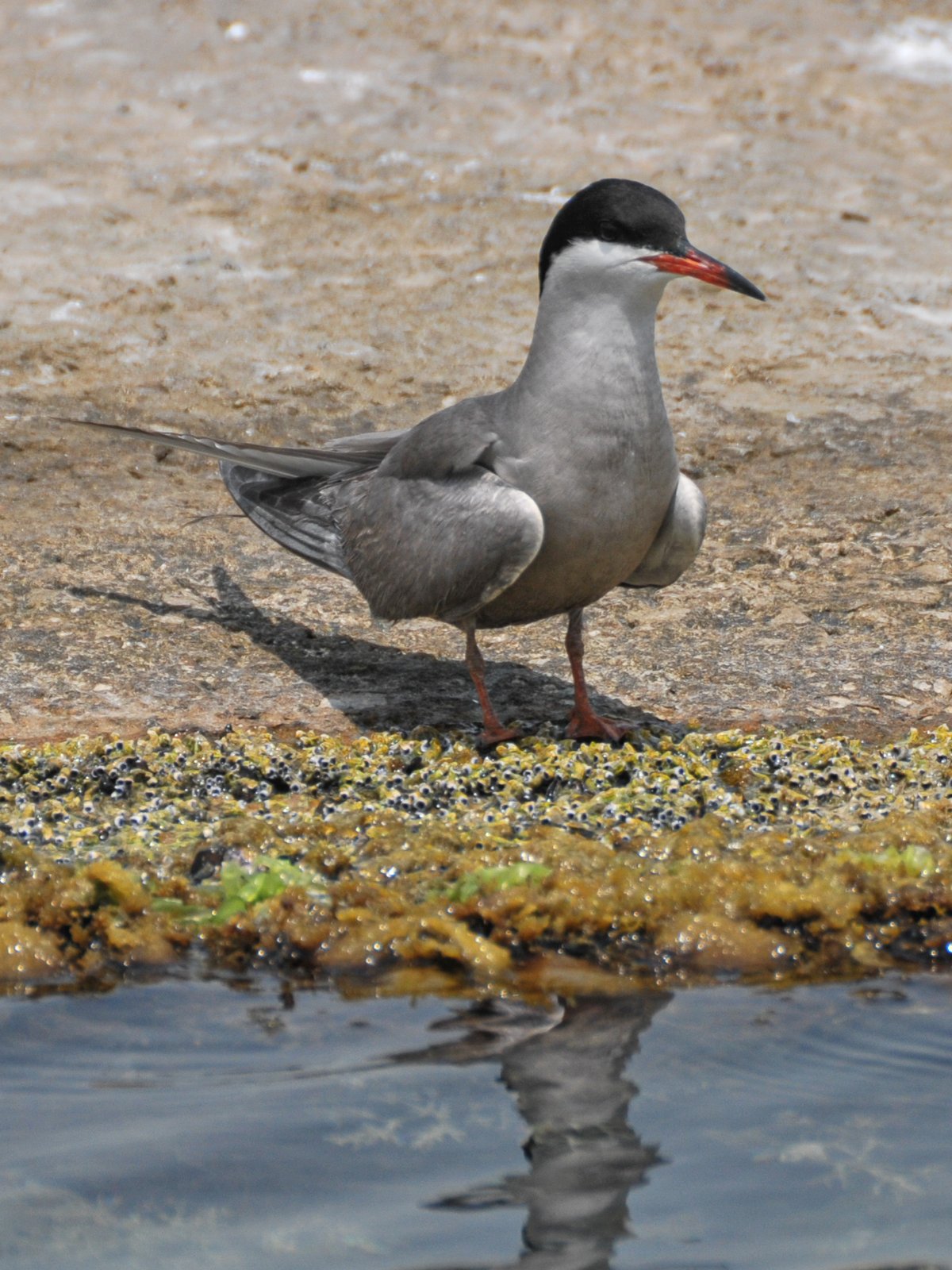
32–34 cm. In breeding plumage a black cap with a broad white cheek stripe below it, contrasting sharply with the grey throat and underparts. The upperparts are dark slate-grey; the rump and tail are grey too, the same shade as the back, an important difference from most other terns. The bill is long, slender and dark red with a blacker tip, the legs red. From below the primaries show a broad dark trailing edge. In non-breeding plumage the forehead and underparts are whiter and the bill black, but the grey rump and tail remain the best feature. Smaller and slimmer than Common Tern, with fast, light flight.
Confusion species
Whiskered Tern Chlidonias hybrida shares the pattern of black cap, white cheek and grey underparts, but is a marsh tern with a short, barely forked tail, broad wings and a short bill, and it dips to the water surface instead of diving. Antarctic Tern Sterna vittata, in breeding plumage during the southern winter, is also very similar, but is stockier, with a heavy red bill and a white rump and tail. Common Tern Sterna hirundo and Arctic Tern Sterna paradisaea have a white rump and tail in all plumages.
Habitat
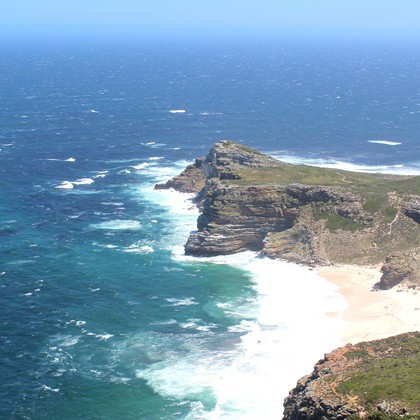
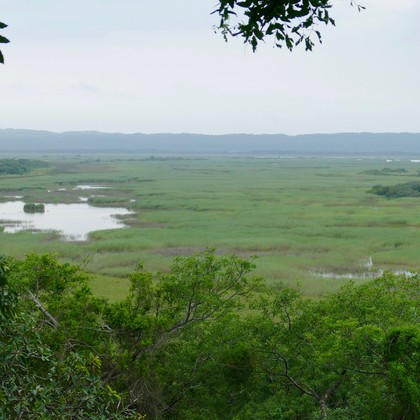
Warm inshore waters, reefs, lagoons and estuaries; it rests on sandbanks and beaches, often among Common Terns and other terns. It feeds on small fish caught by plunge-diving after hovering, and also picks prey from the surface.
Where the bird is most at home, classified by the vegetation units of southern Africa.
Range and movements
In the region only three accepted records, all on the coast of KwaZulu-Natal in South Africa: at the Umvoti River mouth (November 1975) and twice at Richards Bay (1982 and 1991). A record on the coast of Mozambique is to be expected but has not been confirmed. It breeds around the Red Sea, Persian Gulf and Arabian Sea and winters along the East African coast to Kenya and Tanzania and along the west coast of India.
How and when to look
Check large Common Tern roosts on the east coast, especially at Richards Bay and in estuaries in northern KwaZulu-Natal, for a slightly smaller, dark tern with a grey rump. A flight photograph from above, showing back, rump and tail in one shade, is the strongest evidence.
Conservation status
Not globally threatened, although numbers are falling in parts of the breeding range through disturbance and egg collecting on the breeding islands. Of no conservation significance for southern Africa.
Scientific name
Sterna repressa | Hartert, 1916
Hartert described the species in 1916 and placed it straight away in the genus where it still stands. The genus Sterna was introduced in 1758 by Linnaeus. Sterna goes back to Old English stearn, which appears in the poem The Seafarer; the Frisians used a related word for terns. repressa is Latin for 'held back, restrained', from reprimere 'to press back'; why the name was chosen is unclear. The specimen the first description was based on came from Fao, Persian Gulf.