All species › Pelicans, herons and ibises › Herons and bitterns › Striated Heron
Striated Heron | Butorides striata
Mangrovereiger | Garcita Estriada
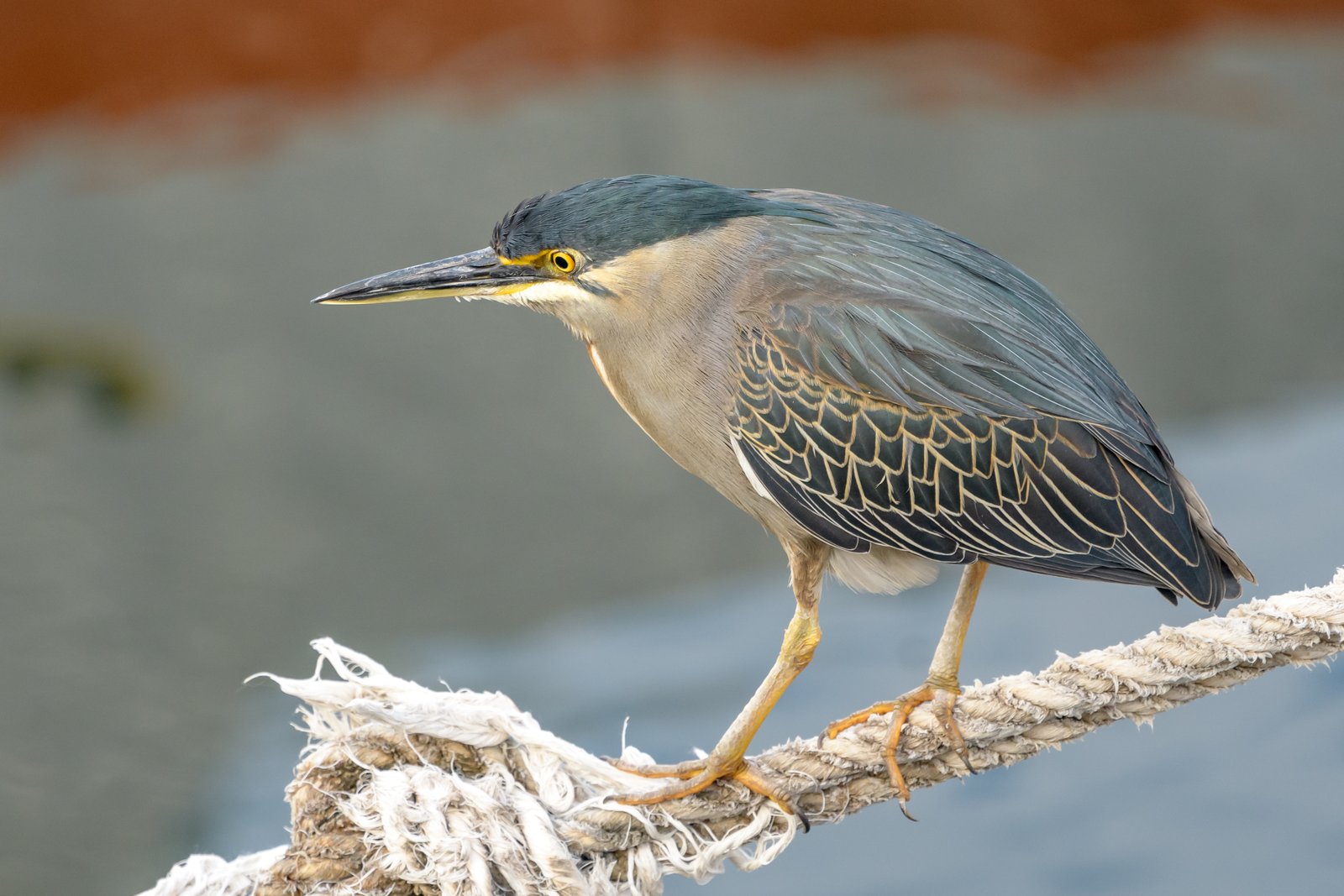
The Striated Heron is a small, compact heron that sits motionless on a branch or root just above the water, with the neck retracted and the bill pointed at the surface. It is common, but its cryptic plumage and quiet habits mean it is often noticed only when it flies off low over the water with a sharp call.
Voice
A sharp, explosive kyow or tchak, especially on take-off; also a soft clicking kek-kek when disturbed.
Recording: José María Loaiza B. — CC BY-NC-SA 4.0 · converted to mono · xeno-canto
Identification
About 41 cm, with short legs, a long, dagger-shaped black bill and a neck that is usually retracted. Adults have a black cap with a short crest, a dark grey-green back with a greenish gloss, wing coverts with narrow pale edges that form a scaly pattern, grey neck and underparts and a white throat with a stripe running down the foreneck. The eye is yellow, the legs yellow to orange. The sexes are alike. Juveniles are brown, with a heavily streaked neck and breast and pale-spotted wing coverts.
Confusion species
Dwarf Bittern Botaurus sturmii is slate-grey above with cream, heavily dark-streaked underparts, and lacks the pale edges on the wing. Little Bittern Botaurus minutus shows a large pale wing patch in flight. A young Black-Crowned Night Heron Nycticorax nycticorax is larger and heavier, with large white spots on the upperparts. Squacco Heron Ardeola ralloides is more buff-brown and shows white wings in flight.
Habitat
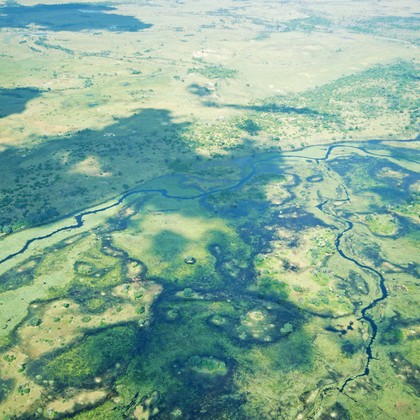
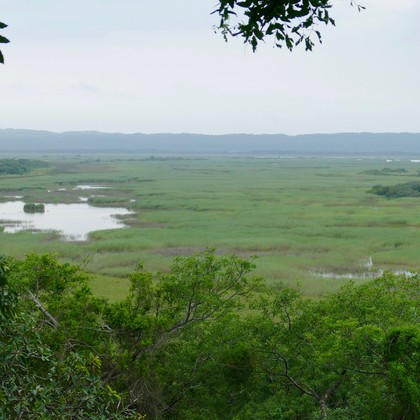
Wooded margins of rivers, dams and lakes with overhanging branches, mangroves, estuaries and rocky coastal pools. It hunts patiently from a fixed perch for fish, frogs, crabs and insects, and sometimes uses bait such as an insect or a feather to lure fish. It nests singly in a tree or bush over water.
Where the bird is most at home, classified by the vegetation units of southern Africa.
Range and movements
Distributed across the north and east of the region: Angola, Zambia, Malawi, Mozambique, Zimbabwe, northern Botswana and Namibia (Okavango, Kunene and Caprivi), and in South Africa in Limpopo, Mpumalanga, KwaZulu-Natal, Eswatini and along the Eastern Cape coast west to about the Garden Route; absent from the arid west and the high interior. Beyond the region it occurs in the tropics and subtropics of Africa, Madagascar, Asia, Australia and South America.
- Resident
- Summer visitor (c. Oct–Mar)
- Winter visitor (c. Apr–Sep)
- Passage (Mar–Apr, Oct–Nov)
- dark = core range, pale = thinly spread
How and when to look
Drift slowly along the banks of the Chobe, the Okavango or the Zambezi, or walk the edges of mangrove creeks on the coasts of KwaZulu-Natal and Mozambique. Check low branches and exposed roots just above the water; a hunched silhouette with a sharp bill pointing down is often all that shows.
Conservation status
Not threatened and widespread. It is locally threatened by the loss of riverine forest and mangroves, but also uses artificial dams with wooded margins.
Scientific name
Butorides striata | (Linnaeus, 1758)
Linnaeus described the species in 1758 as Ardea striata; because it was later moved to another genus, the author and year stand in brackets. The genus Butorides was introduced in 1852 by Blyth. Butorides combines Butor, the genus Thomas Forster introduced for the bitterns in 1827, with Ancient Greek -oides 'resembling'. striata is Latin for 'striated', after the streaking of the plumage. The specimen the first description was based on came from Suriname.