All species › Passerines › Cisticolas › Stout Cisticola
Stout Cisticola | Cisticola robustus
Grote graszanger | Cistícola Robusto
Stout Cisticola is a large, heavily built cisticola of moist grassland on the plateaux of Angola and northern Zambia. The male stands out with a rufous nape that contrasts sharply with a streaked crown and back. The southern races angolensis and awemba are sometimes treated as a separate species, Angola Cisticola.

Voice
A strong song of clear, repeated whistles alternating with dry, rattling or buzzing trills, for example chew-chew-trrrrr, from a perch or in a short song flight. The alarm is a hard, grating chek-chek. The song is less well known than that of the southern species; recordings from Angola and Zambia are the best comparison material.
Recording: Dries Van de Loock — CC BY-NC-SA 4.0 · converted to mono · xeno-canto
Identification
About 13–16 cm; the male is clearly larger than the female. Big and sturdy for a cisticola, with a strong bill and a rather short, broad tail. Crown brown with dark streaks, nape and hindneck plain rufous forming a clear collar; mantle and back greyish-brown with broad black streaks. The wing edgings are brown to warm buff, the tail dark brown with pale tips and a black subterminal band. The underparts are white on the throat, grading to buff on breast and flanks. In non-breeding plumage the bird is browner and the nape less bright. Juveniles are yellower and less contrasting. It sings from a grass stem or small bush and in short, fluttering song flights over the grass.
Confusion species
Croaking Cisticola Cisticola natalensis is about the same size but lacks the rufous nape; its crown and back are more evenly streaked and its song is a deep, croaking chee-frrr. Levaillant's Cisticola Cisticola tinniens is slimmer, has a rufous crown rather than a rufous nape, a long rufous tail and lives closer to open water. Wailing Cisticola Cisticola lais has a rufous crown and lives on mountain slopes. In Angola Huambo Cisticola Cisticola bailunduensis may occur in the same area: smaller, with a rufous crown and a different, wailing song. The rufous nape on a large, heavily streaked cisticola in wet grassland is diagnostic.
Habitat
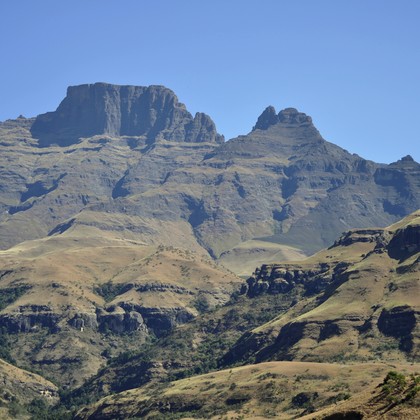
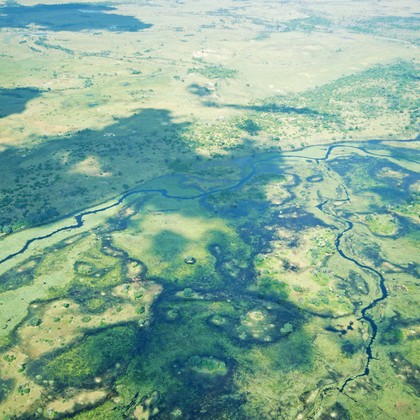
Moist and wet grassland on the plateaux, often around dambos (broad grassy depressions that flood in the rains), along the edges of vleis and in rank grass with scattered bushes, mostly above 1,200 m. It forages low in the grass for insects. The nest is placed low in dense grass tufts.
Where the bird is most at home, classified by the vegetation units of southern Africa.
Range and movements
Within the region only in the north: on the central and western plateau of Angola (race angolensis, including around Huambo, Bié and Huíla) and on the plateau of northern and north-eastern Zambia (race awemba). It does not occur in the countries further south. Beyond the region it ranges through south-western Tanzania, the DR Congo and from there north through East Africa to Ethiopia and Eritrea, with isolated populations in Cameroon and Nigeria.
- Resident
- dark = core range, pale = thinly spread
How and when to look
Year-round; most conspicuous in the rains (November–March) when the males sing. In Angola look in plateau grassland around Huambo and the Serra da Chela; in Zambia on the plateau around Mbala, Kasama and Mpika. With any large cisticola in wet grassland, check the nape: rufous means Stout, no rufous nape but a croaking song points to Croaking Cisticola.
Conservation status
Not threatened on the global assessment. Within the region it is confined to the plateaux of Angola and Zambia, where moist grassland suffers locally from intensive burning, grazing and conversion to farmland. The status of the possible separate species (Angola Cisticola) has not been assessed separately.
Scientific name
Cisticola robustus | (Rüppell, 1845)
Rüppell described the species in 1845 as Drymoica robusta; because it was later moved to another genus, the author and year stand in brackets. The genus Cisticola was introduced in 1829 by Kaup. Cisticola combines the Ancient Greek kisthos 'rock-rose' with the Latin colere 'to dwell'. robustus is Latin for 'stout, strong' — it is one of the largest cisticolas. The specimen the first description was based on came from Ethiopia (not specified further).