All species › Passerines › African Warblers › Red-Faced Crombec
Red-Faced Crombec | Sylvietta whytii
Roodteugelkrombek | Crombec Carirrojo
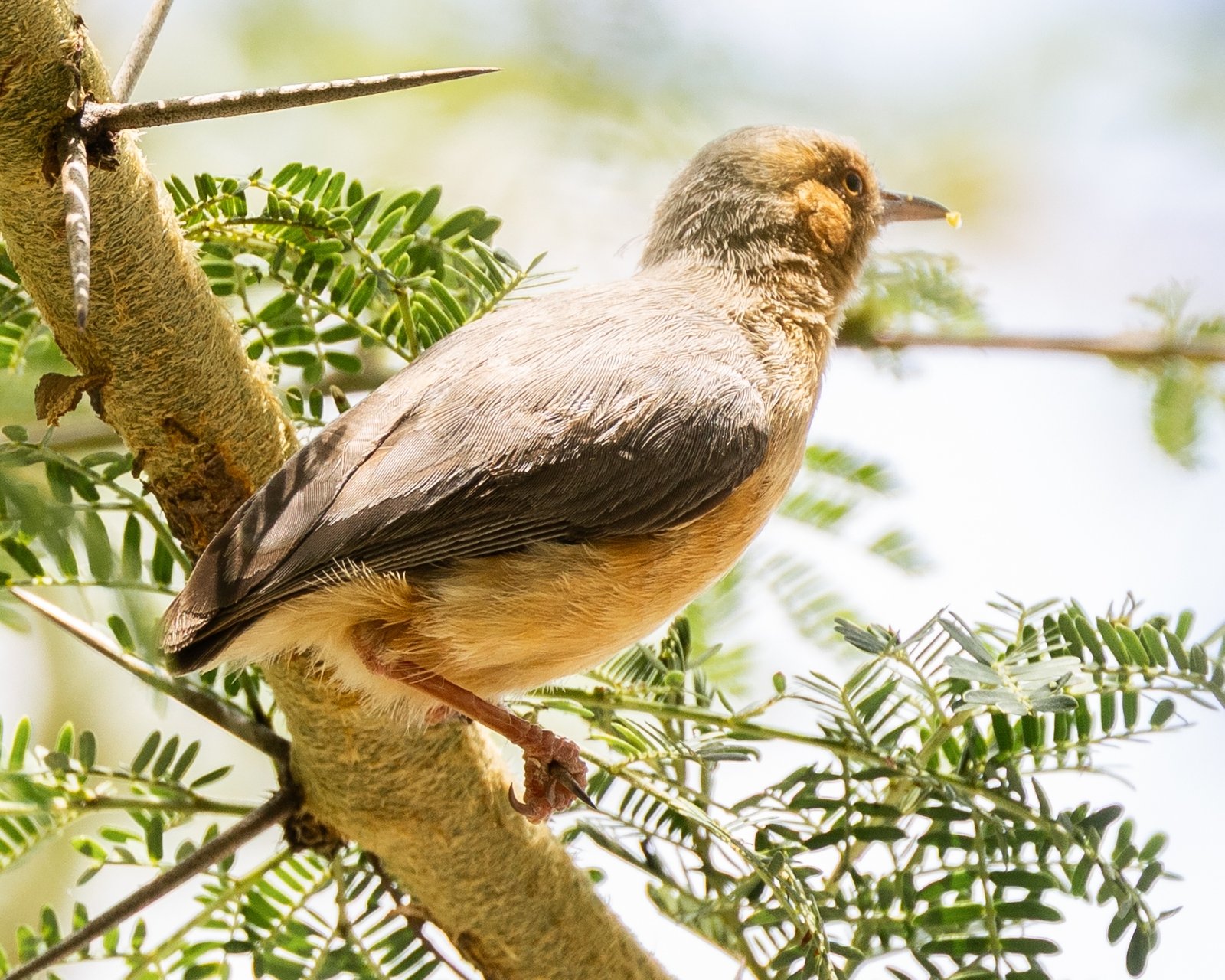
Red-Faced Crombec is the eastern counterpart of Long-Billed Crombec: just as small and stub-tailed, but with a shorter bill and a rufous face. In the region it is a bird of the broad-leaved woodland of Malawi, Mozambique, eastern Zambia and eastern Zimbabwe.
Voice
A fast, high trill or series of thin notes, such as si-si-si-si-si-sirrr, and a repeated, penetrating tirrrit tirrrit. The song sounds higher and thinner than that of Long-Billed Crombec. The contact call is a dry tsik.
Recording: Lars Lachmann — CC BY-NC-SA 4.0 · converted to mono · xeno-canto
Identification
9–10 cm. Crown, hindneck and back uniform grey, wings grey-brown. Lores, supercilium and ear-coverts warm rufous, so the whole face looks reddish; there is no dark eye-stripe. The underparts are uniform rufous-buff to cinnamon, slightly paler on the throat. The tail is very short. The bill is short, straight and dark, clearly shorter than in Long-Billed Crombec. The eye is light brown. The sexes are alike; juveniles are duller.
Confusion species
Long-Billed Crombec Sylvietta rufescens has a longer, slightly decurved bill, a dark eye-stripe with a pale supercilium and a greyer face; the two overlap locally in Zimbabwe, Mozambique and Malawi. Red-Capped Crombec Sylvietta ruficapilla, mainly in the west, has red on the crown or cheeks, a white throat and a pale belly. Burnt-Necked Eremomela Eremomela usticollis has a longer tail, a pale belly and a rufous throat patch.
Habitat
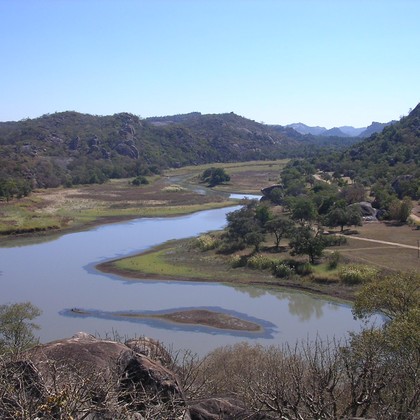
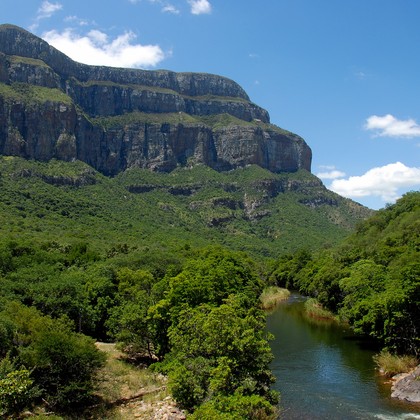
Broad-leaved woodland and miombo, riverine forest and woodland edges, also denser thicket and wooded gardens, mostly at lower altitudes. It forages in the outer foliage of bushes and trees, often in mixed flocks, searching leaves, twigs and bark for insects and spiders.
Where the bird is most at home, classified by the vegetation units of southern Africa.

Range and movements
In the region in Malawi, eastern and northern Zambia (including the Luangwa Valley), central and northern Mozambique and eastern Zimbabwe, mainly the lower parts of the Eastern Highlands around Mutare. Beyond, north through Tanzania, Kenya and Uganda to southern Ethiopia and South Sudan.
- Resident
- Summer visitor (c. Oct–Mar)
- Winter visitor (c. Apr–Sep)
- Passage (Mar–Apr, Oct–Nov)
- dark = core range, pale = thinly spread
How and when to look
In Zimbabwe best searched for in the Burma Valley, the low-lying woodland around Mutare and the Honde Valley; in Malawi and the Luangwa Valley it is much more common. Listen for the high, thin trill and always check bill length and face pattern, as Long-Billed Crombec occurs in the same areas.
Conservation status
Not threatened; widespread and common in suitable woodland. The species tolerates moderate disturbance and also occurs in gardens and around villages; no major threats are known.
Scientific name
Sylvietta whytii | (Shelley, 1894)
Shelley described the species in 1894 as Sylviella whytii; because it was later moved to another genus, the author and year stand in brackets. The genus Sylvietta was introduced in 1839 by De Lafresnaye. Sylvietta is a diminutive of Sylvia (warbler), after the French sylviette, 'little warbler' — for the tiny, almost tailless crombecs. whytii honours the Scottish naturalist Alexander Whyte (1834–1905), who collected in present-day Malawi. The specimen the first description was based on came from Zomba, Malawi.