All species › Passerines › Reed warblers › Mountain Yellow Warbler
Mountain Yellow Warbler | Iduna similis
Bamboerietzanger | Zarcero Montano
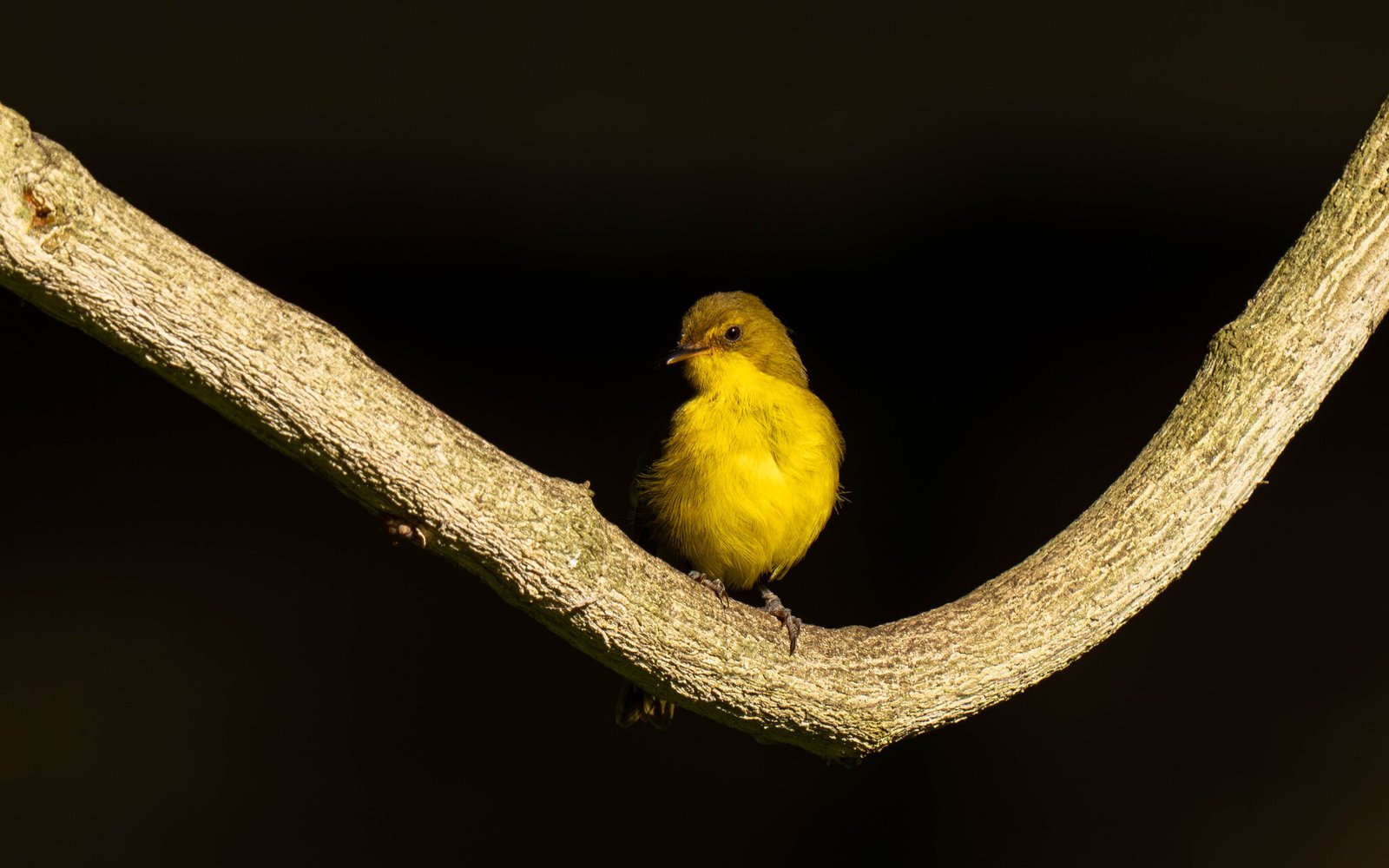
The Mountain Yellow Warbler is an olive-green and bright yellow warbler of the East African highlands which, within the region, occurs only on the plateaus of northern Malawi and adjacent north-eastern Zambia. It lives in rank forest edge, bracken and bamboo above about 1,800 m and is mostly given away by its rich, fluid song.
Voice
The song is a rich, fluid and varied warble of clear whistles and fast trills, more melodious and longer than that of African Yellow Warbler, often from a projecting twig or bracken stem. The call is a hard, dry chak, with a rattling chrrr when alarmed.
Recording: Bram Piot — CC BY-NC-SA 4.0 · converted to mono · xeno-canto
Identification
13–14 cm, with a round head, a fairly broad, flat bill and a long, rounded tail. The upperparts are dark olive-green without markings; the underparts are bright lemon-yellow, washed olive on the flanks. A supercilium is almost lacking and the lores are yellowish. The upper mandible is dark, the lower slightly paler; the legs are dark blue-grey. The wings are short and rounded, without a panel. The sexes are alike; juveniles are browner above and duller yellow below. It often perches upright, slightly hunched, and forages low in dense rank growth for insects, sometimes making a short sally after prey.
Confusion species
African Yellow Warbler Iduna natalensis is very similar but warmer yellow-brown above rather than dark olive-green, and lives lower down, in rank growth near water and in grassland with bushes; in Malawi and Zambia the two largely replace each other with altitude, so that altitude and song matter more than plumage. Yellow-Throated Woodland Warbler Phylloscopus ruficapilla is smaller and slimmer, with a fine bill, a clear supercilium and a yellow throat, and forages restlessly in the canopy of montane forest. Icterine Warbler Hippolais icterina has long wings with a pale panel and an orange-pink lower mandible, and occurs as a migrant in dry savanna.
Habitat
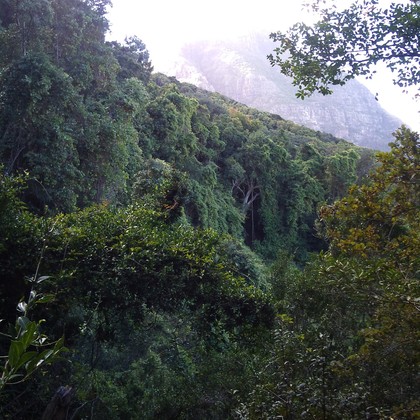
Rank edges of montane forest, bracken, bamboo and scrub, dense herbage along streams and in clearings in montane forest, mostly above 1,800 m. It forages low in the vegetation for small insects and caterpillars. The nest is a deep cup of grasses and stems, low in a bush or among bracken.
Where the bird is most at home, classified by the vegetation units of southern Africa.
Range and movements
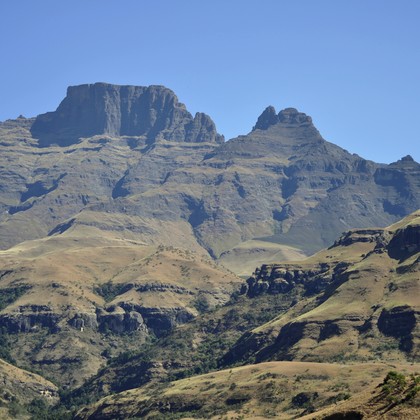
Within the region only in northern Malawi (Nyika Plateau, Misuku Hills and locally on the Viphya Plateau) and on the adjacent Zambian part of the Nyika Plateau and in the Mafinga Mountains. Beyond the region it occurs in the highlands of East Africa, from South Sudan and eastern DR Congo through Uganda and Kenya to the Southern Highlands of Tanzania.
- Summer visitor (c. Oct–Mar)
- dark = core range, pale = thinly spread
How and when to look
All year; the best chance is on the Nyika Plateau, in the bracken and scrub along forest edges around Chelinda and in the stream valleys. Listen in the early morning for the rich song from the tangle and wait for the bird to perch briefly on top of a fern or bush; the dark olive-green back and bright yellow belly are then clearly visible.
Conservation status
Not threatened. Common in the East African highlands, but within the region confined to a few plateaus, where fire, forest clearance and the spread of cultivation at the edges of protected areas degrade its habitat locally.
Scientific name
Iduna similis | (Richmond, 1897)
Richmond described the species in 1897 as Chloropeta similis; because it was later moved to another genus, the author and year stand in brackets. The genus Iduna was introduced in 1840 by Keyserling & Blasius. Iduna refers to Iðunn (Iduna) of Norse mythology, goddess of spring and fertility and keeper of the magic apples of rejuvenation. She was changed into a sparrow so that Loki, in falcon form, could rescue her from the giant Þjazi. similis is Latin for 'similar' — for its close resemblance to the related African Yellow Warbler (Iduna natalensis). The specimen the first description was based on came from Mount Kilimanjaro, Tanzania.