All species › Passerines › Sunbirds › Little Green Sunbird
Little Green Sunbird | Anthreptes seimundi
Kortstaarthoningzuiger | Suimanga de Seimund
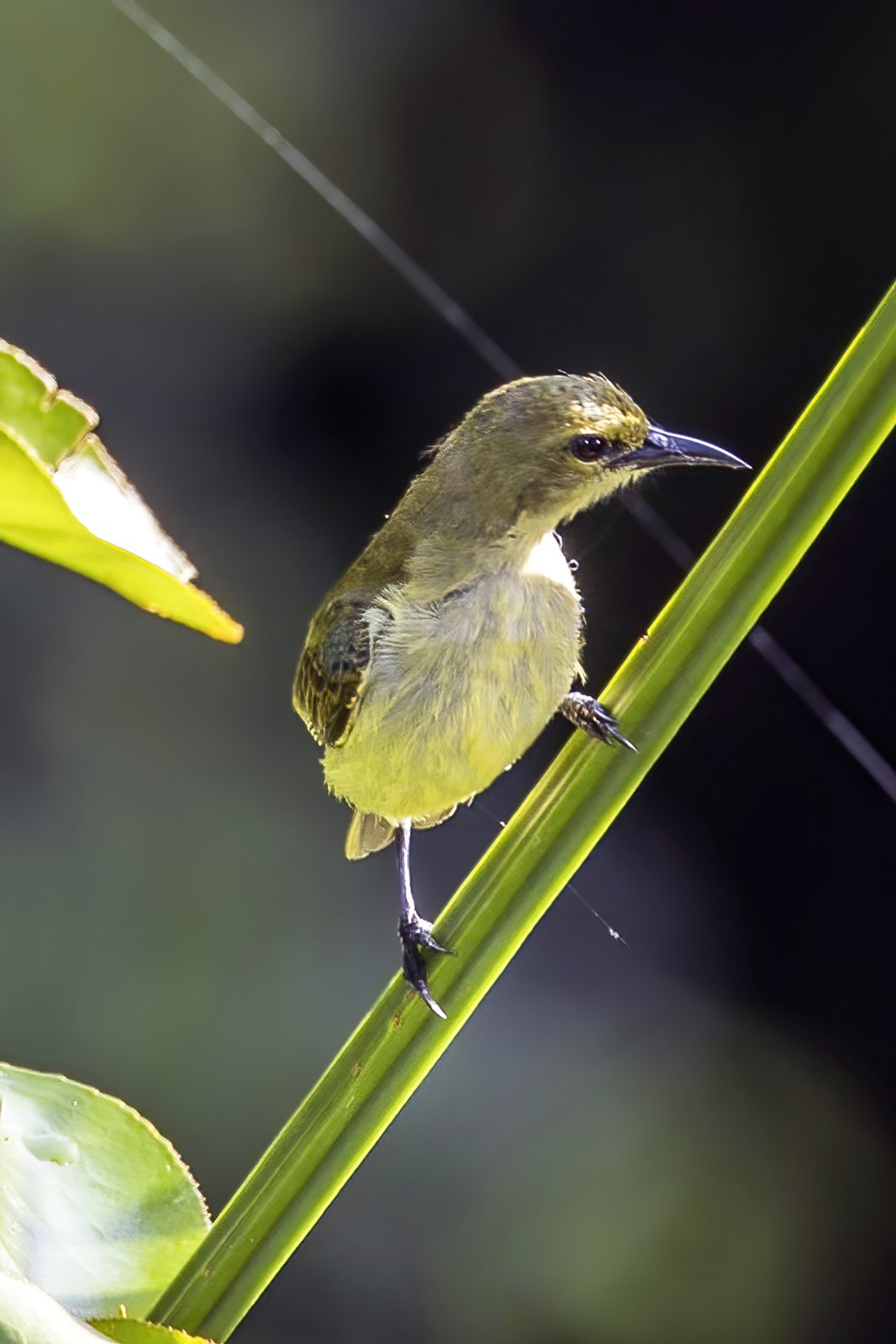
The Little Green Sunbird is one of Africa's smallest sunbirds: a plain olive-green bird with a short tail and a short, almost straight bill, lacking any metallic gloss. It lives in the rainforest canopy and is noticed more for its behaviour than for its plumage.
Voice
A soft, high tsip or chip, usually the first sign of the species in the canopy. The song is a short, squeaky twitter of a few high notes.
Recording: Étienne Leroy — CC BY-NC-SA 4.0 · converted to mono · xeno-canto
Identification
About 9 cm, compact, with a strikingly short, square-cut tail and a short bill. The upperparts are plain olive-green, the underparts paler yellowish-olive, yellower on the centre of the belly. There is a narrow pale eye-ring. The male has small yellow pectoral tufts; otherwise the sexes are alike. Juveniles are somewhat greyer. It moves quickly and restlessly through the foliage, often hanging like a tit.
Confusion species
Fraser's Sunbird (Deleornis fraseri) is also plain green with a straight bill, but larger and longer-tailed, with orange-red pectoral tufts in the male. Olive Sunbird (Cyanomitra olivacea) is much larger, with a long curved bill. Females of Collared Sunbird (Hedydipna collaris) and Olive-Bellied Sunbird (Cinnyris chloropygius) have a green-glossed back or a decurved bill respectively. Also consider small green warblers such as eremomelas and camaropteras, which do not take nectar and have a different bill shape.
Habitat
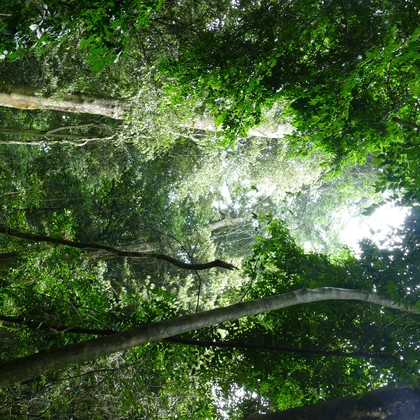
Canopy and edges of lowland rainforest, old secondary forest, gallery forest and coffee and cocoa plantations under shade trees. It feeds mainly on insects and spiders among the leaves and also visits flowering mistletoes and trees, often with mixed flocks.
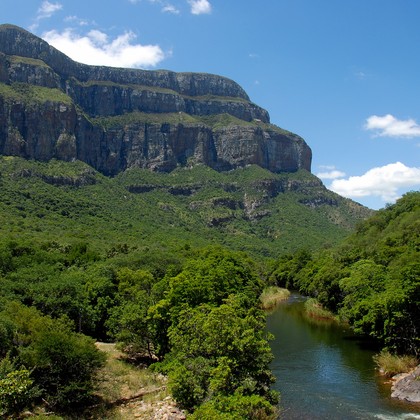
Where the bird is most at home, classified by the vegetation units of southern Africa.
Range and movements
Within the region only in northern Angola, in Cabinda, the north-western provinces (including Uíge and Cuanza Norte) and the north-east (Lunda Norte). Beyond the region from Sierra Leone through the rainforest of West and Central Africa to Uganda, Congo-Kinshasa and Bioko.
- Resident
- dark = core range, pale = thinly spread
How and when to look
In the forest belt of northern Angola, look for mixed flocks in the canopy and train the binoculars on the smallest, most restless green bird. The short tail and the complete absence of gloss make it recognisable with a good view.
Conservation status
Not threatened and widespread in the rainforest. In Angola the species is local and dependent on the remaining forests of the north, which are under pressure from logging and cultivation.
Scientific name
Anthreptes seimundi | (Ogilvie-Grant, 1908)
Ogilvie-Grant described the species in 1908 as Cinnyris seimundi; because it was later moved to another genus, the author and year stand in brackets. The genus Anthreptes was introduced in 1832 by Swainson. Anthreptes comes from the Greek anthos, 'flower', and threptēs, 'feeder' — for the habit of taking nectar from flowers. seimundi honours the British taxidermist Eibert Carl Henry Seimund (?1878–1942), who collected in South Africa (1899–1903), on Fernando Po (Bioko, 1904) and in Malaya (1906–1916). The specimen the first description was based on came from Banterbari, Bioko (Fernando Po), Equatorial Guinea.