All species › Waders, gulls and terns › Gulls and terns › Kelp Gull
Kelp Gull | Larus dominicanus
Kelpmeeuw | Gaviota Dominicana
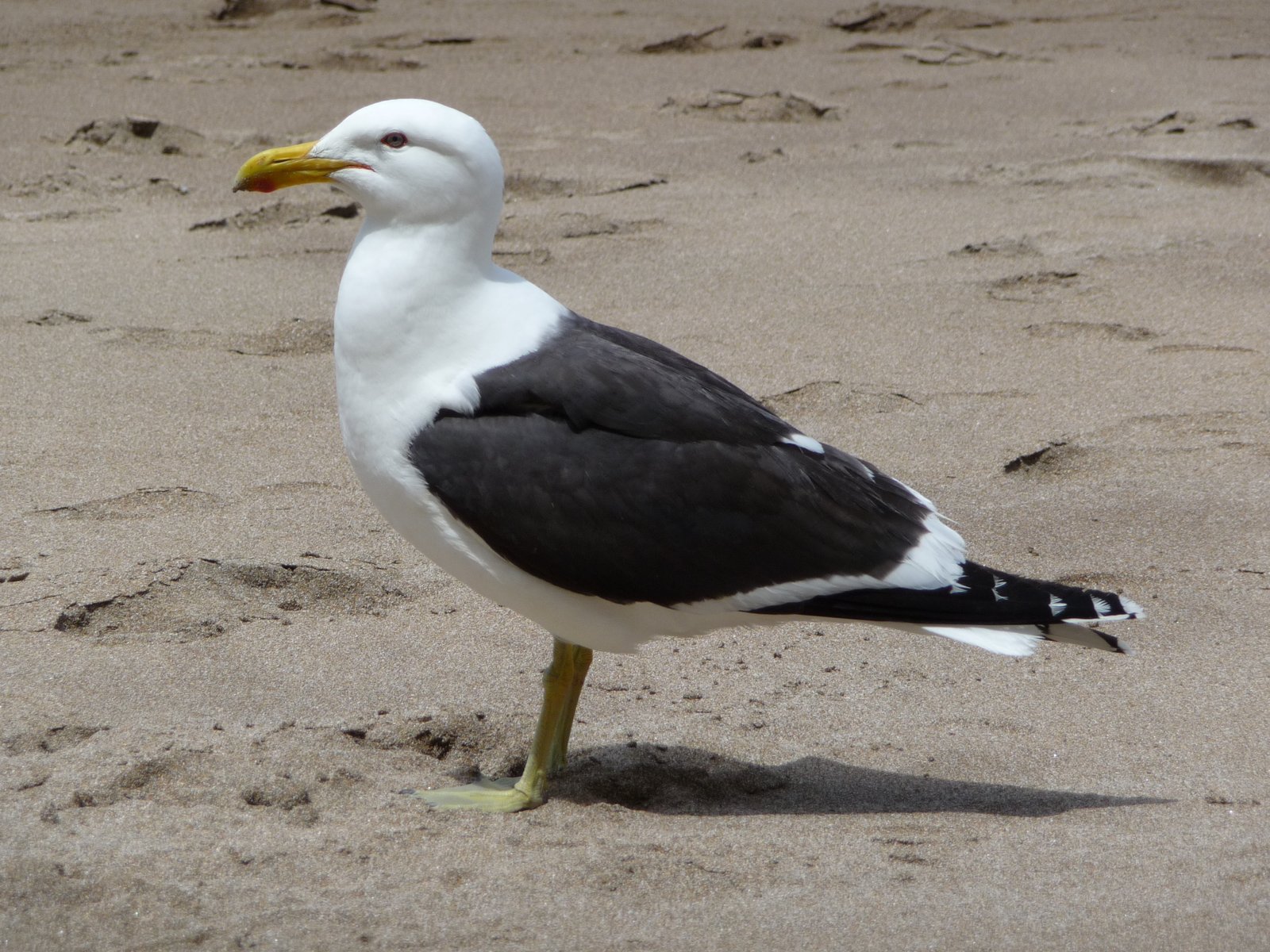
The Kelp Gull is the only large gull that breeds in southern Africa: a heavy, black-backed gull found along the whole south and west coast, from rocky shores and islands to harbours and rubbish dumps. The form occurring here, vetula, the Cape Gull, is sometimes treated as a separate species.
Voice
A loud, drawn-out kiow-kiow-kiow, followed by a laughing series with the head thrown back; also a short, deep kaa and an alarm ha-ha-ha.
Recording: African Bioacoustics Community — CC BY-NC-SA 4.0 · converted to mono · xeno-canto
Identification
54–65 cm. A large, bulky gull with a heavy yellow bill with a red spot near the gonys. Adults have a white head, tail and underparts, a blackish mantle and wings with a narrow white trailing edge and a small white mirror in the outermost primary. In the southern African form the eye is dark and the legs olive-grey to greenish; males are larger and heavier-billed than females. Immatures are dark brown, mottled and scaly, with a black bill and a dark tail, and acquire adult plumage in three to four years.
Confusion species
Lesser Black-Backed Gull Larus fuscus is smaller and slimmer, with longer wings, yellow legs, a pale iris and a finer bill; in most birds in the region the mantle is slightly less black. Great Skua Stercorarius skua and Brown Skua Stercorarius antarcticus can resemble immature Kelp Gulls at a distance, but have white flashes at the base of the primaries and a shorter, stockier build.
Habitat
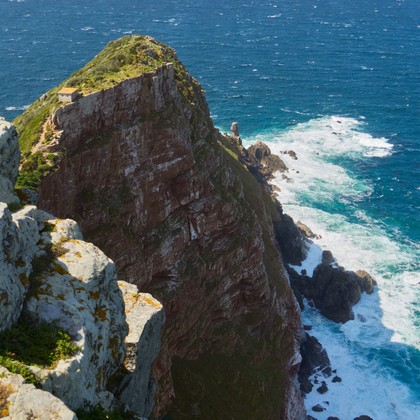
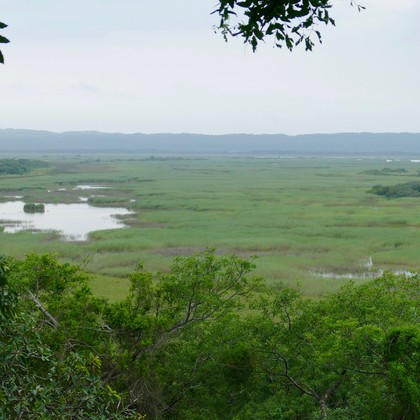
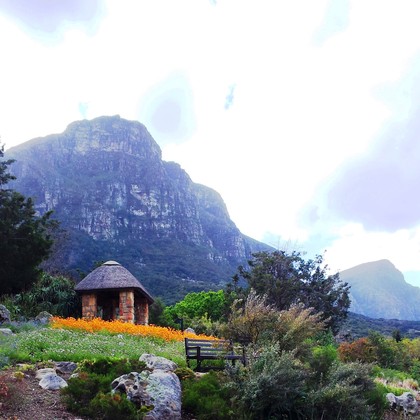
Rocky shores, islands, beaches, estuaries, lagoons, harbours and rubbish dumps, and sometimes farmland just behind the coast. A versatile feeder on fish, shellfish (which it drops onto rocks or roads to break them), fish offal, carrion, and the eggs and chicks of other seabirds. It breeds in loose colonies on islands, coastal rocks and in dunes, and increasingly on roofs.
Where the bird is most at home, classified by the vegetation units of southern Africa.
Range and movements
Along the coast from the extreme south of Angola through Namibia and the Western Cape to the Eastern Cape and KwaZulu-Natal; scarce in southern Mozambique. Commonest between Walvis Bay and Port Elizabeth, with the largest colonies on the Western Cape islands. Rarely inland. Elsewhere along the coasts of South America, New Zealand, Australia and the subantarctic islands to the Antarctic Peninsula; also on Madagascar.
- Resident
- Summer visitor (c. Oct–Mar)
- Passage (Mar–Apr, Oct–Nov)
- dark = core range, pale = thinly spread
How and when to look
Everywhere along the Cape coast, in harbours such as Hout Bay and Kalk Bay, on the islands of Saldanha Bay and on the jetties of Walvis Bay. At penguin colonies such as Boulders it pays to watch the Kelp Gulls as egg predators.
Conservation status
Not threatened; the world population is large and increasing. In southern Africa the population has grown on refuse and fishery waste, which has increased the pressure of Kelp Gulls on the eggs and chicks of threatened seabirds such as African Penguin and Cape Gannet. Avian influenza also affects this species.
Scientific name
Larus dominicanus | Lichtenstein, 1823
Lichtenstein described the species in 1823 and placed it straight away in the genus where it still stands. The genus Larus was introduced in 1758 by Linnaeus. Larus is Latin, from Ancient Greek laros, and appears to have referred to a gull or another large seabird. dominicanus refers to the Dominican friars, whose black-and-white habit recalls this gull's black back and white head and underparts. The specimen the first description was based on came from coast of Brazil.