All species › Passerines › Cisticolas › Dambo Cisticola
Dambo Cisticola | Cisticola dambo
Dambograszanger | Cistícola Dambo
The Dambo Cisticola is a little-known ‘cloud-scraper’ among the cisticolas, singing high above the seasonally wet grasslands (dambos) and floodplains of central Africa. Within the region it occurs only in the extreme north-west of Zambia and north-eastern Angola. It was long treated as a subspecies of Cloud Cisticola.
Voice
In a high, sustained display flight the male sings short, constantly repeated phrases of high, sharp notes and dry clicks, lower and scratchier than in Cloud Cisticola; the descent is accompanied by an accelerating series of ticks. The call is a dry chik. Recordings from north-western Zambia are the best reference.
Recording: Dries Van de Loock — CC BY-NC-SA 4.0 · converted to mono · xeno-canto
Identification
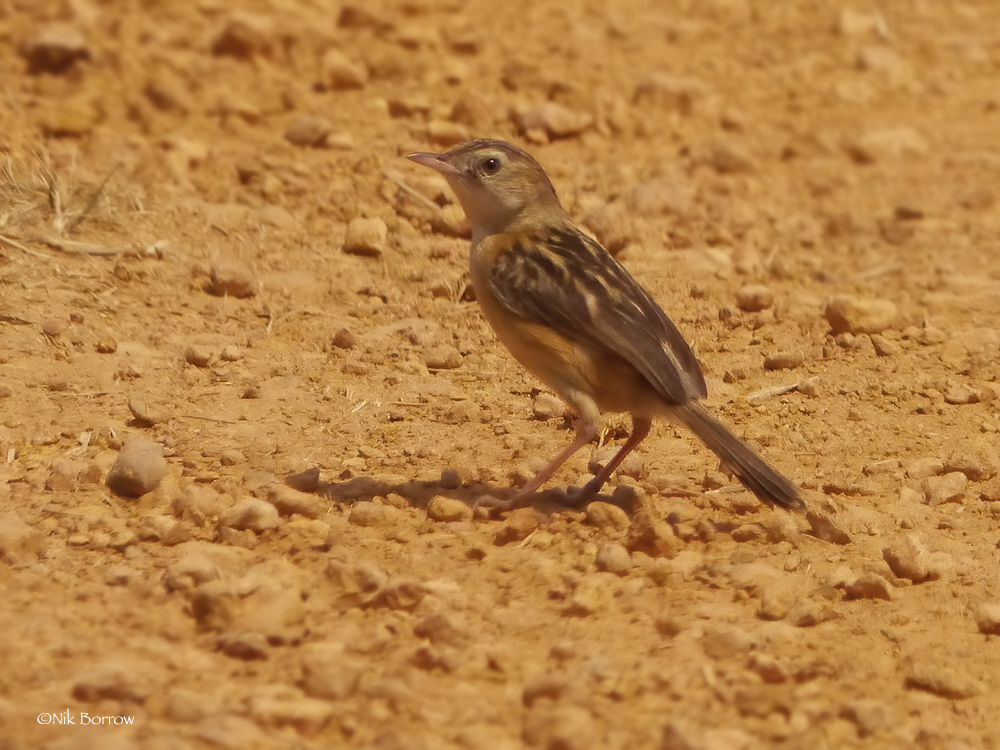
About 11 cm, a little larger and clearly longer-tailed than Cloud Cisticola. The upperparts are heavily streaked black on a buff ground, including the crown; the rump is warmer brown and unstreaked. The underparts are pale buff, warmer ochre on the breast sides and flanks, without streaks. The tail has a black subterminal band and pale tips. The legs are pale pink, the bill short. The sexes are alike, although the female is slightly smaller. On plumage alone it cannot be separated safely from other streaked cisticolas; display flight, song and habitat are decisive.
Confusion species
Wing-Snapping Cisticola Cisticola ayresii occurs in the same area but is smaller with a very short tail, chooses short, drier grassland and produces loud wing-snaps in display. Pale-Crowned Cisticola Cisticola cinnamomeus also lives in wet grassland, but the male has an unstreaked, pale cinnamon crown and black lores and sings a thin, insect-like tsee-tsee-tsee. Zitting Cisticola Cisticola juncidis is smaller and makes low, bouncing flights with a rhythmic zit…zit. Short-Winged Cisticola Cisticola brachypterus has an unstreaked back and lives in wooded country. Cloud Cisticola Cisticola textrix, its closest relative, occurs far to the south and does not overlap.
Habitat
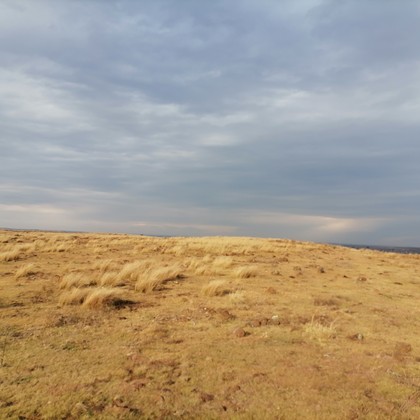
Seasonally wet or flooded grassland on Kalahari sand: dambos, grassy plains along rivers and the edges of floodplains, especially where the grass is kept short by fire or grazing. It avoids tall reeds and scrub. It breeds in the rainy season.
Where the bird is most at home, classified by the vegetation units of southern Africa.

Range and movements
Within the region in north-western Zambia (Mwinilunga District and the grasslands of the upper Zambezi) and north-eastern Angola (the Lunda provinces and northern Moxico). Beyond the region in southern Democratic Republic of the Congo and locally in south-eastern Gabon. The distribution is incompletely known and the species is probably often overlooked.
- Resident
- dark = core range, pale = thinly spread
How and when to look
Search in the rainy season (November to March) in the dambos around Mwinilunga, for example along the road to the source of the Zambezi. Stand in open grassland early in the morning and scan the sky: the male gives himself away with his repeated phrases high above the plain. Record the song and compare it with Wing-snapping and Pale-Crowned Cisticolas, which may sing in the same dambos.
Conservation status
Not threatened. The species has a fairly large range in thinly populated country; its grasslands are locally under pressure from agriculture and changed fire regimes, but there is no evidence of a steep decline.
Scientific name
Cisticola dambo | Lynes, 1931
Lynes described the species in 1931 and placed it straight away in the genus where it still stands. The genus Cisticola was introduced in 1829 by Kaup. Cisticola combines the Ancient Greek kisthos 'rock-rose' with the Latin colere 'to dwell'. dambo refers to dambos, the seasonally flooded grasslands of Zambia and southern Congo where the species lives. The specimen the first description was based on came from Nasondoye, southern DR Congo.