All species › Waders, gulls and terns › Plovers and lapwings › Crowned Lapwing
Crowned Lapwing | Vanellus coronatus
Diadeemkievit | Avefría Coronada
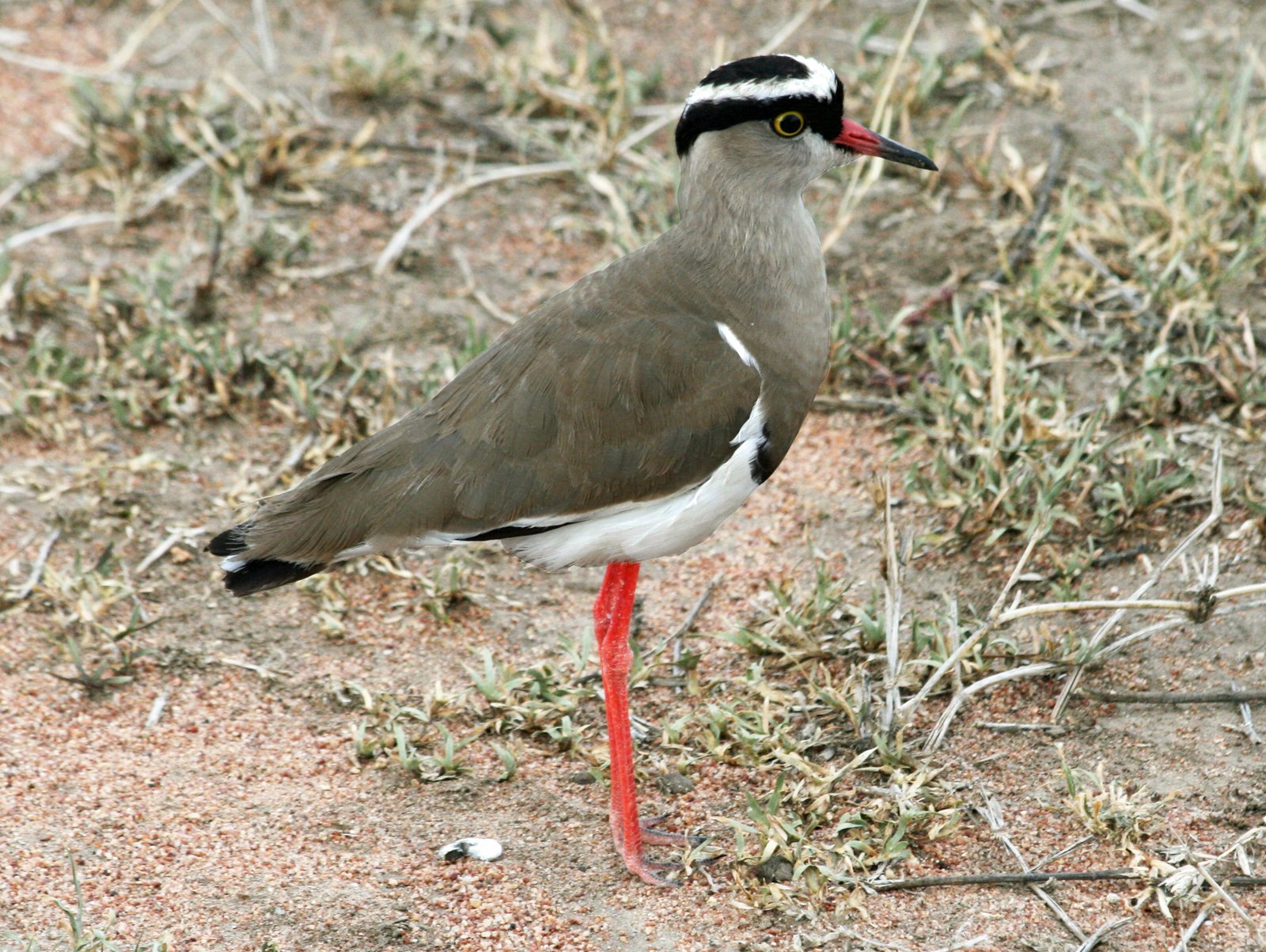
The Crowned Lapwing is the lapwing of dry, short grassland, from the Kalahari to the sports fields and road verges of towns. Its black cap ringed in white can be seen from afar, and its loud, grating call, also at night, is one of the most familiar sounds of open country in southern Africa.
Voice
A loud, grating kreeep or kie-weet, often in rapid series when disturbed and also at night; pairs and groups alarm together. Dive attacks on intruders with a sustained, high call.
Recording: Marna Buys — CC BY-NC-SA 4.0 · converted to mono · xeno-canto
Identification
29–31 cm. The upperparts and breast are sandy brown, the belly white, and a narrow black band separates breast from belly. The crown is black, surrounded by a broad white ring like a diadem. The bill is red with a black tip, the eye yellow and the legs bright red. In flight the wing shows a broad white band across the coverts and black flight feathers; the tail is white with a black terminal band. The sexes are alike; juveniles have pale feather fringes and a blurred crown pattern.
Confusion species
Black-Winged Lapwing Vanellus melanopterus and Senegal Lapwing Vanellus lugubris have a grey head with a white forehead patch instead of a black cap ringed in white. Blacksmith Lapwing Vanellus armatus is black, white and grey and is almost always beside water. No other lapwing in the region has this head pattern combined with red legs.
Habitat
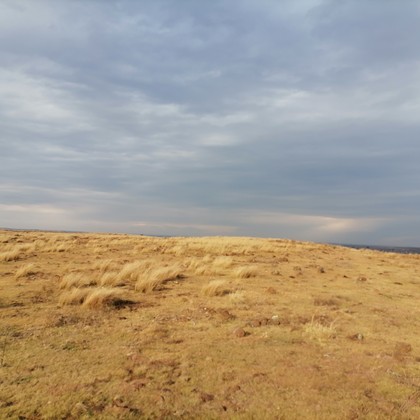
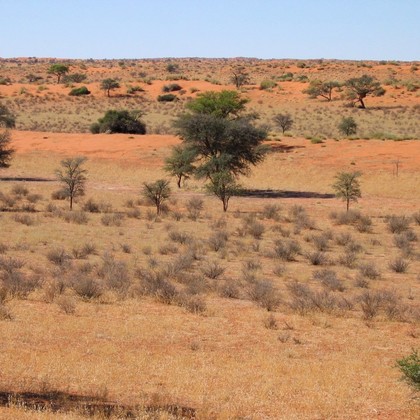
Dry, short or bare grassland and open thornveld, often on overgrazed or burnt ground; also sports fields, golf courses, airfields, road verges and fallow land. Less tied to water than Blacksmith Lapwing. The nest is a scrape on bare ground, often ringed with bits of dung or small stones.
Where the bird is most at home, classified by the vegetation units of southern Africa.

Range and movements
Across most of the region: South Africa, Lesotho, Eswatini, Botswana, Namibia and Zimbabwe, and also southern and central Angola, southern and western Zambia, southern Mozambique and locally Malawi. Scarcer on the humid coastal plain, in the wooded north and in the core of the Namib. Beyond the region in East Africa north to Ethiopia and Somalia.
- Resident
- Winter visitor (c. Apr–Sep)
- dark = core range, pale = thinly spread
How and when to look
Anywhere in open country, including the middle of towns. At a sports field or grassy verge, listen for the grating call: the sandy birds often stand among the tussocks and are noticed only when they call. In the breeding season pairs keep dive-bombing overhead until you move on.
Conservation status
Not threatened; common and benefits from grazing, sports fields and open ground around settlements. Nests on bare ground are sometimes lost to mowing and trampling.
Scientific name
Vanellus coronatus | (Boddaert, 1783)
Boddaert described the species in 1783 as Charadrius Coronatus; because it was later moved to another genus, the author and year stand in brackets. The genus Vanellus was introduced in 1760 by Brisson. Vanellus is the diminutive of the Latin vannus, 'winnowing fan' — for the sound and shape of the broad, rounded wings in flight, which recall a fan being winnowed. coronatus is Latin for 'crowned' — for the black cap encircled by a white ring. The specimen the first description was based on came from Cape of Good Hope.