All species › Swifts › Swifts › Common Swift
Common Swift | Apus apus
Gierzwaluw | Vencejo Común
The Common Swift is a European and Asian breeder that spends the northern winter in Africa. In southern Africa it is a numerous but often high-flying and distant summer visitor that moves across the land in large flocks with rain fronts.
Voice
The familiar high sreeeh of the breeding grounds is rarely heard in Africa; flocks in the wintering area are usually silent.
Recording: Meena Haribal — CC BY-NC-SA 4.0 · shortened to the first 60 s, mono · xeno-canto
Identification
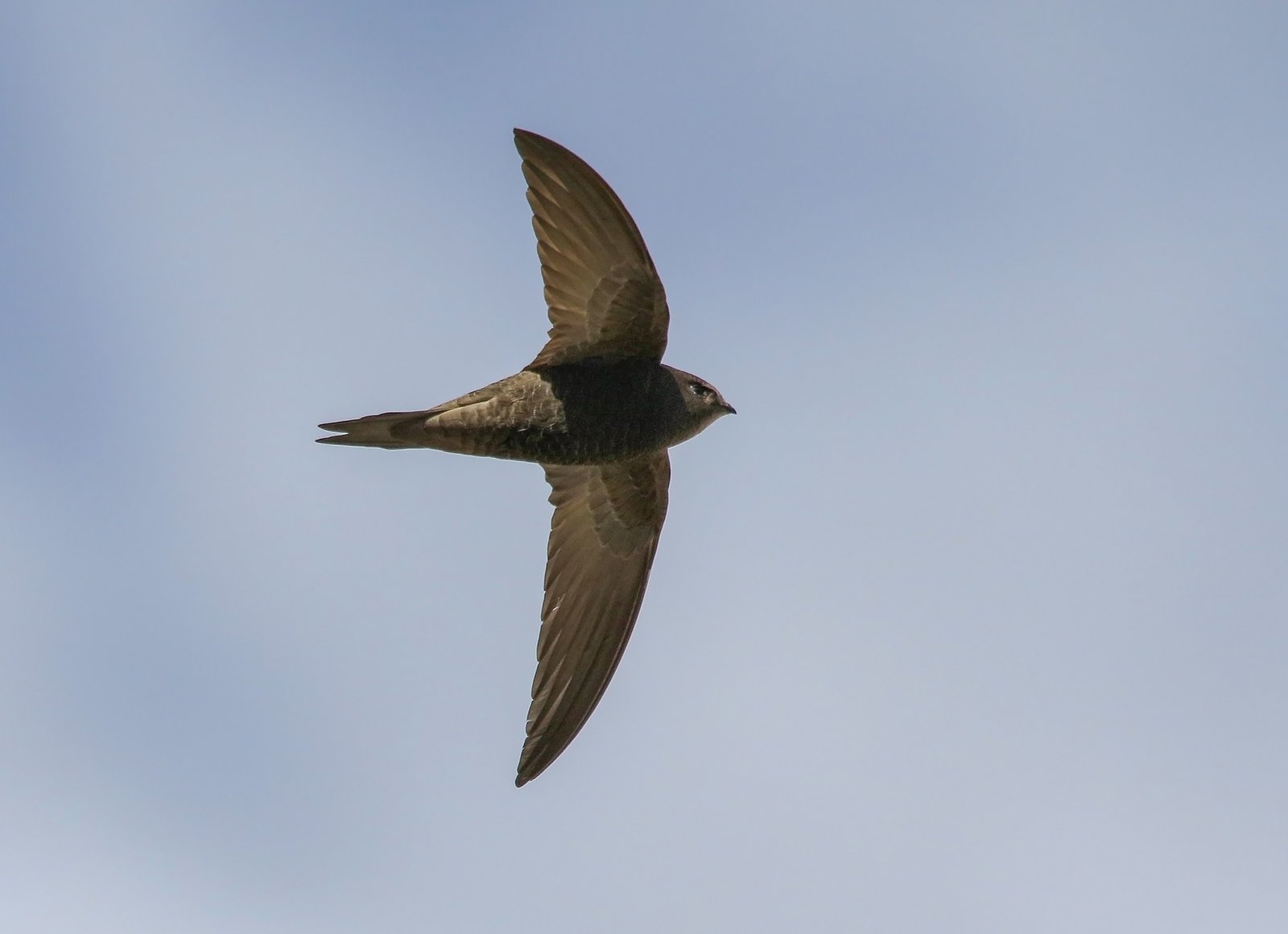
16–17 cm, wingspan 38–42 cm. Uniform dark blackish-brown, with a distinct dirty-white throat patch; at close range pale fringes are visible on the belly. The upperwing is fairly uniform, at most with slightly paler secondaries than the back. The wings are long and sickle-shaped, the tail moderately forked. The sexes are alike; first-years show a larger white throat and pale fringes to the forehead and wing coverts. It flies fast on stiff beats and long glides, in the region usually high.
Confusion species
The African Black Swift Apus barbatus is slightly larger and blacker, with a clear pale panel in the inner wing against the black back from above. Bradfield's Swift Apus bradfieldi is paler and more grey-brown with scaly underparts. The White-Rumped Swift Apus caffer and the Horus Swift Apus horus have a white rump. In the field the species closely resembles African Black Swift; season and flock size help.
Habitat
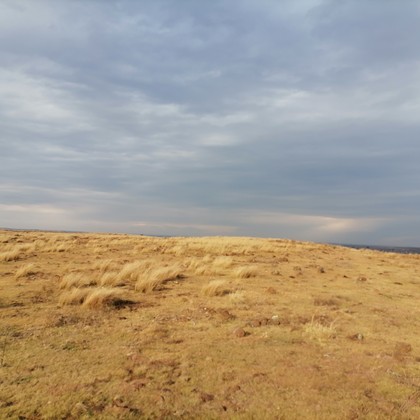
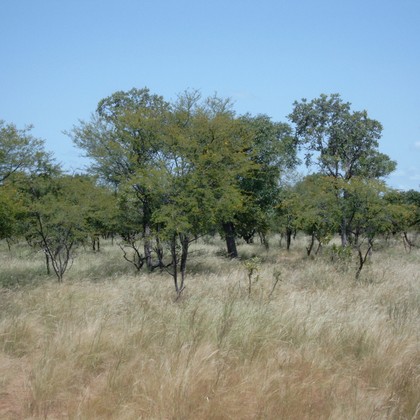
Over almost any landscape, from savanna, woodland and grassland to semi-desert and towns; especially where rain falls and insects swarm. It spends the night on the wing at great height. Large flocks move with rain fronts and hunt emerging termites ahead of thunderstorms.
Where the bird is most at home, classified by the vegetation units of southern Africa.

Range and movements
From October to March over almost the whole region, most numerous in the north and east: Angola, Zambia, Malawi, Zimbabwe, Mozambique, Botswana, Namibia and northern and eastern South Africa; scarce in the western Cape. It breeds from Europe and North Africa to Central Asia and China and winters in sub-Saharan Africa.
- Summer visitor (c. Oct–Mar)
- Passage (Mar–Apr, Oct–Nov)
- dark = core range, pale = thinly spread
How and when to look
Watch for high flocks of tens to thousands of birds before and behind a thunderstorm in the summer months, especially in December and January in the north of the region. In mixed parties check the contrast in the upperwing to pick out African Black Swift.
Conservation status
Not threatened, with a very large world population, although numbers in Europe are declining through the loss of nest sites in buildings and the decline of insects. No specific threats are known in the wintering area.
Scientific name
Apus apus | (Linnaeus, 1758)
Linnaeus described the species in 1758 as Hirundo Apus; because it was later moved to another genus, the author and year stand in brackets. The genus Apus was introduced in 1777 by Scopoli. Apus is Latin for a swift, from Greek a- 'without' and pous 'foot', the ancients taking it for a kind of swallow without feet. The specific name repeats the genus name. The specimen the first description was based on came from Sweden.