All species › Gamebirds › Pheasants and partridges › Common Quail
Common Quail | Coturnix coturnix
Kwartel | Codorniz Común
The Common Quail is a small, seldom-seen gamebird of grassland and grain fields, known mainly from the call of the male. In southern Africa the African form africana breeds, following the rains; European migrants reach the north of the region only in small numbers.
Click a thumbnail to switch the photo above.
Voice
The male gives a clear three-part whit-wi-whit, rhythmically repeated, often after dark and audible over long distances; it is rendered as wet-my-lips. A soft cree-cree when flushed.
Recording: Stanislas Wroza — CC BY-NC-SA 4.0 · shortened to the first 60 s, mono · xeno-canto
Identification
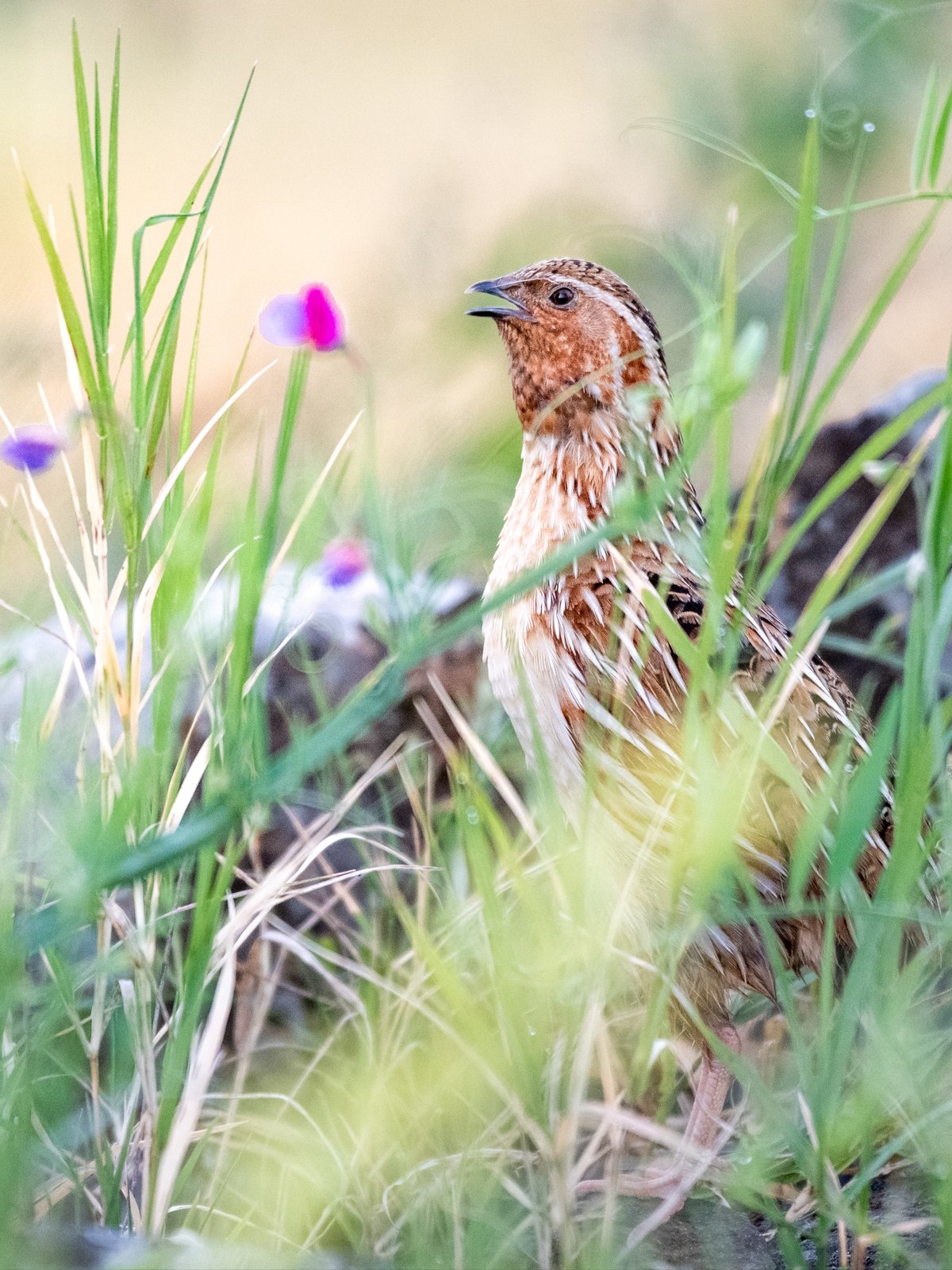
About 18 cm, squat and short-tailed, sandy brown with pale lengthwise streaks on back and flanks. The male has a black throat with a black anchor-shaped mark, a pale supercilium and, in the form africana, rusty breast and flanks with pale streaks. The female has a pale throat and a breast finely spotted dark. In flight it shows long, pointed wings and a plain brown wing, flying low over the grass on rapid, shallow wingbeats.
Confusion species
The female Harlequin Quail (Coturnix delegorguei) is very similar, but has darker, warmer brown underparts with fewer breast spots and a more crisply marked head; the male has a black breast patch and chestnut flanks. Blue Quail (Synoicus adansonii) is clearly smaller. Common Buttonquail (Turnix sylvaticus) is smaller, with a contrasting pale wing panel in flight and rufous breast sides spotted black. Corn Crake (Crex crex) is larger, with rufous wings and dangling legs in flight.
Habitat
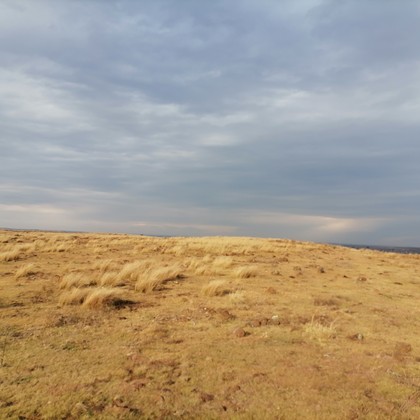
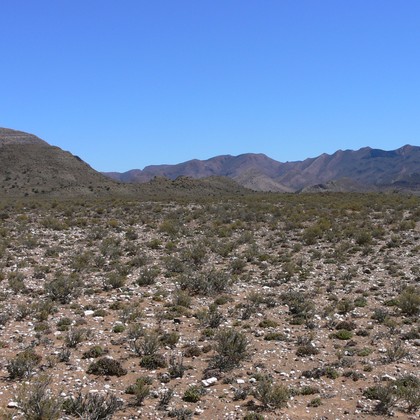
Open grassland, grain and lucerne fields, fallow land and grassy Karoo plains after rain, from sea level high into the mountains. It avoids woodland and dense scrub. It eats seeds, grass buds and insects from the ground.
Where the bird is most at home, classified by the vegetation units of southern Africa.

Range and movements
Across almost the whole region, most numerous on the South African Highveld, in the wheatlands of the Western Cape and in Lesotho, and also in Namibia, Botswana, Zimbabwe, Zambia, Malawi, Mozambique and Angola; numbers fluctuate strongly with rainfall. Beyond the region across much of Africa, Europe and western and central Asia, and on Madagascar.
- Resident
- Summer visitor (c. Oct–Mar)
- Winter visitor (c. Apr–Sep)
- Passage (Mar–Apr, Oct–Nov)
- dark = core range, pale = thinly spread
How and when to look
On still summer evenings, listen along grain fields and grassland on the Highveld or in the Swartland for the three-part call. The bird itself is rarely seen unless it flushes right at your feet or crosses a dirt road at dusk.
Conservation status
Not threatened. In the region it benefits from grain farming, but mowing during the breeding season and pesticides cost nests and birds. It is hunted; beyond the region numbers of migrants have declined through intensive agriculture and hunting around the Mediterranean.
Scientific name
Coturnix coturnix | (Linnaeus, 1758)
Linnaeus described the species in 1758 as Tetrao Coturnix; because it was later moved to another genus, the author and year stand in brackets. The genus Coturnix was introduced in 1764 by De Garsault. Coturnix is the Latin word for the quail. The specific name repeats the genus name. The specimen the first description was based on came from Sweden.